

Wednesday 09 April 2025
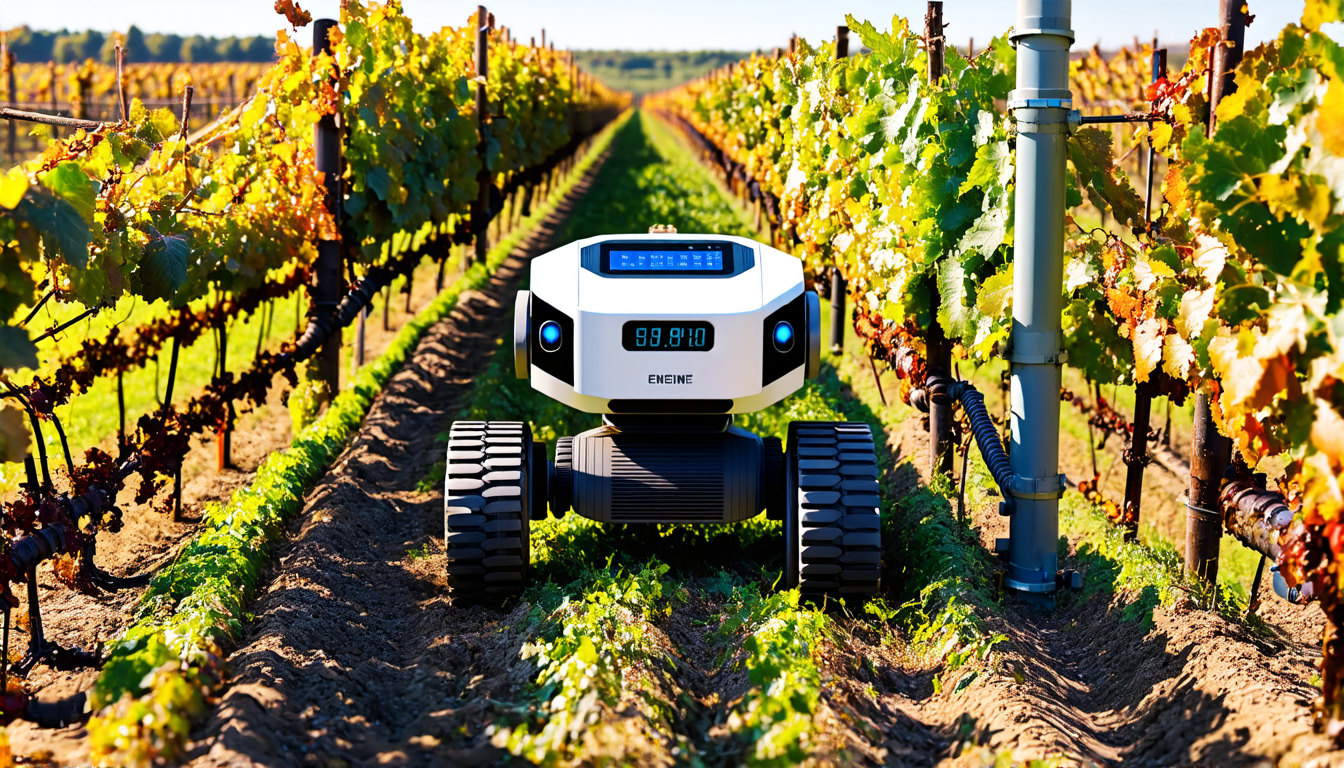
Agricultural robots are increasingly being used to help farmers automate tasks and improve crop yields, but they face a significant challenge: navigating through complex outdoor environments. To overcome this hurdle, researchers have developed a novel method for embedding semantic information into keypoint descriptors, allowing robots to better understand their surroundings.
The new approach, called Keypoint Semantic Integration (KSI), enhances traditional keypoint detectors with semantic embeddings derived from specific objects in the environment. In the case of vineyards, these objects might include trunks, poles, and water pipes. By incorporating this additional context, KSI can significantly improve the accuracy of feature matching, which is critical for tasks such as relative pose estimation and visual localisation.
To test their approach, researchers created a dataset called SemanticBLT, consisting of images of vineyards taken over multiple seasons with significant visual and temporal variations. They then evaluated their method using various keypoint descriptors and matches, demonstrating an overall 9% higher matching accuracy in semantically significant regions compared to the respective baselines.
The KSI framework is designed to be flexible and adaptable, allowing it to be applied to a range of environments and scenarios. By incorporating semantic information into keypoint detectors, robots can better understand their surroundings and make more informed decisions about navigation and task execution.
One potential application of this technology is in precision agriculture, where robots could be used to monitor crop health and detect pests or diseases earlier and more effectively. The ability to accurately localise within a vineyard or other agricultural environment would enable these robots to perform tasks such as pruning, weeding, and spraying with greater precision and efficiency.
The KSI approach also has broader implications for the development of autonomous systems in general. By incorporating semantic information into keypoint detectors, researchers may be able to improve the accuracy and reliability of feature matching in a wide range of environments, from urban streets to natural landscapes.
In addition to its technical significance, the KSI framework highlights the importance of developing agricultural robotics that are specifically designed for the unique challenges of outdoor environments. As the global population continues to grow and urbanisation increases, it will be essential to develop more efficient and sustainable methods for food production. By leveraging advances in robotics and computer vision, researchers may be able to help farmers overcome some of the biggest challenges facing agriculture today.
Cite this article: “Semantically Enhanced Keypoint Matching for Robust Visual Localization in Agricultural Environments”, The Science Archive, 2025.
Agricultural Robots, Computer Vision, Keypoint Semantic Integration, Ksi, Precision Agriculture, Autonomous Systems, Feature Matching, Robotics, Outdoor Environments, Semantic Information





