

Wednesday 09 April 2025
As we navigate our daily lives, we often rely on machines and robots to assist us in various tasks. From helping us move heavy objects to providing companionship, these devices have become an integral part of modern society. However, one challenge that remains is how humans and robots can collaborate effectively without direct communication.
In a recent study, researchers developed a framework to address this issue by introducing a model that captures the probability distribution of human choices rather than relying on fixed parameters. This approach allows robots to better adapt to the uncertainties inherent in human decision-making.
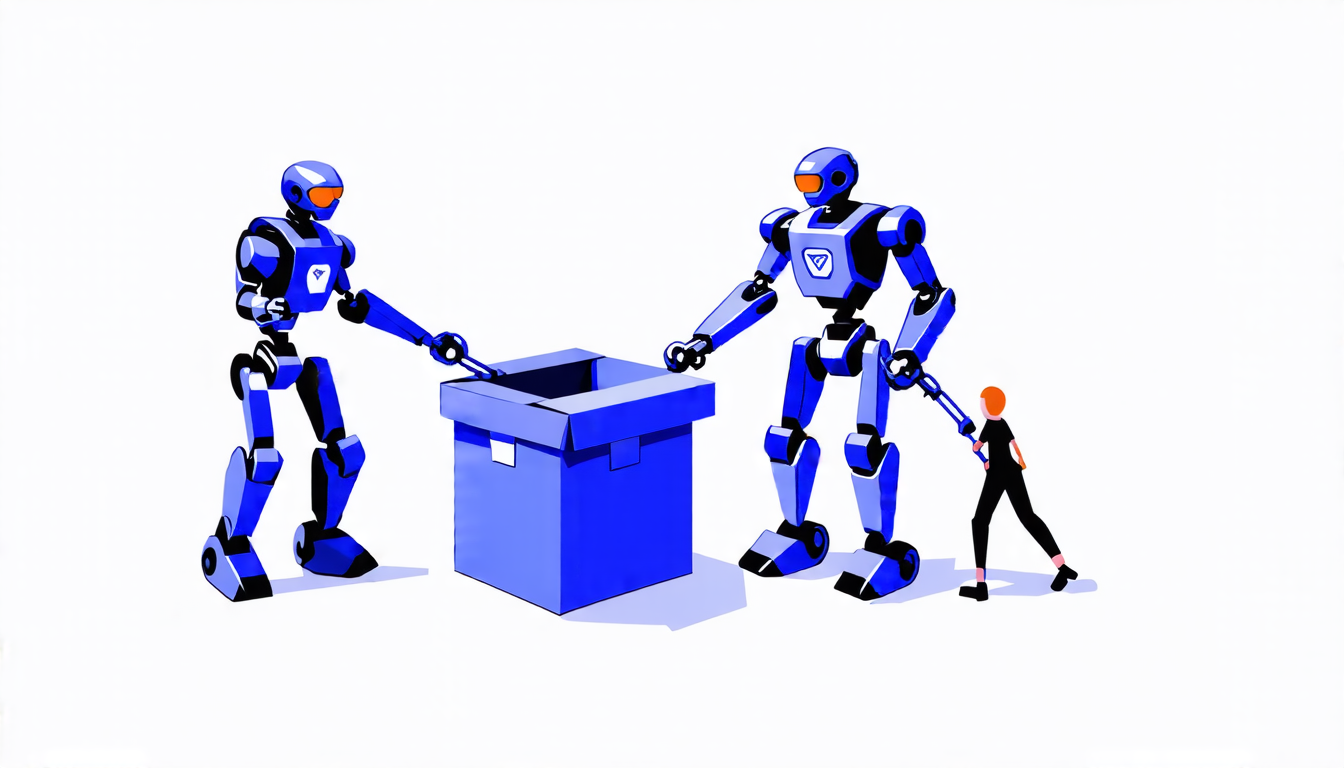
The framework, which was tested through experiments with human participants, demonstrates how robots can successfully collaborate with humans in tasks such as co-transportation. In this scenario, a human and a robot work together to move an object from one location to another. The robot uses its model to predict the human’s preferred path, taking into account factors such as the human’s level of stubbornness.
The study also introduces a time-varying stubbornness measure, which allows the robot to transition between different coordination modes. For instance, if the human’s preferred path conflicts with the robot’s plan and their stubbornness exceeds a certain threshold, the robot can switch to following the human’s lead.
To validate the framework, the researchers conducted experiments using a Fetch robot, which is designed for collaborative tasks. The results show that incorporating pose optimization – a strategy that helps the robot adjust its movement to compensate for human uncertainties – significantly reduces the system’s true cost in each environment.
The study’s findings have significant implications for various fields, including robotics, artificial intelligence, and human-computer interaction. By developing more sophisticated models of human behavior and decision-making, researchers can create robots that are better equipped to collaborate with humans in a wide range of tasks.
One potential application of this technology is in the field of healthcare, where robots could assist medical professionals in delicate procedures or provide companionship for patients. In manufacturing, robots could work alongside humans to improve efficiency and reduce errors.
While there is still much work to be done to fully integrate human-robot collaboration into our daily lives, this study represents a significant step forward in understanding how humans and machines can work together effectively. By developing more advanced models of human behavior and decision-making, researchers can create robots that are better equipped to collaborate with humans in a wide range of tasks.
Cite this article: “Unlocking Human-Robot Harmony: A Novel Framework for Uncertainty-Aware Co-Transportation”, The Science Archive, 2025.
Human-Robot Collaboration, Robotics, Artificial Intelligence, Machine Learning, Decision-Making, Uncertainty Modeling, Pose Optimization, Human-Computer Interaction, Healthcare, Manufacturing





