

Wednesday 09 April 2025
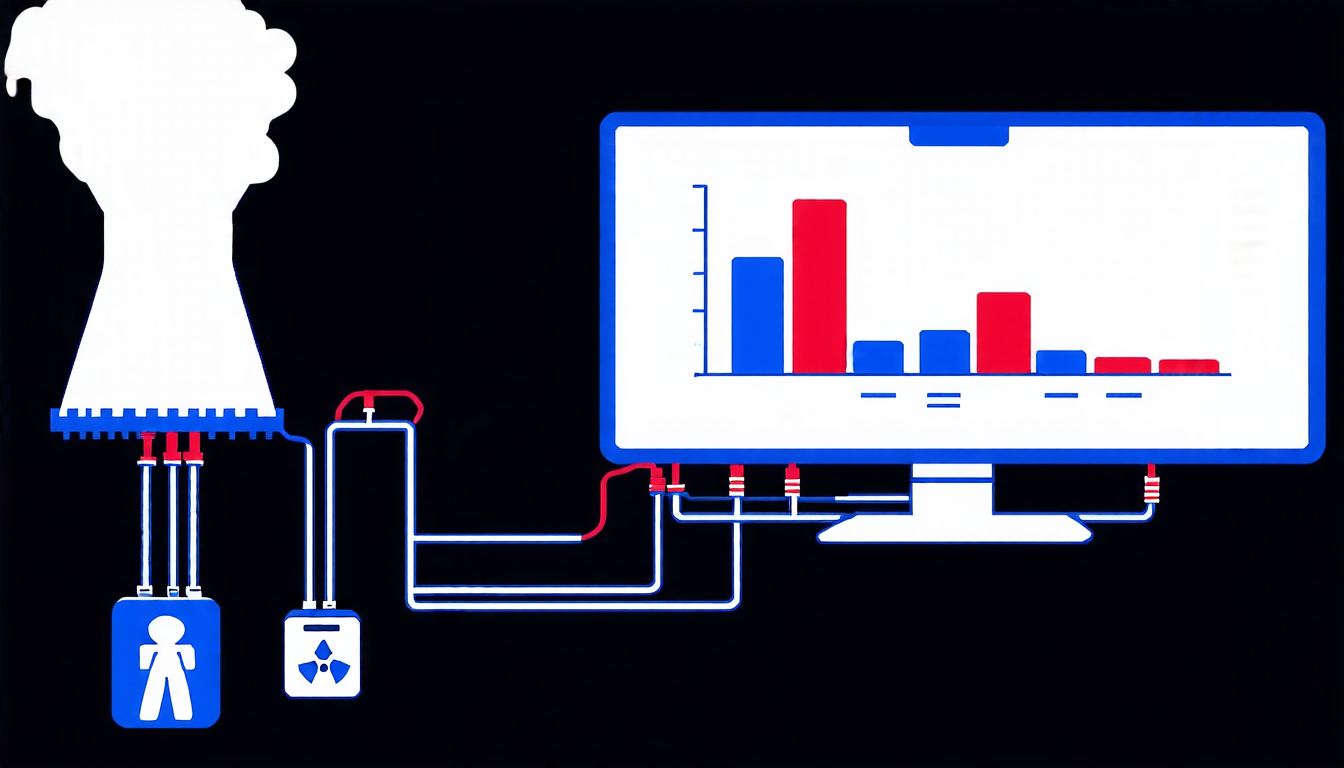
Scientists have been working on a revolutionary new way to monitor and control complex systems, like power plants and nuclear reactors. They’ve developed an innovative technique called Shallow Recurrent Decoder Networks (SHRED), which uses artificial intelligence to create accurate models of these systems.
The idea behind SHRED is simple: by analyzing data from sensors and other sources, the algorithm can learn how different parts of a system interact with each other. This allows it to predict what will happen in the future, making it possible to optimize performance, detect problems early, and even control the system remotely.
One of the key benefits of SHRED is its ability to work with limited data. Traditional modeling techniques require large amounts of information, but SHRED can create accurate models using just a few sensors. This makes it ideal for situations where it’s difficult or expensive to gather data, such as in remote locations or on complex systems like nuclear reactors.
To test the effectiveness of SHRED, researchers used it to model a natural circulation loop at the DYNASTY experimental facility. The loop is designed to mimic the behavior of molten salt reactors, which are being developed as a potential new source of clean energy.
The results were impressive: SHRED was able to accurately predict the behavior of the system, even when faced with unexpected changes or anomalies. This is crucial for nuclear reactors, where small mistakes can have big consequences.
But what really sets SHRED apart is its ability to learn and adapt over time. As new data becomes available, the algorithm can update its model and make more accurate predictions. This means that it can continue to improve its performance even as the system it’s modeling changes or evolves.
The potential applications of SHRED are vast. It could be used to optimize the performance of power plants, detect early warning signs of equipment failure, or even control complex systems remotely. And because it’s designed to work with limited data, it could be used in a wide range of situations where traditional modeling techniques wouldn’t be effective.
Overall, SHRED represents an exciting new development in the field of artificial intelligence and complex systems modeling. Its ability to learn from limited data and adapt over time makes it a powerful tool for scientists and engineers, and its potential applications are vast and varied.
Cite this article: “Revolutionizing Nuclear Reactor Monitoring with AI-Driven Reduced Order Modeling”, The Science Archive, 2025.
Artificial Intelligence, Complex Systems, Shred, Modeling, Sensors, Data, Power Plants, Nuclear Reactors, Machine Learning, Predictive Analytics





