

Wednesday 09 April 2025
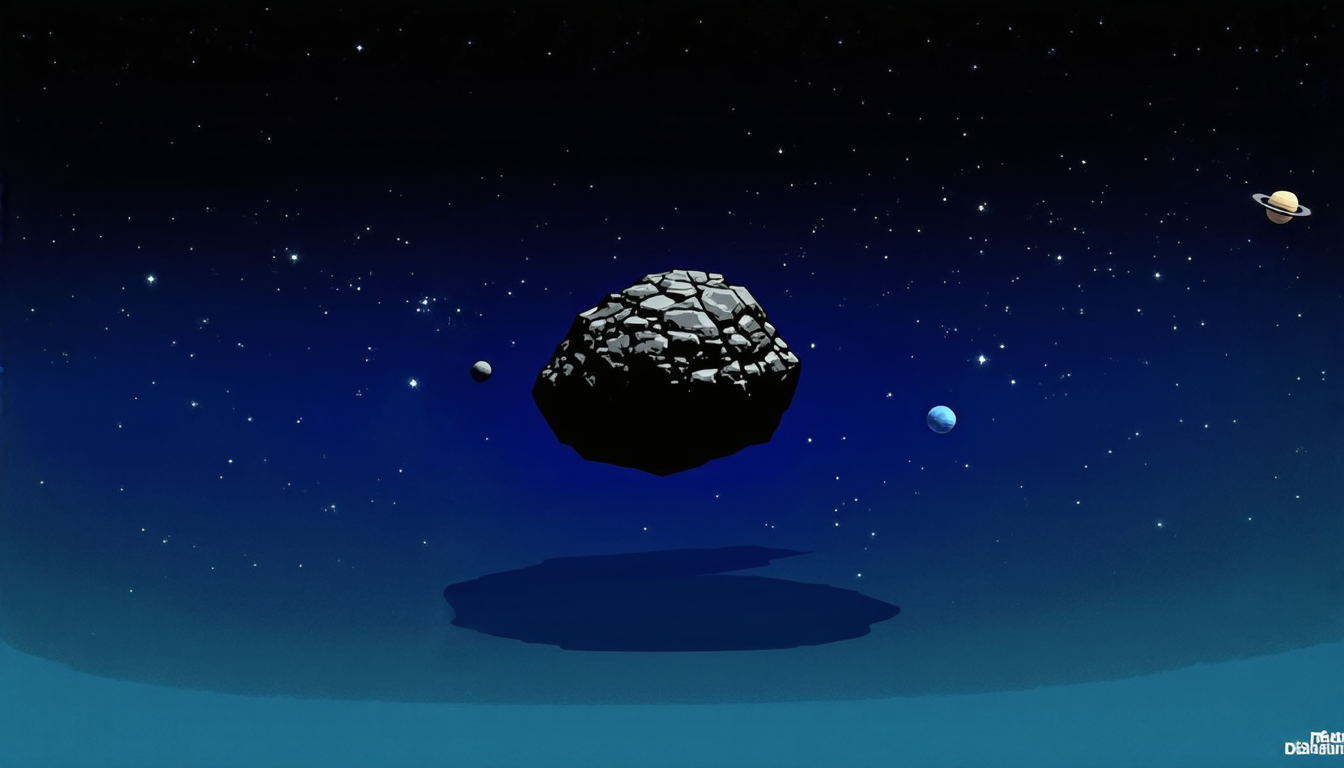
A recent study has shed new light on a long-standing mystery in our solar system – the identity of a small, dark object called 2005 VL1. For years, astronomers have been trying to figure out what this object is and where it came from. Some have suggested that it might be a lost Soviet-era space probe, while others believe it could be a comet or an asteroid.
The latest research suggests that the mystery surrounding 2005 VL1 may finally be solved. By analyzing data on the object’s orbit and trajectory, scientists have been able to rule out the possibility that it is the lost Soviet probe Venera 2, which was sent to Venus in the 1960s but never returned.
The study used a combination of mathematical models and computer simulations to determine the likely path of 2005 VL1 through space. By comparing this path with data on Venera 2’s trajectory, scientists were able to show that there is no match between the two.
One of the key findings of the research is that 2005 VL1 is not moving in a way that would suggest it was launched by a human spacecraft. Its orbit is more typical of an asteroid or comet, and its path through space does not match up with any known man-made objects.
The study also found that 2005 VL1 has a non-gravitational acceleration, which could be caused by the object’s shape and size. This acceleration is similar to what would be expected for an asteroid or comet, rather than a spacecraft.
While the research has ruled out one possibility – that 2005 VL1 is Venera 2 – it does not provide a definitive answer about what the object actually is. However, it does give scientists more information to work with as they try to solve the mystery of 2005 VL1’s identity.
The study highlights the importance of continued research into our solar system and the objects that inhabit it. By studying 2005 VL1 and other small, dark objects, scientists can learn more about the formation and evolution of our solar system, and gain a better understanding of the risks and challenges posed by near-Earth asteroids and comets.
The research also underscores the need for continued investment in space exploration and astronomy. By exploring our solar system and studying its many mysteries, we can continue to advance our knowledge and improve our ability to predict and prepare for potential threats from space.
Cite this article: “Dark Comet or Lost Probe? Debunking the Claim That Asteroid 2005 VL1 is Venera-2”, The Science Archive, 2025.
Asteroid, Comet, Solar System, Space Probe, Venera 2, Orbit, Trajectory, Simulation, Acceleration, Astronomy





