

Wednesday 09 April 2025
As we navigate the vast expanse of digital worlds, our ability to generate realistic and immersive environments has reached new heights. A team of researchers has made significant strides in this regard by developing a novel framework for extendable 3D scene generation.
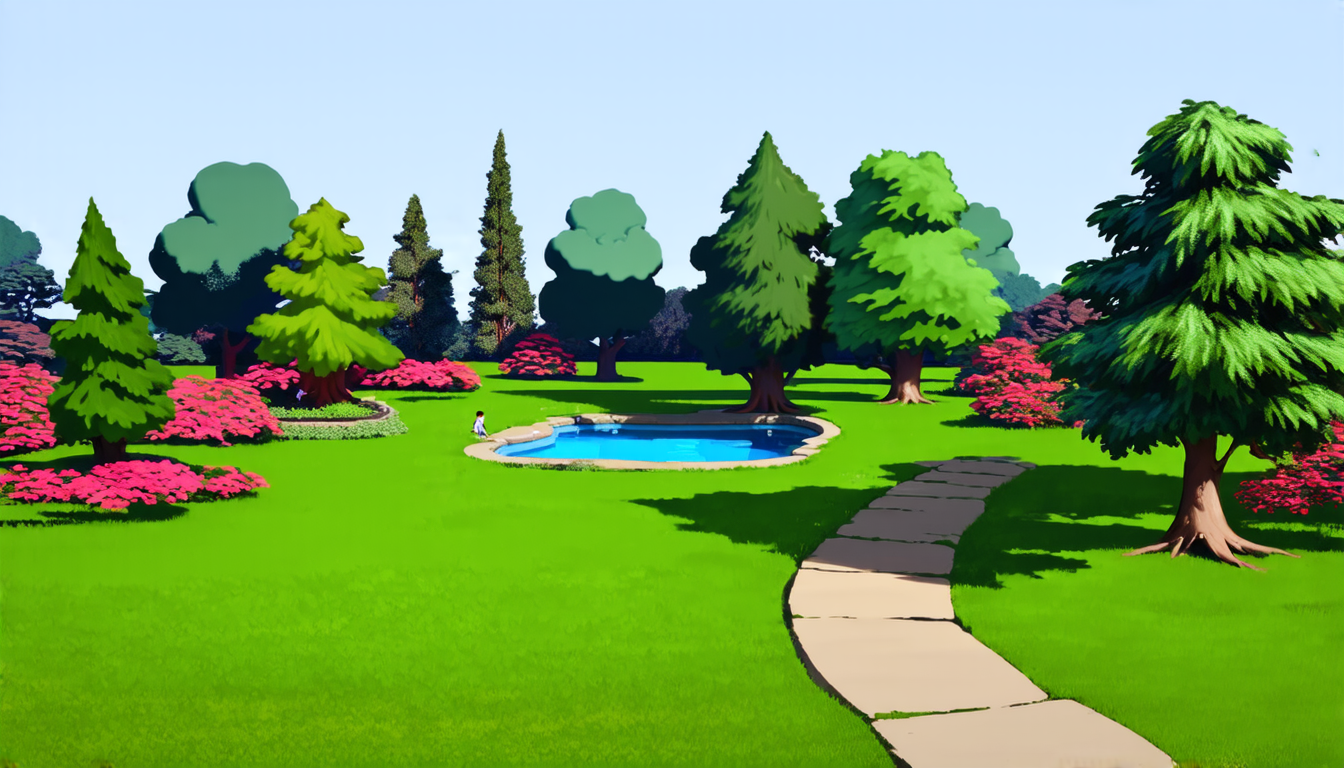
The core innovation lies in the integration of video generative models with a powerful world-level prior that leverages the strength of existing video datasets. This synergy enables the creation of highly realistic and coherent 3D scenes, complete with intricate details and textures. The framework, dubbed WonderVerse, has been tested on a range of scenarios, from serene gardens to bustling cities, and demonstrates remarkable flexibility in accommodating diverse styles and settings.
One of the most impressive aspects of WonderVerse is its ability to generate complex environments that would be difficult or impossible to achieve using traditional methods. For instance, the framework can effortlessly create scenes with multiple camera views, allowing for a level of immersion that was previously unattainable. This capability has far-reaching implications for fields such as virtual reality, gaming, and even architecture.
But what truly sets WonderVerse apart is its capacity to adapt to user input. By incorporating new text prompts, users can guide the scene extension process, adding desired objects or elements to create a customized environment that meets their specific needs. This level of interactivity opens up new avenues for creative expression and collaboration, allowing individuals to co-create and refine 3D scenes in real-time.
The technical underpinnings of WonderVerse are equally impressive. By utilizing a novel technique called Gaussian- based scene extension, the framework can efficiently generate high-quality point clouds that accurately capture the intricacies of complex environments. This approach has several advantages over traditional methods, including reduced computational overhead and improved rendering speeds.
As we continue to push the boundaries of digital world-building, frameworks like WonderVerse will play a crucial role in shaping our collective imagination. By providing us with the tools to create richly detailed and immersive environments, researchers are empowering artists, designers, and developers to bring their most ambitious projects to life.
The potential applications of WonderVerse are vast and varied, spanning industries from entertainment and education to architecture and urban planning. As we move forward into a future where digital worlds become increasingly indistinguishable from reality, the ability to generate realistic and coherent 3D scenes will be essential for creating engaging, believable, and even transformative experiences.
In this era of rapid technological advancement, WonderVerse represents a significant milestone in our quest to master the art of scene generation.
Cite this article: “Unlocking the Power of Generative Models: A Novel Approach to Extendable 3D Scene Generation”, The Science Archive, 2025.
3D Scene Generation, Video Generative Models, World-Level Prior, Immersive Environments, Realistic Scenes, Coherent Textures, Virtual Reality, Gaming, Architecture, User Input





