

Wednesday 09 April 2025
The quest for better language models has led researchers to explore new ways of training them, and a recent study sheds light on an innovative approach that could significantly improve performance.
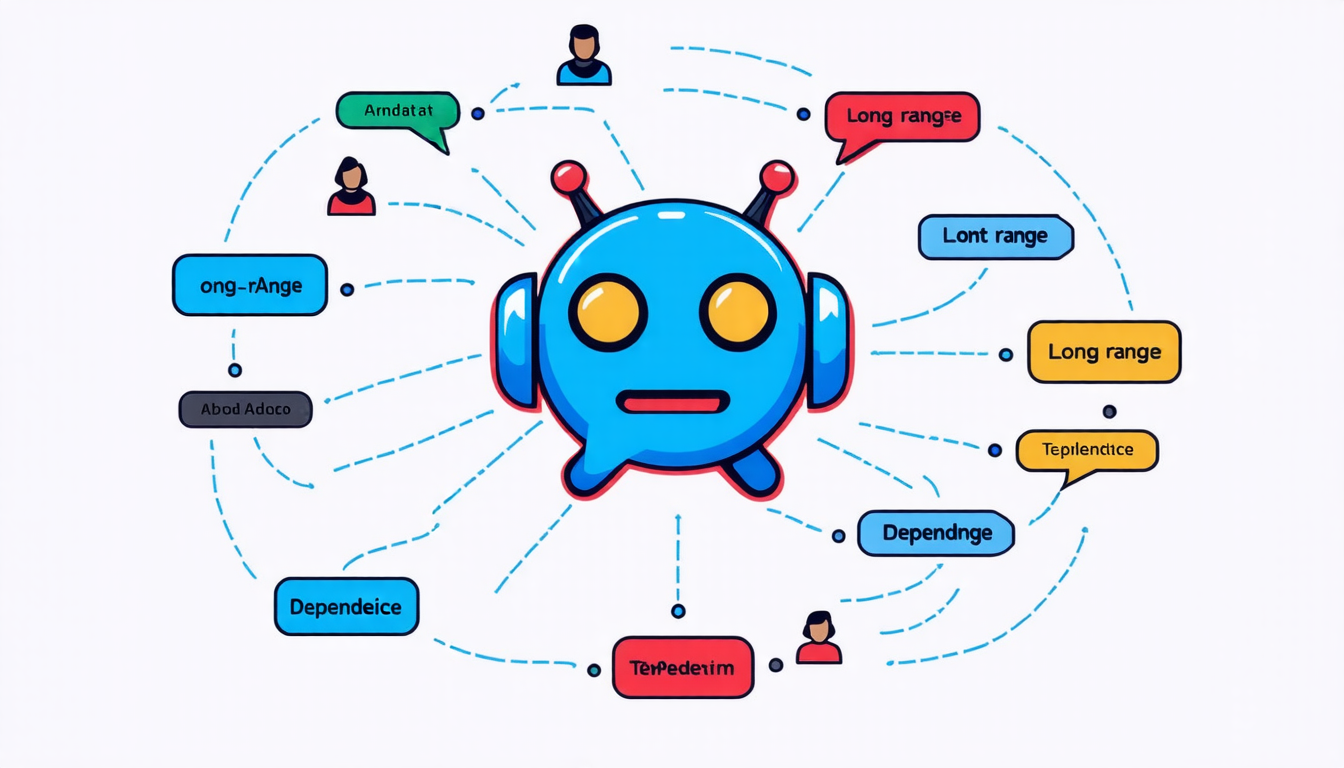
The problem with current language models is that they often struggle to understand long-range dependencies in text. This means that when processing sequences of words, the model’s ability to capture relationships between distant parts of the sequence is limited. To overcome this limitation, scientists have developed a technique called token weighting, which assigns different weights to each word in a sequence based on its context.
In their study, researchers used a novel approach to token weighting, combining it with a type of loss function that encourages the model to focus on less frequent words. This not only improved the model’s ability to capture long-range dependencies but also led to better overall performance on various natural language processing tasks.
One of the key findings was that using this new approach resulted in significant improvements on the RULER benchmark, which tests a model’s ability to answer questions about text. Specifically, the results showed that the new approach outperformed standard methods by up to 10% on certain tasks.
Another notable outcome was that the improved performance was not limited to specific tasks or datasets. Instead, the enhanced model performed well across a range of natural language processing benchmarks, including those focused on summarization and question answering.
So what does this mean for the future of language models? The study suggests that by incorporating token weighting and encouraging models to focus on less frequent words, researchers can create more robust and effective language models. This could have significant implications for applications such as chatbots, virtual assistants, and even machine translation.
The findings also raise interesting questions about how humans process language. If we can develop machines that are better at capturing long-range dependencies, do we need to rethink our own understanding of language? Or is this simply an example of the power of human ingenuity in creating tools that mimic our abilities?
As researchers continue to push the boundaries of what’s possible with language models, it will be fascinating to see how these techniques evolve and are applied in different contexts. One thing is certain: the future of natural language processing has never looked more promising.
Cite this article: “Unlocking Multimodal Understanding: A Study on Long-Context Language Models”, The Science Archive, 2025.
Language Models, Token Weighting, Long-Range Dependencies, Natural Language Processing, Loss Function, Benchmarks, Ruler, Summarization, Question Answering, Machine Translation
Reference: Falko Helm, Nico Daheim, Iryna Gurevych, “Token Weighting for Long-Range Language Modeling” (2025).





