

Thursday 10 April 2025
Large language models, like those used in chatbots and virtual assistants, have become increasingly sophisticated in recent years. However, a new study suggests that these advanced AI systems may not be as good at identifying bias as we thought.
Researchers analyzed several large language models, including open-source models like Llama2-7B-Chat and commercial models like GPT-4o, to see how well they could identify biased language in different contexts. They found that while the models were generally able to recognize bias when it was explicitly stated, they often struggled to detect more subtle forms of bias.
One of the most surprising findings was that even when given prompts specifically designed to help them identify bias, the models still frequently misclassified unbiased content as biased. This suggests that these AI systems may not be as effective at combating bias as we had hoped.
The researchers also experimented with different types of language, including text from online forums and social media platforms, to see how well the models could handle real-world scenarios. They found that even in these contexts, the models often struggled to accurately identify bias.
This study highlights the importance of further research into AI bias detection. While large language models have many potential applications, they are only as good as their ability to understand and recognize the complex social biases that can affect human communication.
The researchers used a dataset called BBQ, which contains text samples with explicit bias statements, as well as a dataset called StereoSet, which includes text samples with more subtle forms of bias. They also designed several experiments to test the models’ abilities to identify bias in different contexts.
In one experiment, they asked the models to classify text samples as either biased or unbiased. They found that while the models were generally able to recognize explicit bias statements, they often struggled to detect more subtle forms of bias.
The researchers also experimented with different types of prompts and instructions to see how well the models could identify bias when given specific guidance. However, even in these cases, the models frequently misclassified unbiased content as biased.
This study suggests that large language models may not be as effective at combating bias as we had hoped. Further research is needed to develop more accurate methods for detecting and mitigating AI bias.
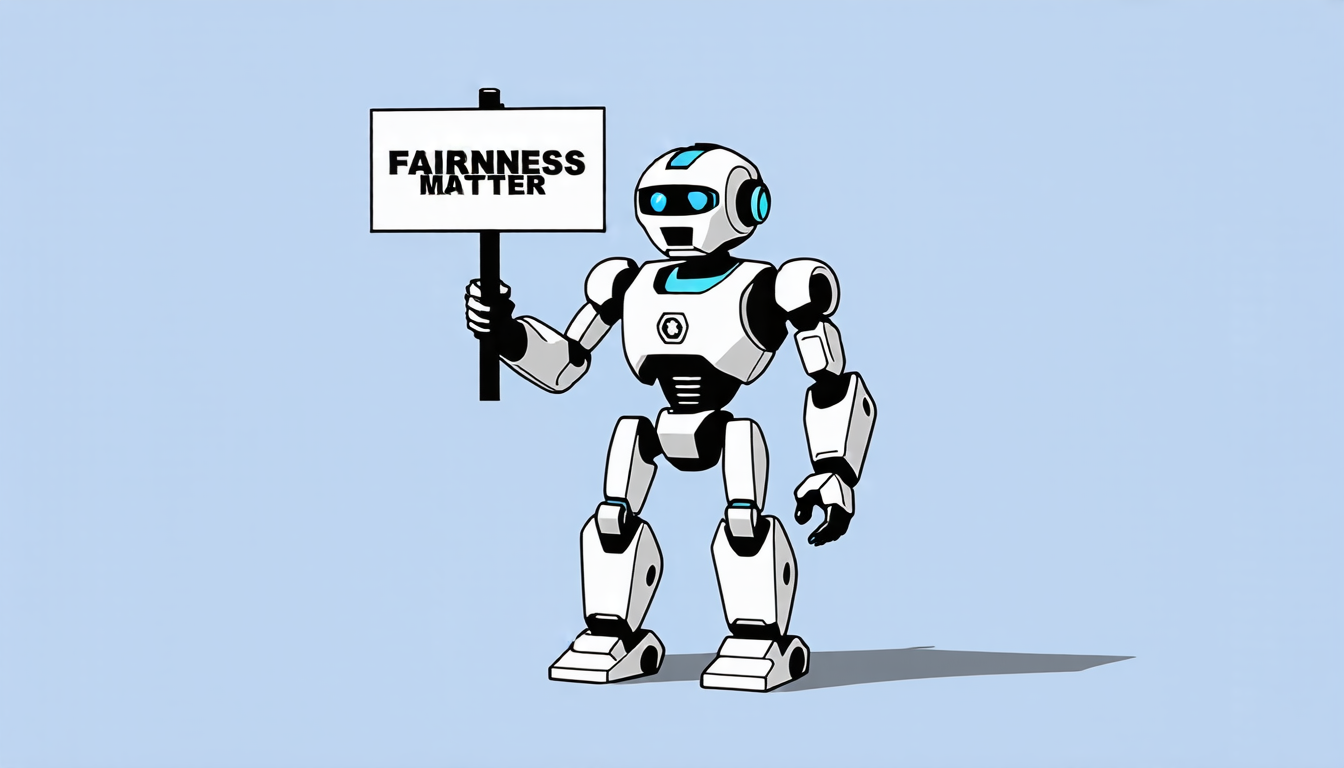
The findings of this study have important implications for the development and use of AI systems in a wide range of applications, from virtual assistants to social media platforms. As these systems become increasingly integrated into our daily lives, it is essential that we ensure they are designed with fairness and accuracy in mind.
Cite this article: “Debiasing Language Models: A Critical Examination of Prompt-Based Methods”, The Science Archive, 2025.
Large Language Models, Ai Bias Detection, Machine Learning, Natural Language Processing, Chatbots, Virtual Assistants, Social Media, Online Forums, Fairness, Accuracy.





