

Thursday 10 April 2025
The quest for reliable and robust visual navigation has been a long-standing challenge in the field of robotics and computer vision. The ability to accurately estimate camera pose, velocity, and orientation is crucial for various applications such as autonomous vehicles, drones, and robots. However, traditional methods often rely on specific assumptions about the environment or require expensive sensors like lidar.
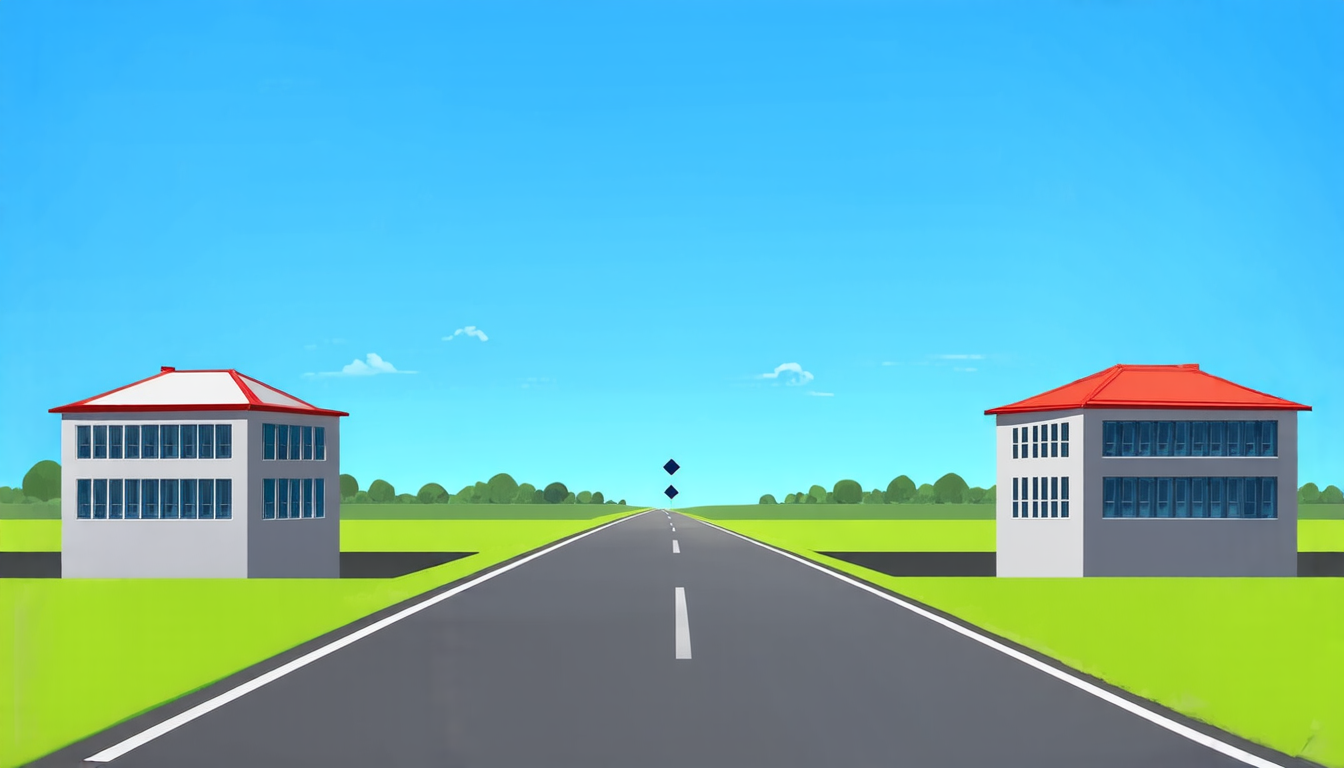
Recently, researchers have been exploring the use of vanishing points in images to improve visual odometry, which estimates the camera’s motion from a sequence of images. Vanishing points are lines that appear to converge at a point on the horizon, providing valuable information about the scene’s geometry and structure. By leveraging these lines, scientists can create more accurate and robust visual navigation systems.
One such approach is the integration of vanishing points into a factor graph optimization framework. This technique combines the strengths of multiple feature types – including point, line, and vanishing points – to improve the accuracy and reliability of camera pose estimation. The system uses a novel factor graph that incorporates geometric constraints from vanishing directions, allowing it to better handle challenging environments with strong man-made structures.
The researchers tested their method on several benchmark datasets, including the ICL-NUIM dataset, which features low-contrast and low-texture synthetic indoor sequences. Their results show significant improvements in tracking accuracy compared to state-of-the-art methods, demonstrating the effectiveness of incorporating vanishing points into visual odometry.
Another advantage of this approach is its ability to handle environments with strong linear features, such as buildings or roads. This is particularly important for applications like autonomous driving, where accurate mapping and localization are crucial. The system’s robustness in these scenarios makes it a promising solution for real-world problems.
The integration of vanishing points also enables the estimation of camera pose in challenging situations, such as rapid acceleration or deceleration. This is because the lines provide additional geometric constraints that can help disambiguate the motion estimation problem.
While this research has significant implications for various applications, it also highlights the importance of considering the structural properties of scenes when designing visual navigation systems. By incorporating vanishing points and other geometric features, scientists can create more accurate and robust methods that better adapt to real-world environments.
The potential impact of this work is substantial, as it could enable more reliable and efficient navigation in a wide range of scenarios. For example, autonomous vehicles could use this technology to improve their mapping and localization capabilities, leading to safer and more efficient transportation systems.
Cite this article: “Unlocking Monocular SLAM: A Novel Approach Combining Point, Line, and Vanishing Point Features for Enhanced Accuracy and Robustness”, The Science Archive, 2025.
Visual Navigation, Robotics, Computer Vision, Vanishing Points, Visual Odometry, Camera Pose Estimation, Factor Graph Optimization, Geometric Constraints, Autonomous Vehicles, Real-Time Navigation





