

Thursday 10 April 2025
Scientists have made a significant breakthrough in understanding how information and energy can be transmitted simultaneously over optical wireless communication channels. This technology, known as simultaneous lightwave information and power transfer (SLIPT), has the potential to revolutionize the way we communicate and power devices.
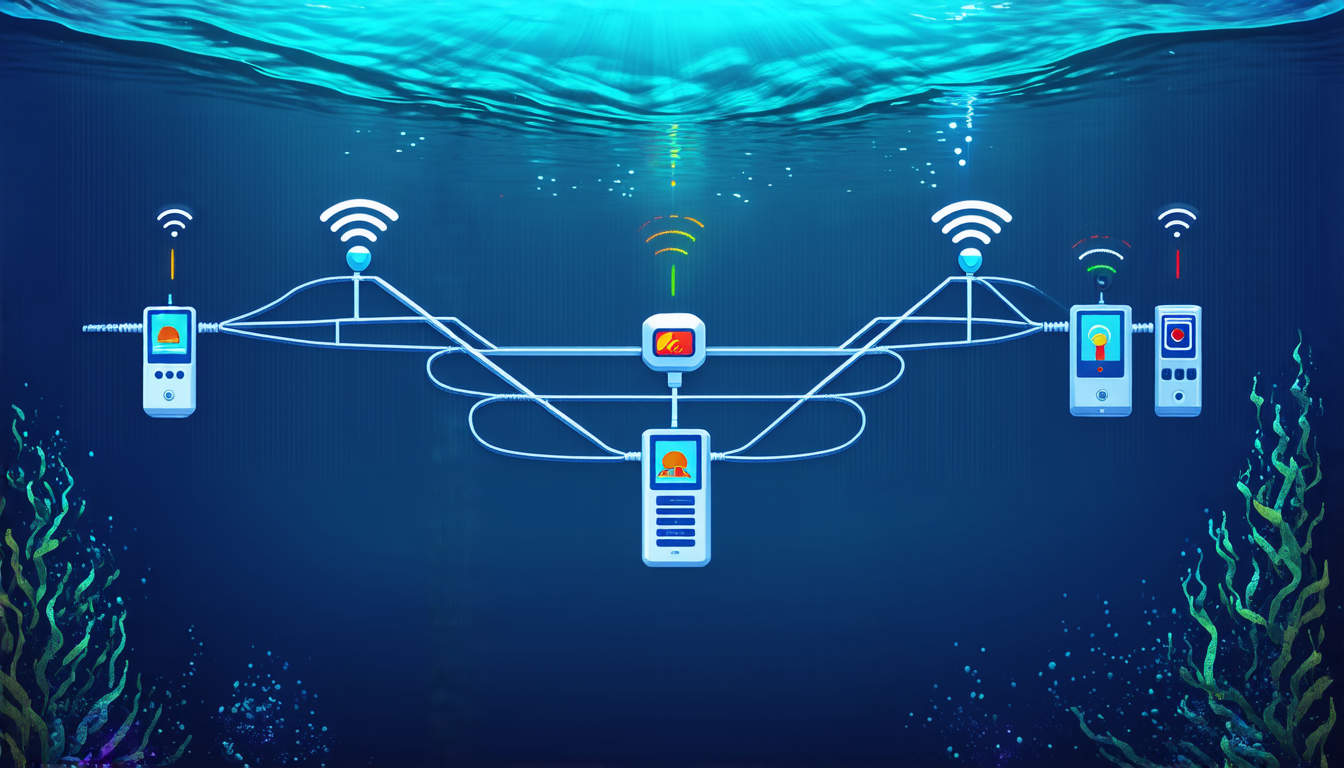
The study, which was published recently, focused on developing a comprehensive analysis of SLIPT systems operating over lognormal fading channels. Lognormal fading is a type of signal degradation that occurs when signals are transmitted through mediums with varying levels of absorption and scattering, such as underwater or atmospheric channels.
To achieve this goal, the researchers employed a novel cooperative information-energy capacity learning framework based on generative adversarial networks (GANs). GANs are a type of artificial intelligence algorithm that can learn complex patterns in data by competing against each other. In this case, the GAN was trained to optimize the SLIPT system’s performance by adapting to changing channel conditions.
The researchers found that the optimal input distribution for SLIPT systems operating over lognormal fading channels is discrete, meaning it consists of a finite number of mass points. This is in contrast to traditional communication systems, which often assume continuous distributions.
The team also discovered that the transition points between different regions of the information-energy capacity region are critical in determining the system’s performance. These transition points occur when the channel conditions change significantly, and the optimal input distribution must adapt accordingly.
To better understand these transition points, the researchers developed a theoretical framework that provides a solid foundation for designing and optimizing SLIPT systems operating over challenging environments. This framework can be used to predict how the system will perform under different channel conditions and optimize its performance accordingly.
The implications of this research are far-reaching. For example, it could enable more efficient communication networks that can adapt to changing environmental conditions, such as underwater or atmospheric channels with varying levels of absorption and scattering. It also has potential applications in areas where energy harvesting is critical, such as powering sensors or devices in remote or hard-to-reach locations.
In summary, this study represents a significant advancement in our understanding of SLIPT systems operating over lognormal fading channels. The novel cooperative information-energy capacity learning framework based on GANs provides a powerful tool for optimizing the system’s performance and adapting to changing channel conditions. As research continues to evolve, we can expect to see even more innovative applications of this technology in the future.
Cite this article: “Unlocking the Secrets of Simultaneous Lightwave Information and Power Transfer: A Theoretical Analysis of Capacity Regions”, The Science Archive, 2025.
Optical Wireless Communication, Simultaneous Lightwave Information And Power Transfer, Slipt, Lognormal Fading Channels, Generative Adversarial Networks, Gans, Artificial Intelligence, Cooperative Information-Energy Capacity Learning, Information-Energy Capacity Region, Channel Conditions





