

Thursday 10 April 2025
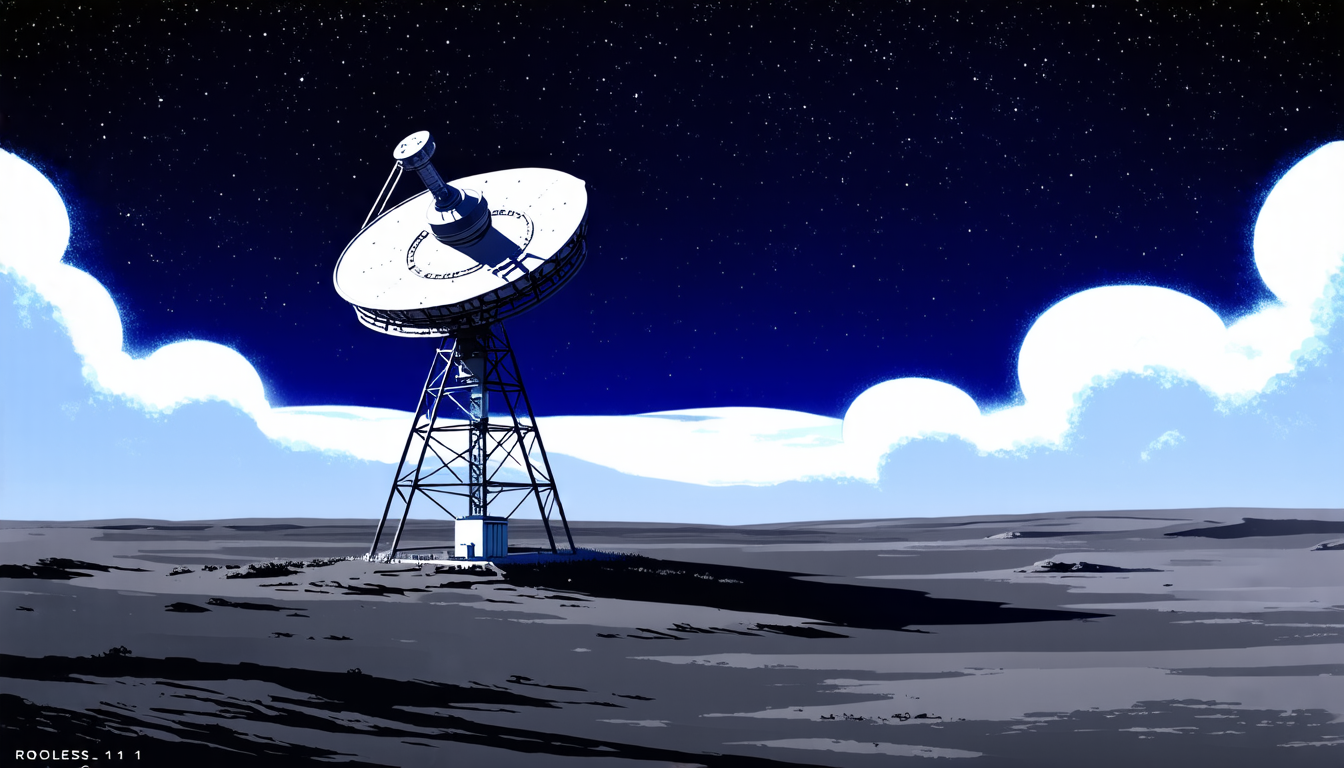
As NASA’s first radio telescope on the Moon, ROLSES-1 has made some remarkable discoveries about our planet and its ionosphere. The instrument, which is part of the Odysseus lunar lander, has been collecting data on shortwave radio transmissions breaking through the Earth’s atmosphere.
One of the most interesting findings is that these transmissions are modulated by density fluctuations in the ionosphere. This means that changes in the ionosphere’s density can affect the signals we receive from radio transmitters on Earth. The ROLSES-1 team has found that this modulation can be used as a marker to help search for extraterrestrial intelligence (SETI) signals.
The data collected by ROLSES-1 also shows that there are many shortwave radio transmissions coming from all over the world. These signals are so strong that they can be detected even when they’re passing through the ionosphere. This is important because it means that we can use these signals to study the ionosphere and learn more about how it affects our communication systems.
The ROLSES-1 team has also discovered that some of these shortwave radio transmissions are extremely powerful, with powers reaching up to 100 kilowatts. To put this in perspective, the average power output of a FM radio station is around 10 kilowatts. These strong signals can travel long distances and be detected even when they’re passing through the ionosphere.
The ROLSES-1 instrument has been collecting data on shortwave radio transmissions for several days now, and the team is excited to continue studying this phenomenon. They believe that by analyzing these signals, they can learn more about the Earth’s ionosphere and how it affects our communication systems.
One of the most interesting aspects of this research is its potential applications in SETI research. The modulation of shortwave radio transmissions by density fluctuations in the ionosphere could be used as a marker to help detect extraterrestrial intelligence signals. This is because many SETI researchers believe that intelligent life elsewhere in the universe would likely use similar technologies to communicate.
The ROLSES-1 instrument is just one part of NASA’s efforts to explore the Moon and learn more about our planet. The data collected by this instrument will be used to study the Earth’s ionosphere and its effects on our communication systems. It’s an exciting time for space exploration, and we can’t wait to see what other discoveries are made as we continue to explore our universe.
Cite this article: “Lunar Radio Telescope Detects Shortwave Signals from Earth”, The Science Archive, 2025.
Nasa, Moon, Rolses-1, Radio Telescope, Ionosphere, Seti, Shortwave Radio Transmissions, Communication Systems, Extraterrestrial Intelligence, Space Exploration





