

Thursday 10 April 2025
Scientists have made a significant breakthrough in understanding the behavior of sliding ferroelectric bilayers, a type of material that could revolutionize the way we store data and power electronic devices.
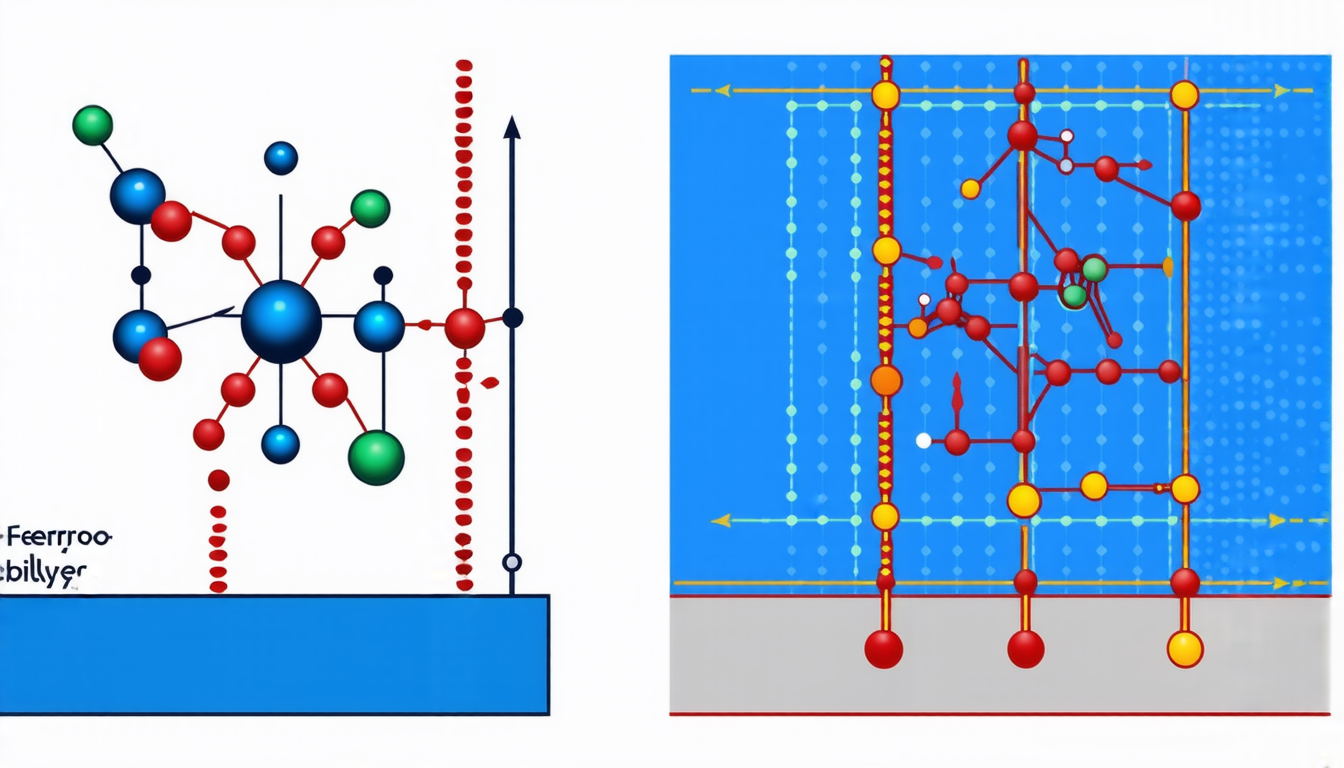
These materials are made up of two layers of atoms that can slide past each other, creating an electric polarization. This property allows them to be used as non-volatile memory devices, which can retain information even when powered off.
Researchers have been studying these materials for years, but they’ve struggled to understand the underlying physics behind their behavior. A new study published in a recent issue of Nature has shed light on this mystery by revealing that the material’s polarization is not just determined by its chemical composition, but also by the way the atoms are arranged within each layer.
The researchers used computer simulations to study the behavior of sliding ferroelectric bilayers and found that the material’s polarization is influenced by the arrangement of the atoms in a way that was previously unknown. They discovered that the polarization is not just determined by the chemical composition of the material, but also by the way the atoms are arranged within each layer.
This discovery has significant implications for the development of new materials with improved properties. For example, it could allow researchers to design materials that have both high polarization and high stability, which would be ideal for use in electronic devices.
The study’s findings also shed light on the behavior of other materials that exhibit similar properties, such as liquid crystals and magnetic materials. It could lead to a deeper understanding of these materials and potentially unlock new technologies.
In addition to its potential applications in electronics, this research has important implications for our understanding of the fundamental laws of physics. The study’s findings challenge our current understanding of how materials behave at the atomic level, and could lead to a re-evaluation of our understanding of the behavior of other materials.
The researchers are now working on applying their findings to the development of new materials with improved properties. They believe that this research has the potential to revolutionize the way we store data and power electronic devices, and could have significant implications for a wide range of technologies.
The study’s findings were published in the journal Nature and have been hailed as a major breakthrough in the field of materials science. The researchers are now working on applying their findings to the development of new materials with improved properties, and believe that this research has the potential to revolutionize the way we store data and power electronic devices.
Cite this article: “Unlocking the Secrets of Two-Dimensional Materials: A Breakthrough in Understanding Phase Transitions”, The Science Archive, 2025.
Materials Science, Ferroelectric Bilayers, Non-Volatile Memory, Polarization, Atomic Arrangement, Computer Simulations, Electronic Devices, Data Storage, Materials Properties, Breakthrough





