

Thursday 10 April 2025
A new study has shed light on the complex dynamics of power grid failures, providing valuable insights into how these events can be prevented or mitigated.
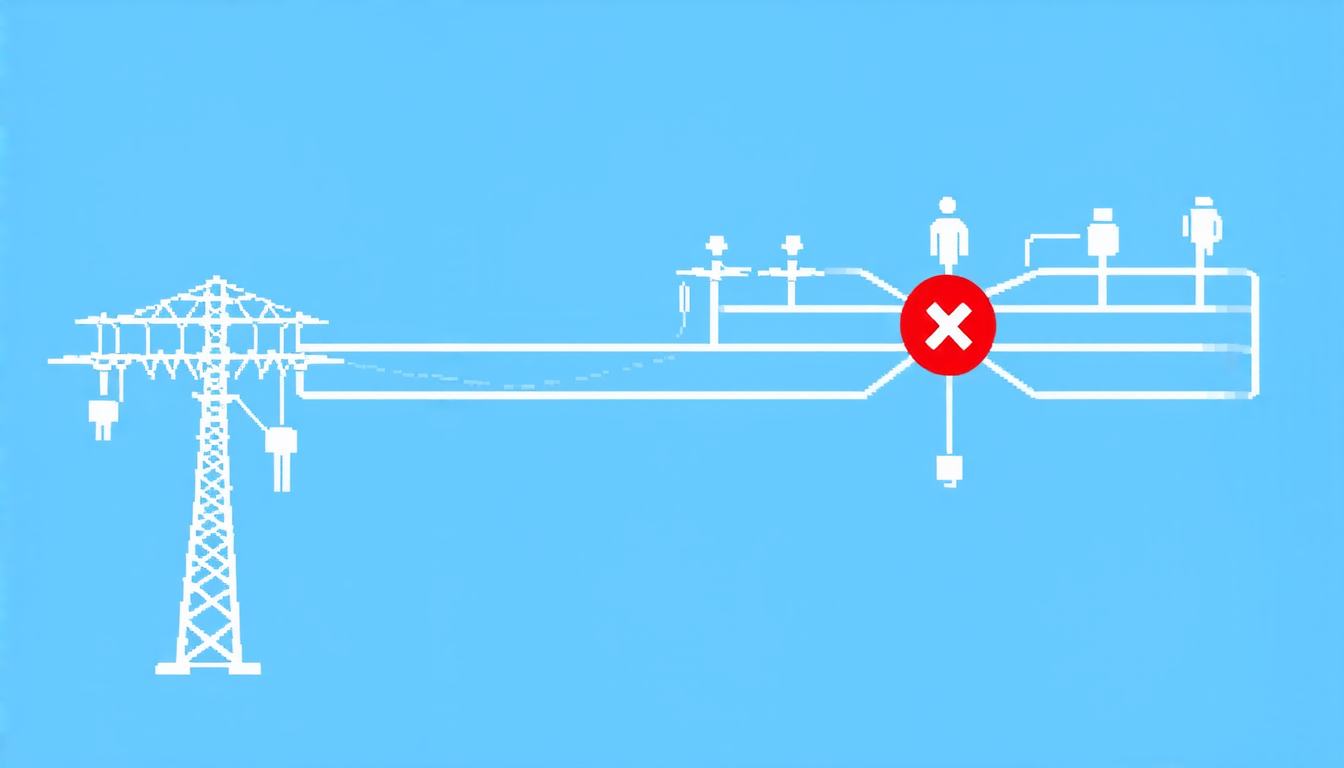
The power grid is a delicate network of interconnected systems that supplies electricity to our homes and businesses. However, when one part of the grid fails, it can trigger a cascade of failures that spread rapidly across the entire system. This phenomenon, known as a cascading failure, has the potential to cause widespread blackouts and economic disruption.
Researchers have long sought to understand the underlying mechanisms that drive these events, but the complexity of the power grid has made it challenging to model and predict them accurately. The latest study uses a novel approach to analyze the interactions between different components of the grid, revealing new insights into how failures propagate through the system.
The researchers created a mathematical model of the power grid, using data from real-world events to inform their simulations. They then used this model to simulate the behavior of the grid under different scenarios, including the introduction of random failures or intentional attacks on key components.
By analyzing the results of these simulations, the researchers were able to identify patterns and trends that help explain how cascading failures occur. For example, they found that certain types of failures are more likely to trigger a cascade than others, and that the timing and location of failures can have a significant impact on the overall behavior of the grid.
The study also highlights the importance of understanding the interactions between different components of the grid. The researchers found that the failure of one component can have far-reaching consequences for other parts of the system, making it essential to consider these interactions when designing and operating the grid.
While the study’s findings may seem complex, they have important implications for the way we manage and maintain our power grids. By better understanding the dynamics of cascading failures, utilities and policymakers can develop more effective strategies for preventing or mitigating these events.
For example, the researchers suggest that identifying and isolating critical components of the grid could help prevent failures from spreading. They also propose developing more robust and resilient systems, such as those that incorporate advanced technologies like smart grids and energy storage.
Ultimately, the study’s findings have significant implications for our ability to maintain a reliable and efficient power supply. By advancing our understanding of cascading failures, we can take steps to ensure that our power grid remains safe, secure, and resilient in the face of uncertainty.
Cite this article: “Unlocking the Secrets of Cascading Failures in Power Grids: A Stochastic Interaction Graph Approach”, The Science Archive, 2025.
Power Grid, Failures, Cascading Failure, Blackouts, Economic Disruption, Mathematical Model, Simulations, Patterns, Trends, Resilience





