

Thursday 10 April 2025
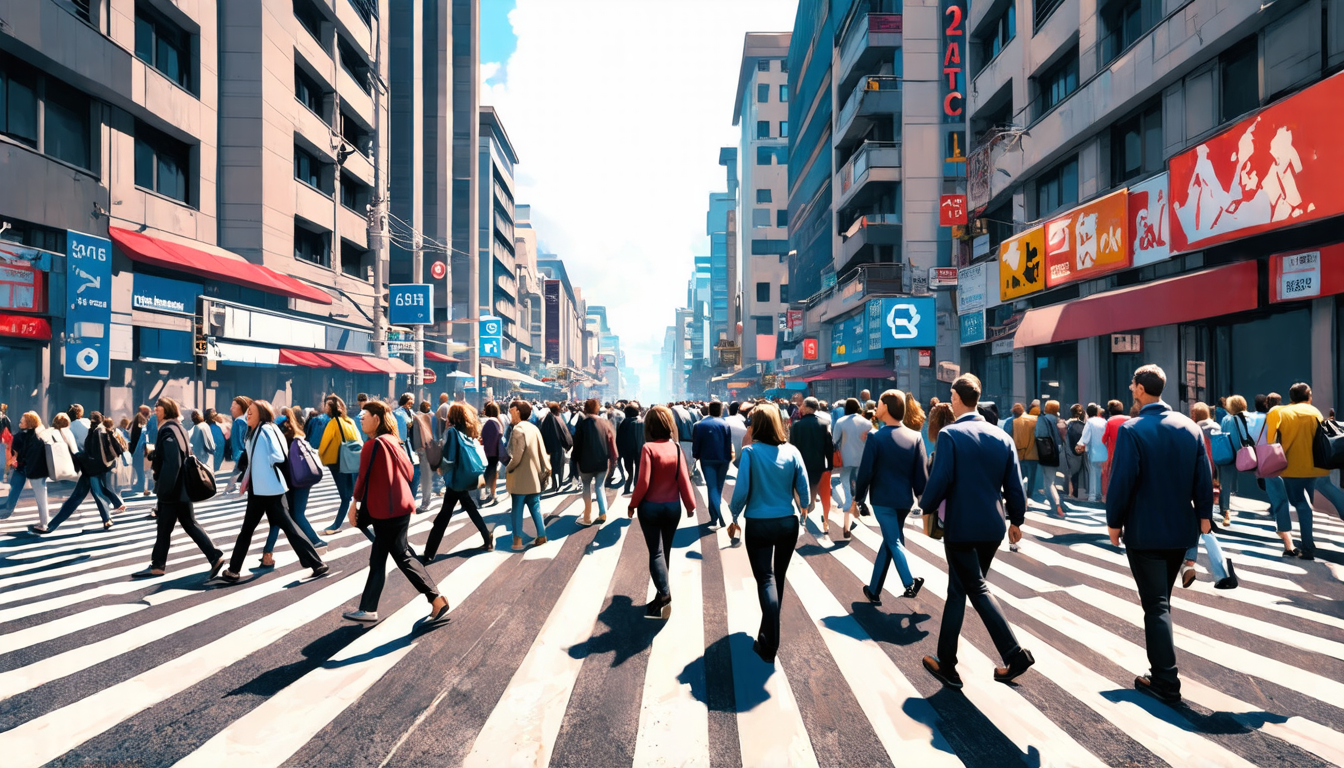
Scientists have long been fascinated by the complex patterns of human motion, particularly in crowded spaces like streets and stadiums. Predicting how people will move in these environments is crucial for designing efficient transportation systems, managing crowds at events, and even improving our understanding of social behavior.
Recently, researchers have made significant progress in developing algorithms that can accurately forecast human trajectories. One such approach, called MoFlow, uses a combination of machine learning techniques and physical modeling to predict the movements of individuals in complex environments.
MoFlow works by first identifying key patterns and relationships between people’s movements. This is achieved through the use of neural networks, which are trained on large datasets of video recordings or sensor readings. The algorithm then uses these patterns to generate predictions about how each individual will move over time.
One of the most innovative aspects of MoFlow is its ability to incorporate social interactions into its predictions. Unlike other algorithms that focus solely on individual movements, MoFlow takes into account the ways in which people’s actions are influenced by those around them. For example, if a person is walking down a crowded street and sees someone else approaching from the opposite direction, they may adjust their own speed or path to avoid collision.
MoFlow has been tested on a variety of datasets, including videos of pedestrians in urban areas and basketball games. In each case, the algorithm was able to generate accurate predictions about how individuals would move over time. Perhaps most impressively, MoFlow was able to accurately forecast the movements of multiple people simultaneously, even when they were interacting with one another.
The potential applications of MoFlow are vast. For example, city planners could use the algorithm to design more efficient transportation systems and pedestrian-friendly infrastructure. Event organizers could use it to manage crowds at concerts or sports games, reducing the risk of overcrowding and improving public safety. And social scientists could use it to better understand the complex dynamics of human social behavior.
MoFlow is not without its limitations, however. For one thing, it requires large amounts of data to train its neural networks. This can be a challenge in environments where there are limited video recordings or sensor readings available. Additionally, MoFlow’s predictions may not always account for unexpected events or changes in the environment.
Despite these challenges, MoFlow represents an important step forward in our ability to understand and predict human motion. As researchers continue to refine and improve the algorithm, we can expect to see even more innovative applications across a range of fields.
Cite this article: “Flow-Based Model Distillation for Human Trajectory Forecasting”, The Science Archive, 2025.
Here Are The Keywords: Human Motion, Prediction, Machine Learning, Physical Modeling, Neural Networks, Social Interactions, Crowd Management, Event Planning, Transportation Systems, Pedestrian Behavior





