

Thursday 10 April 2025
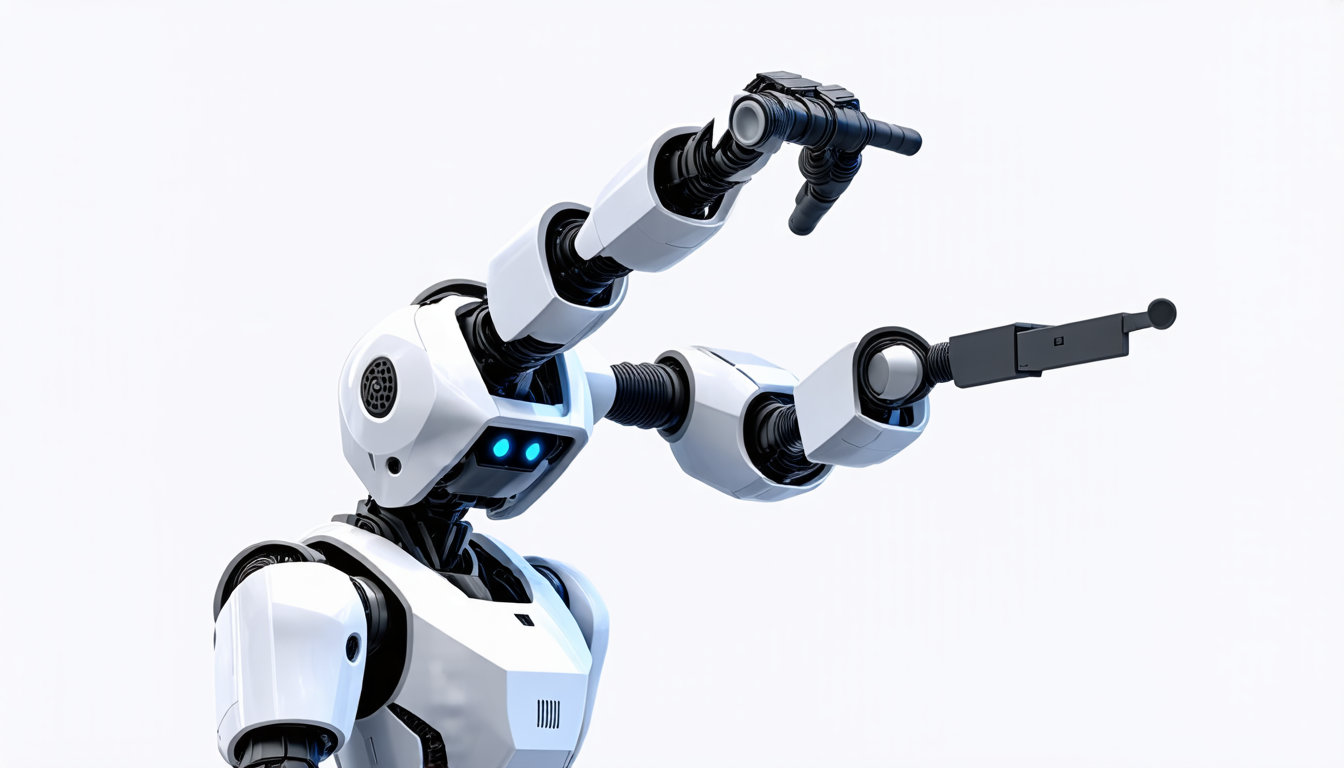
Robots have long been a staple of science fiction, but in recent years they’ve become increasingly sophisticated and ubiquitous. From assembly lines to hospitals, robots are being used to perform tasks that were once the exclusive domain of humans. But what about when we want our robots to move like us? To dance, to gesture, to convey emotion? Until recently, this was a challenge that had stumped robotics engineers.
Enter the world of expressive motion generation. This field involves training robots to mimic human movements, not just in terms of physical accuracy but also in terms of emotional resonance. It’s a complex problem, requiring a deep understanding of human psychology and physiology, as well as advanced algorithms and machine learning techniques.
One approach is to use data-driven methods, where robots are trained on large datasets of human motion capture recordings. These datasets can be used to generate robotic movements that are both physically accurate and emotionally expressive. For example, a robot might learn to mimic the subtle gestures of a human speaker, conveying emotions like excitement or boredom through its movement.
Another approach is to use generative models, which allow robots to create their own movements based on input from sensors and other sources. These models can be trained using machine learning algorithms that learn to recognize patterns in human motion, allowing the robot to generate novel and creative movements.
The benefits of expressive motion generation are numerous. For one, it allows humans to interact with robots in a more natural and intuitive way. It also opens up new possibilities for robot-assisted therapy, education, and entertainment. And from a technical standpoint, it requires the development of advanced algorithms and machine learning techniques that can be applied to a wide range of robotics applications.
One challenge facing robotics engineers is the need to balance physical accuracy with emotional expression. A robot might be able to mimic human movements perfectly, but if it doesn’t convey emotion in the same way, the interaction will feel robotic and unengaging. To overcome this challenge, researchers are developing new algorithms that can learn to recognize and generate emotions in addition to physical movements.
Another challenge is ensuring that robots can move safely and efficiently in complex environments. This requires developing advanced control systems that can handle unexpected obstacles and changes in the environment, while also maintaining a sense of fluidity and naturalness in the robot’s movement.
Despite these challenges, researchers are making rapid progress in the field of expressive motion generation.
Cite this article: “Real-Time Expressive Motion Interaction with a 6-DOF Companion Robotic Arm Using Generative Models and Optimization Techniques”, The Science Archive, 2025.
Robotics, Expressive Motion Generation, Human-Robot Interaction, Machine Learning, Algoriithms, Emotion Recognition, Physical Accuracy, Natural Movement, Safety, Efficiency.





