
Thursday 10 April 2025
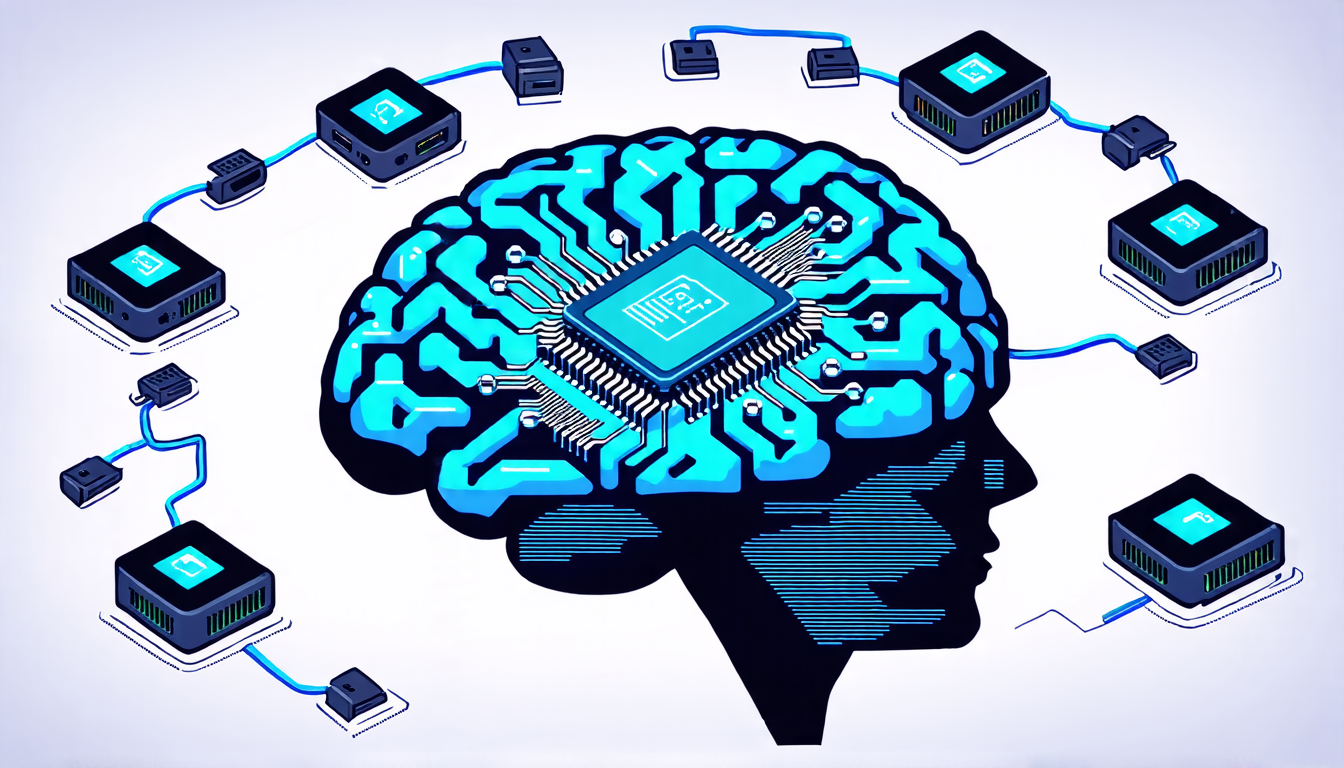
As we increasingly rely on wearable devices and brain-computer interfaces to monitor our health and control machines, the need for efficient data compression techniques has become more pressing than ever. A team of researchers has developed a novel approach that combines the power of artificial intelligence and signal processing to compress electroencephalography (EEG) signals – the electrical activity of the brain – with unprecedented efficiency.
The new method, dubbed AVDCT-Net, uses a multi-channel structure to process EEG data from multiple sources simultaneously. This allows for more effective removal of redundant information and preservation of critical features, leading to better compression ratios and reconstruction accuracy. The model leverages a combination of hard-thresholding nonlinearities and scaling operators to extract important details from the signal.
One of the key innovations is the use of an adaptive filter bank at the fog level, which merges relevant features from adjacent channels into each individual channel. This enhances the robustness and generalization ability of the model, making it more suitable for real-world applications.
The researchers tested AVDCT-Net on two public datasets – BCI2 and BCI3 – and compared its performance to several state-of-the-art methods. The results showed that AVDCT-Net achieved superior compression efficiency and reconstruction accuracy, with a compression ratio of up to 14.89 without compromising classification accuracy.
The potential applications of AVDCT-Net are vast. In medical settings, it could enable the efficient transmission of EEG data for remote monitoring or diagnosis, reducing the burden on healthcare systems. In industrial contexts, it could facilitate the control of machines and devices using brain-computer interfaces, improving productivity and worker safety.
The development of AVDCT-Net represents a significant step forward in the field of signal processing and compression. As our reliance on wearable devices and brain-computer interfaces continues to grow, this technology has the potential to play a critical role in shaping the future of healthcare and industry alike.
Cite this article: “Unlocking Efficient EEG Data Compression for Edge-Fog Computing: A Novel Asymmetrical Variational Discrete Cosine Transform Network (AVDCT-Net)”, The Science Archive, 2025.
Eeg Signals, Artificial Intelligence, Signal Processing, Data Compression, Brain-Computer Interfaces, Wearable Devices, Electroencephalography, Avdct-Net, Neural Networks, Biomedical Engineering