

Thursday 10 April 2025
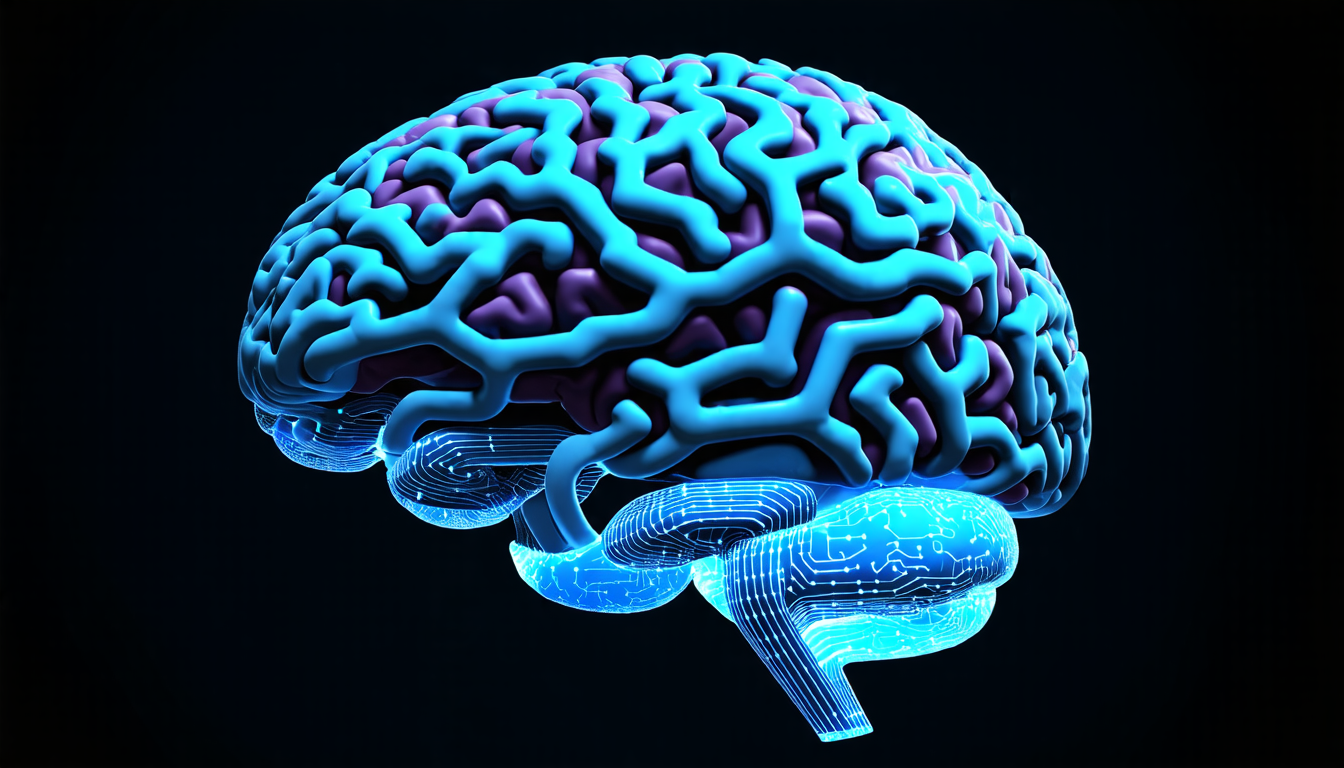
Researchers have made a significant breakthrough in the field of neuroscience, developing a machine learning algorithm that can reconstruct 3D images of the brain without requiring a reference image. This innovative technology has the potential to revolutionize our understanding of the human brain and its complex functions.
The algorithm, known as RefFree, uses synthetic data generated from magnetic resonance imaging (MRI) scans to train a neural network. This allows the system to learn patterns and features that are specific to the brain’s structure and function. By analyzing 2D photographs taken during brain dissection, RefFree can accurately estimate the 3D coordinates of each pixel in the image.
One of the key challenges faced by researchers is the lack of available data for training neural networks. Traditional approaches rely on large amounts of labeled data, which can be time-consuming and expensive to collect. By using synthetic data, RefFree overcomes this limitation, allowing it to learn from a much larger dataset.
The algorithm’s ability to reconstruct 3D images without a reference image has significant implications for neuroscience research. It enables researchers to analyze the brain’s structure and function at a level of detail that was previously impossible. This could lead to a better understanding of neurological disorders such as Alzheimer’s disease, Parkinson’s disease, and depression.
RefFree also has potential applications in other fields, such as medical imaging and computer vision. By developing more accurate and efficient algorithms for reconstructing 3D images from 2D data, researchers can improve the diagnosis and treatment of a wide range of diseases and conditions.
The development of RefFree is a testament to the power of machine learning and its ability to transform our understanding of complex systems. As researchers continue to refine this technology, we can expect to see even more innovative applications in the future.
RefFree has been tested on a variety of brain images, including those with different levels of resolution and quality. The results show that the algorithm is able to accurately reconstruct 3D images from even low-quality data, making it a valuable tool for researchers working with limited resources.
In addition to its potential applications in neuroscience research, RefFree has also been shown to be effective in analyzing other types of medical imaging data, such as MRI scans and CT scans. This suggests that the algorithm could have a wide range of applications across various fields of medicine.
Overall, RefFree is an exciting development that has the potential to revolutionize our understanding of the human brain and its complex functions.
Cite this article: “Unlocking the Secrets of Brain Dissection: A Machine Learning Breakthrough in 3D Reconstruction”, The Science Archive, 2025.
Neuroscience, Machine Learning, Algorithm, 3D Image Reconstruction, Brain Imaging, Magnetic Resonance Imaging, Neural Network, Synthetic Data, Computer Vision, Medical Imaging





