

Thursday 10 April 2025
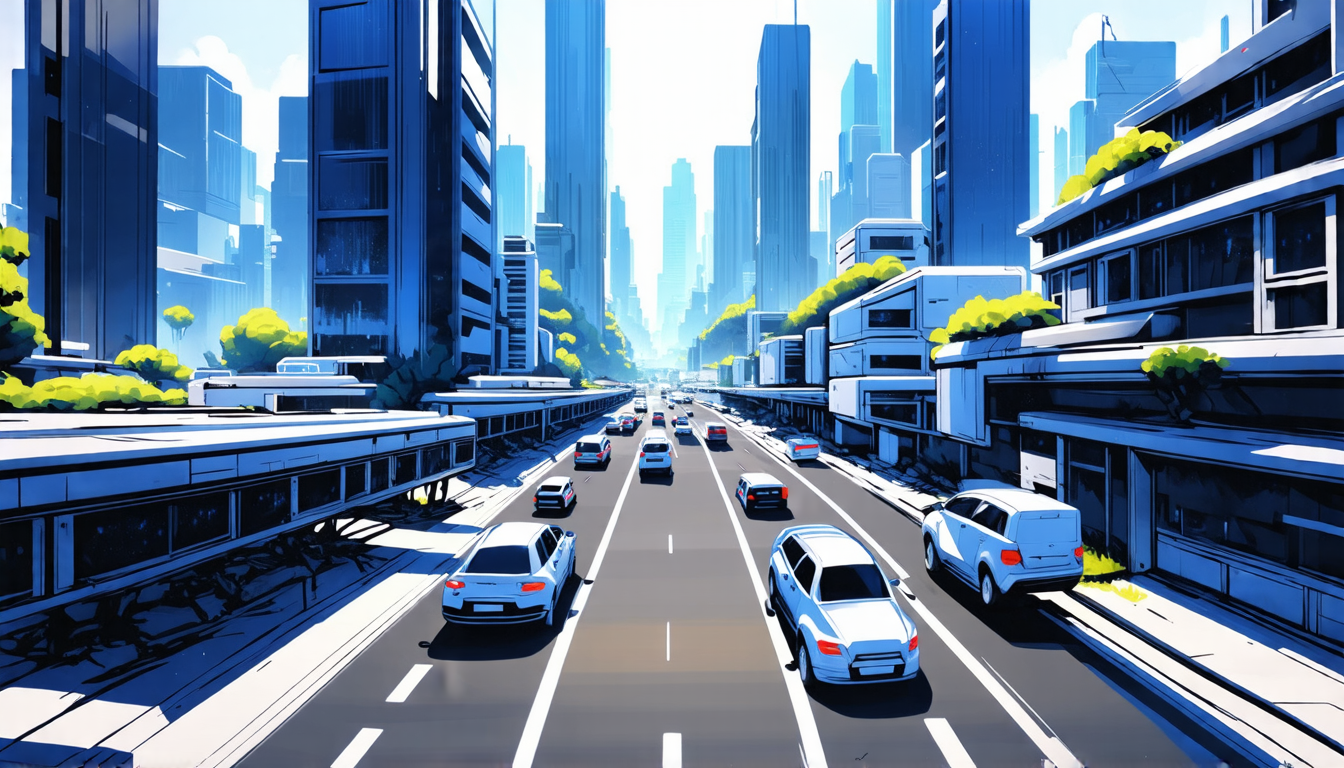
The future of urban mobility is looking up, thanks to a new approach that combines artificial intelligence and real-time traffic data to optimize traffic flow. The concept is simple: by analyzing traffic patterns in real-time and adjusting routing accordingly, cities can reduce congestion, lower emissions, and make commutes more efficient.
At the heart of this system are connected and automated vehicles (CAVs), which use sensors and GPS to communicate with each other and the infrastructure around them. This allows for the creation of a dynamic, constantly adapting network that can respond to changing traffic conditions in real-time.
The system uses a hierarchical approach, dividing tasks into two levels: upper-level routing and lower-level trajectory planning. The former is responsible for distributing traffic flow across the city, while the latter focuses on optimizing individual vehicle trajectories. This allows for a more efficient use of resources and reduces congestion by minimizing the number of vehicles on the road at any given time.
One key innovation in this system is its ability to predict when traffic will become congested, allowing for proactive measures to be taken. By analyzing real-time traffic data and incorporating it into the routing algorithm, the system can identify potential bottlenecks and adjust routes accordingly. This not only reduces congestion but also lowers emissions by minimizing the number of vehicles stuck in traffic.
The benefits of this approach are numerous. For one, it can significantly reduce travel times, making commutes more efficient and reducing stress. It also has the potential to lower emissions and improve air quality, making cities cleaner and healthier. Additionally, the system’s ability to adapt to changing traffic conditions means that it can respond quickly and effectively to unexpected events like accidents or road closures.
While this system is still in its early stages, the potential for widespread adoption is significant. As CAVs become more prevalent on our roads, the infrastructure to support them will need to be developed. This system provides a blueprint for how cities can build a more efficient, sustainable transportation network that benefits both drivers and the environment.
The next step will be testing this approach in real-world scenarios, refining its algorithms and optimizing its performance. But with its potential to transform urban mobility, it’s an exciting development that has the potential to change the way we travel for years to come.
Cite this article: “Revolutionizing Urban Traffic Flow: A Novel Framework for Cooperative Routing and Trajectory Planning in Connected and Automated Vehicles”, The Science Archive, 2025.
Urban Mobility, Artificial Intelligence, Real-Time Traffic Data, Connected Vehicles, Automated Vehicles, Congestion Reduction, Emissions Lowering, Air Quality Improvement, Trajectory Planning, Routing Optimization.





