

Thursday 10 April 2025
The quest for a practical quantum computer has been an elusive one, with many promising approaches faltering in their attempts to overcome the significant challenges of noise and error correction. But a new paper offers hope that we may finally be on the cusp of a breakthrough.
The researchers behind this latest effort have focused on one of the most critical components of Shor’s algorithm, a quantum factoring method that could potentially break many modern encryption schemes. Modular exponentiation is a crucial step in this process, and until now, it has been difficult to implement efficiently using current quantum computing technology.
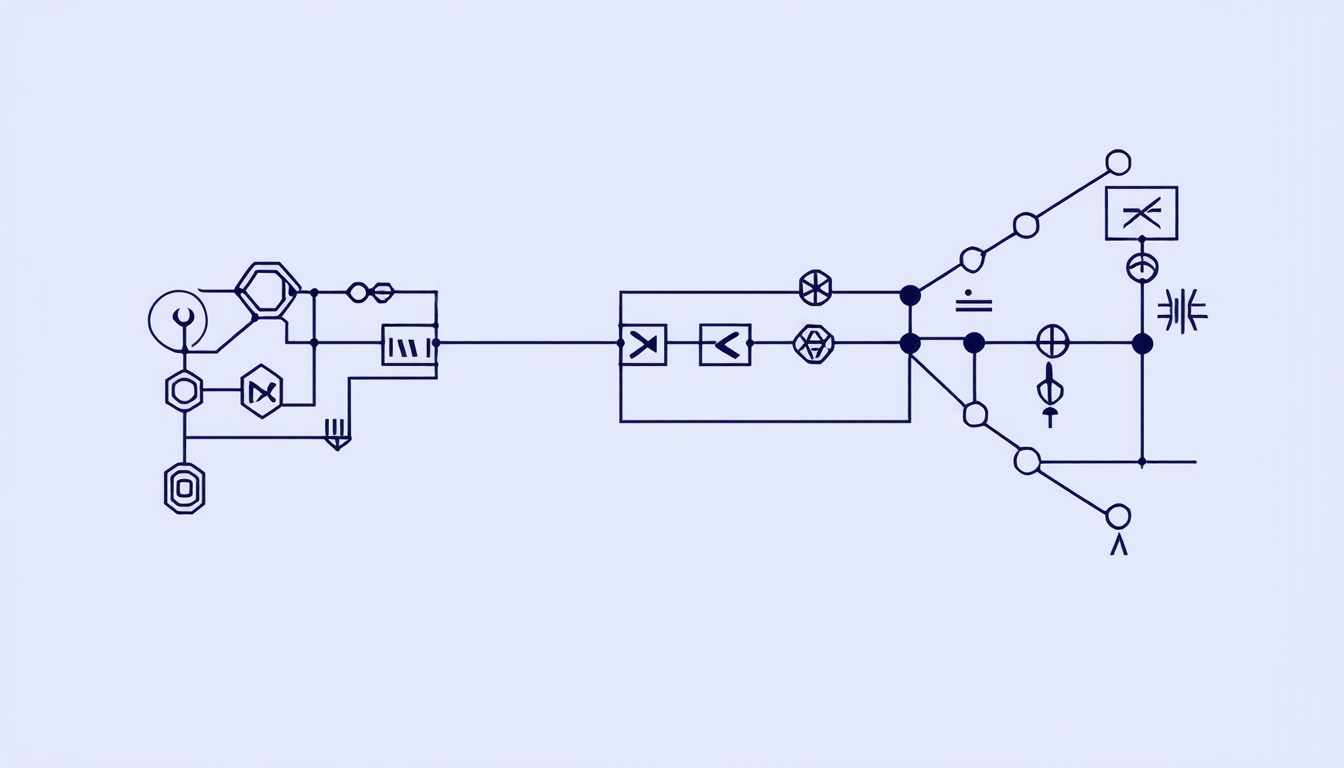
The team’s solution involves modifying Kitaev’s algorithm for Fourier transform on the Abelian group ZN, which allows them to construct a modular multiplication operator that can be implemented using standard quantum circuit components. This approach not only reduces the number of qubits required but also simplifies the overall circuit design.
One of the key advantages of this method is its ability to reuse the structure of a single QFT implementation for modular multiplication, making it more feasible for near-term experimental implementations. While the complexity of their circuit is still O(L3), where L is the number of bits required to store the number being factored, this represents a significant improvement over previous proposals.
The implications of this work are substantial. If successfully implemented, it could pave the way for a practical quantum computer capable of breaking certain encryption schemes, which would have far-reaching consequences for cryptography and cybersecurity. Moreover, the techniques developed in this study may also be applicable to other areas of quantum computing, such as quantum simulation and machine learning.
Despite the challenges still facing quantum computing, this research offers a glimmer of hope that we are making progress towards a more practical and powerful technology. As researchers continue to push the boundaries of what is possible with quantum computers, it’s clear that the potential rewards will be well worth the effort.
Cite this article: “Quantum Leap Forward: New Circuit Design Boosts Factorization Speed by Orders of Magnitude”, The Science Archive, 2025.
Quantum Computing, Shor’S Algorithm, Modular Exponentiation, Kitaev’S Algorithm, Fourier Transform, Abelian Group, Zn, Quantum Circuit Components, Encryption Schemes, Cryptography





