
Thursday 10 April 2025
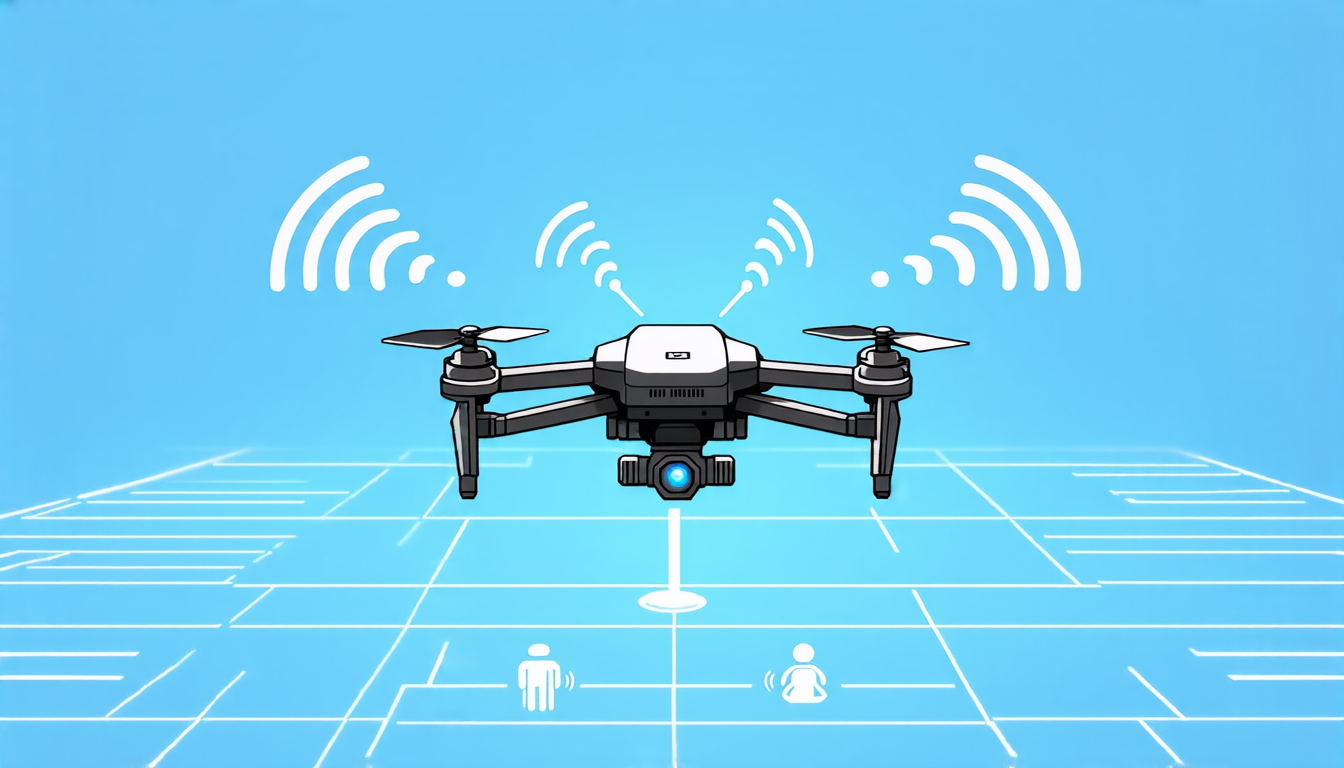
Researchers have made a significant breakthrough in the field of wireless communication, developing a new technology that can simultaneously transmit data and detect targets using a single signal. This innovative approach has far-reaching implications for various applications, including military surveillance, navigation, and even autonomous vehicles.
The key to this achievement lies in the use of a waveform called Affine Frequency Division Multiplexing (AFDM), which allows for the transmission of multiple signals simultaneously. By modulating the frequency and amplitude of the signal, AFDM enables data transmission while also generating a unique signature that can be used for target detection.
One of the most impressive aspects of this technology is its ability to adapt to changing environments. The researchers have developed an algorithm that can adjust the waveform in real-time to compensate for factors such as interference and channel distortions. This means that the system can maintain a high level of accuracy even in challenging conditions, making it ideal for use in complex scenarios.
The potential applications of this technology are vast. In the military, AFDM could be used for surveillance and reconnaissance missions, allowing troops to detect and track targets more effectively. For autonomous vehicles, the technology could enable advanced navigation systems that can adapt to changing road conditions and traffic patterns.
But what’s truly remarkable about this breakthrough is its ability to integrate multiple functions into a single signal. This means that AFDM could potentially replace a range of separate systems, such as radar and communication equipment, with a single device. The implications for size, weight, and power consumption are significant, making it an attractive solution for applications where space and energy efficiency are critical.
The researchers have also explored the use of AFDM in conjunction with other technologies, such as compressed sensing. This enables even more efficient data transmission and target detection, while also reducing the amount of processing required to analyze the signal.
While this technology is still in its early stages, it has the potential to revolutionize the way we communicate and detect targets. As researchers continue to develop and refine AFDM, we can expect to see a range of innovative applications emerge that will transform industries and improve our daily lives.
Cite this article: “Unlocking High-Mobility Communications: Off-Grid SBL-Based Target Sensing in AFDM-ISAC Systems”, The Science Archive, 2025.
Wireless Communication, Afdm, Target Detection, Data Transmission, Military Surveillance, Navigation, Autonomous Vehicles, Radar, Compressed Sensing, Signal Processing.