

Thursday 10 April 2025
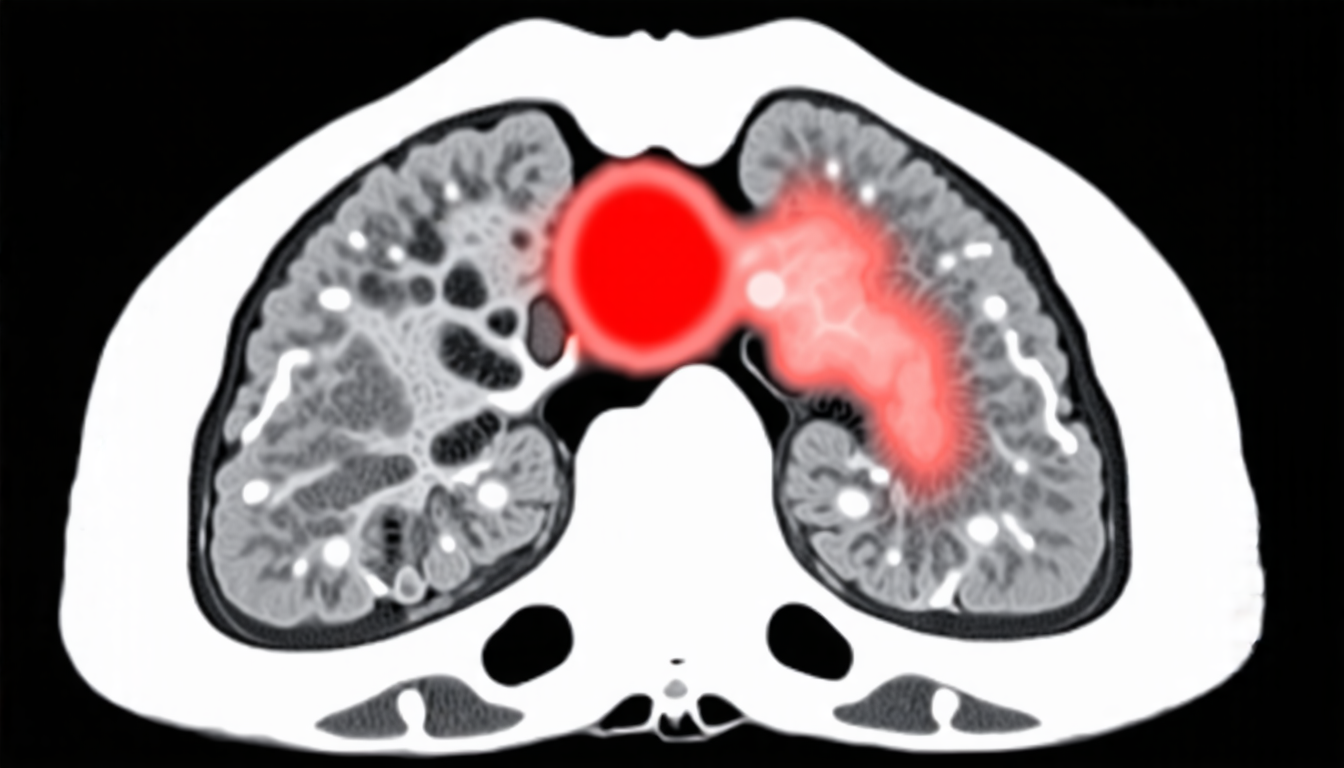
Deep learning has made tremendous progress in recent years, and its applications are becoming increasingly diverse. One area where it’s having a significant impact is medical imaging. Researchers have been using deep learning to improve the accuracy of diagnoses, particularly when it comes to detecting lung nodules.
Lung nodules can be benign or malignant, and identifying them early on is crucial for effective treatment. Currently, doctors use computer-aided detection (CAD) systems to help identify these nodules. However, these systems are not always accurate, leading to false positives and missed diagnoses.
To address this issue, a team of researchers has developed a new deep learning model called CPYOLO. This model uses a combination of techniques, including convolutional neural networks (CNNs) and region proposal networks (RPNs), to detect lung nodules with high accuracy.
One of the key challenges in developing this model was dealing with the variability in nodule size, shape, and location within CT scans. To address this, the researchers used a technique called multi-scale feature fusion, which allows the model to capture features at different scales. This is particularly useful for detecting small nodules that may be difficult to spot.
Another challenge was handling noisy data, which can occur when CT scans are taken in different environments or using different machines. To address this, the researchers used a technique called C2f_RepViT, which helps to reduce noise and improve image quality.
The CPYOLO model has been tested on a large dataset of CT scans and has shown promising results. In tests, it was able to detect lung nodules with an accuracy rate of over 90%, outperforming other state-of-the-art models in the field.
But what does this mean for patients? The development of accurate deep learning models like CPYOLO could lead to earlier detection of lung cancer and better treatment outcomes. It’s also important to note that these models are not meant to replace human doctors, but rather to assist them in their work.
In addition to its potential medical applications, the CPYOLO model has also been used in other areas such as autonomous vehicles and object detection. Its ability to detect small objects in complex environments makes it a valuable tool for a wide range of industries.
Overall, the development of deep learning models like CPYOLO is an exciting area of research with many potential applications.
Cite this article: “Unlocking Accurate Pulmonary Nodule Detection: A Deep Learning Framework with Multi-Scale Feature Fusion and Nonlinear Feature Learning”, The Science Archive, 2025.
Lung Nodules, Deep Learning, Medical Imaging, Ct Scans, Convolutional Neural Networks, Region Proposal Networks, Multi-Scale Feature Fusion, C2F_Repvit, Cpyolo, Object Detection.





