

Thursday 10 April 2025
Researchers have made a significant breakthrough in the field of artificial intelligence, developing a new framework that enables machines to collaborate more efficiently and effectively. This innovative approach combines reinforcement learning with large language models to create a powerful tool for solving complex problems.
The framework, known as LGC- MARL (Large Language Model-based Graph Collaboration Multi-Agent Reinforcement Learning), uses a combination of machine learning and natural language processing techniques to enable agents to work together seamlessly. By leveraging the strengths of both reinforcement learning and large language models, LGC-MARL is able to tackle tasks that were previously too difficult for machines to accomplish alone.
One of the key advantages of LGC-MARL is its ability to handle complex, real-world scenarios. Unlike traditional AI systems, which are often designed to solve specific, well-defined problems, LGC-MARL is capable of adapting to new situations and learning from experience. This makes it an extremely powerful tool for applications such as robotics, autonomous vehicles, and smart homes.
Another benefit of LGC-MARL is its ability to facilitate communication between agents. By using natural language processing techniques, the framework enables agents to communicate with each other in a way that is both efficient and effective. This allows them to work together more easily, even when they are faced with complex or ambiguous tasks.
The researchers behind LGC-MARL have tested their framework on a variety of scenarios, including robotics, autonomous vehicles, and smart homes. In each case, the results were impressive, with agents able to collaborate successfully and achieve their goals.
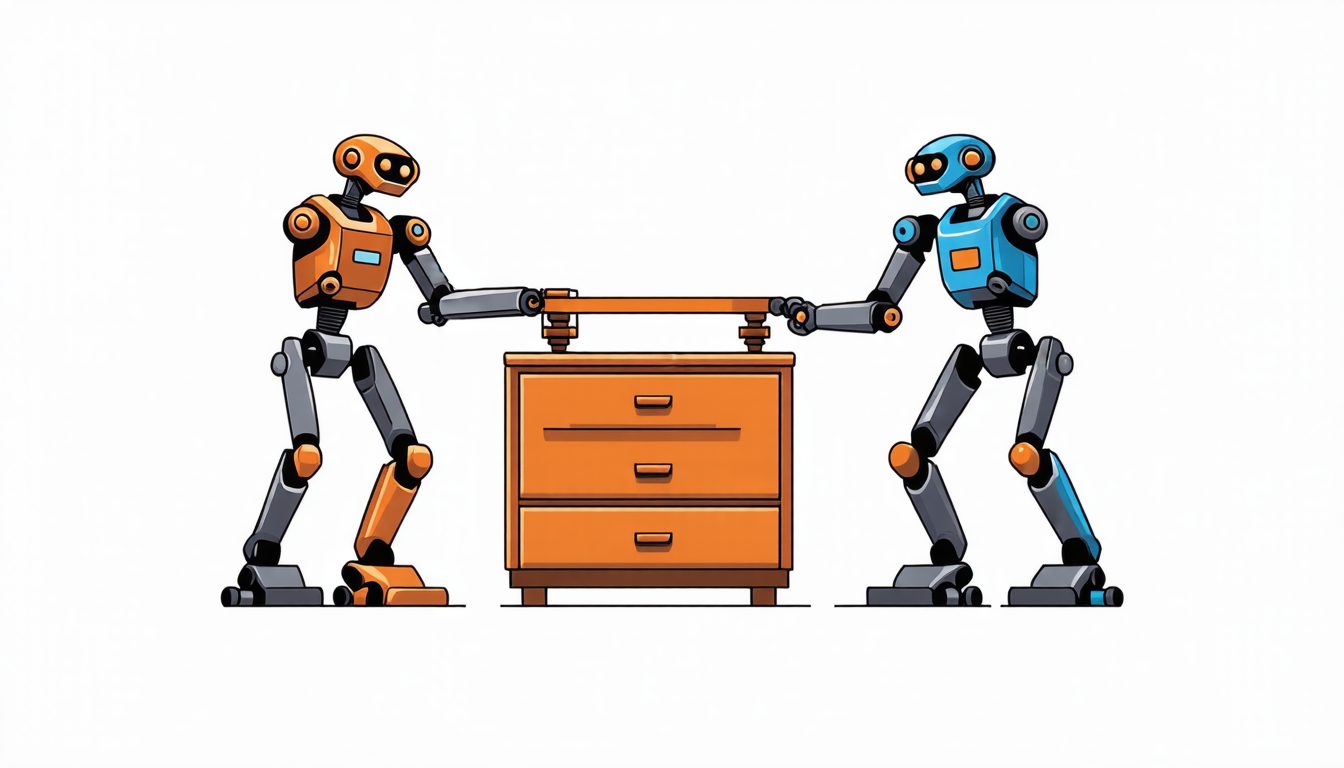
One example of the potential applications of LGC-MARL is in the field of robotics. Imagine a team of robots working together to complete a complex task, such as assembling a piece of furniture or cleaning a room. With LGC-MARL, these robots would be able to communicate with each other and work together seamlessly, allowing them to accomplish tasks that were previously too difficult for individual robots.
Another potential application is in the field of autonomous vehicles. Imagine a fleet of self-driving cars working together to navigate through a complex cityscape. With LGC-MARL, these vehicles would be able to communicate with each other and work together to avoid traffic jams and find the most efficient routes.
The researchers behind LGC-MARL are excited about the potential applications of their framework. They believe that it has the potential to revolutionize the way machines interact with each other and with humans, enabling them to accomplish complex tasks more efficiently and effectively.
Cite this article: “Unlocking Efficient Multi-Agent Collaboration with Large Language Models: A Novel Framework for Robotics and Automation”, The Science Archive, 2025.
Artificial Intelligence, Reinforcement Learning, Large Language Models, Machine Learning, Natural Language Processing, Robotics, Autonomous Vehicles, Smart Homes, Multi-Agent Systems, Collaboration





