

Thursday 10 April 2025
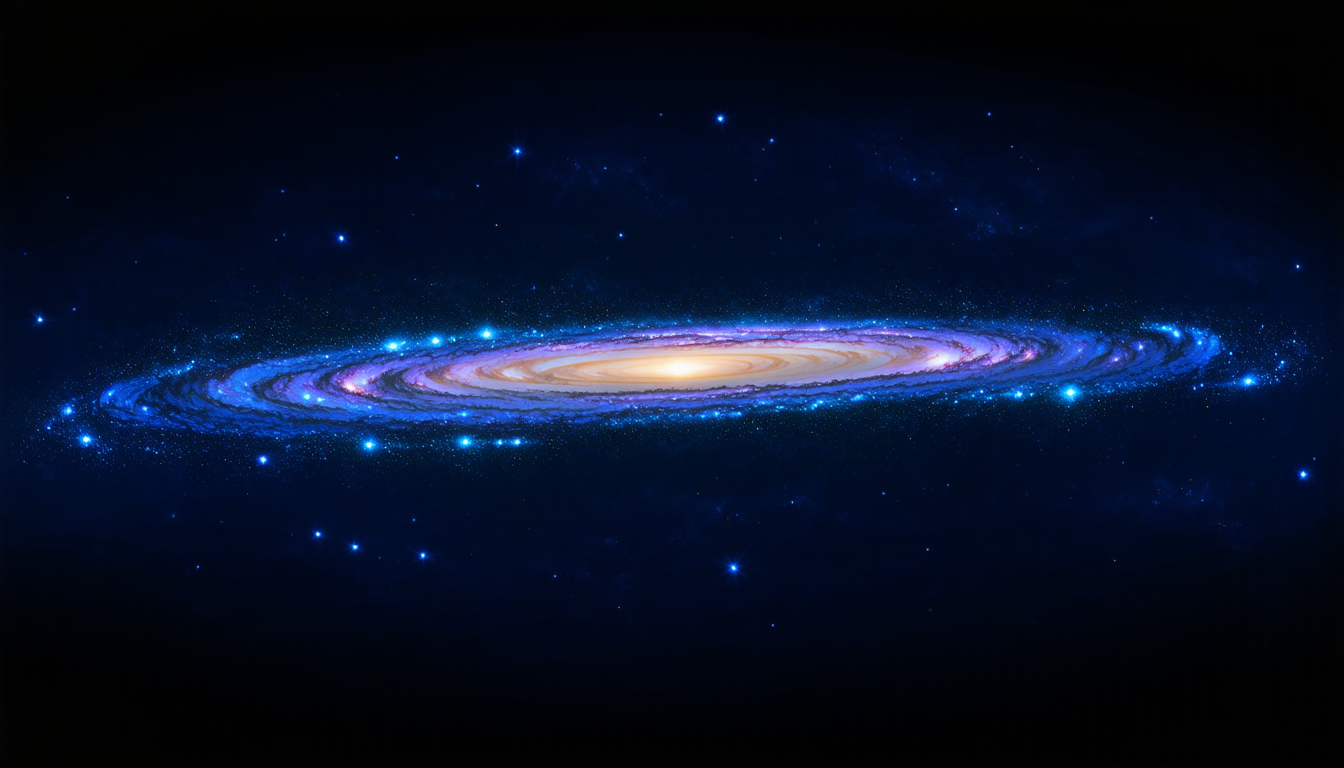
Scientists have made a remarkable discovery about the hot gas surrounding our galaxy, the Milky Way. By using powerful X-ray telescopes, researchers have found evidence of a vast, glowing halo that stretches far beyond our galaxy’s visible boundaries.
This hot gas is known as the circumgalactic medium (CGM), and it’s thought to be a remnant of the galaxy’s formation over billions of years. The CGM is made up of ionized gas, which is plasma that’s been heated by intense radiation from stars and other sources. As this gas moves through space, it interacts with the surrounding environment, influencing the formation of new stars and planets.
The latest findings suggest that the CGM is more extensive than previously thought, stretching out to distances of about 30% beyond the Milky Way’s visible disk. This means that the galaxy’s influence extends much further than we initially thought, shaping the surrounding universe in ways that are still not fully understood.
One of the most fascinating aspects of this research is the way it challenges our understanding of the CGM’s role in the formation of galaxies. For decades, scientists have believed that the CGM plays a crucial part in regulating star formation and galaxy evolution. However, these new findings suggest that the CGM might be more complex than previously thought, with multiple mechanisms at play.
The data collected by the eROSITA telescope provides a unique glimpse into the CGM’s structure and composition. By analyzing the X-ray emissions from hot gas within the CGM, researchers have been able to create detailed maps of its distribution and behavior. These maps reveal a complex network of filaments and bubbles that are thought to be responsible for shaping the galaxy’s evolution.
The study also sheds light on the relationship between the CGM and other components of the galaxy, such as stars, gas, and dark matter. By studying how these different elements interact, scientists can gain a better understanding of the intricate processes that govern galaxy formation and evolution.
Ultimately, this research has significant implications for our understanding of the universe’s largest structures, from individual galaxies to vast galaxy clusters. As we continue to explore the mysteries of the cosmos, discoveries like these remind us of the awe-inspiring complexity and beauty of the universe around us.
Cite this article: “Unlocking the Secrets of Galaxy Halos: A Deep Dive into NGC 50s Hot Gaseous Envelope”, The Science Archive, 2025.
Galaxy, Milky Way, X-Ray Telescopes, Circumgalactic Medium, Ionized Gas, Plasma, Star Formation, Galaxy Evolution, Dark Matter, Erosita Telescope





