

Thursday 10 April 2025
The way we learn about complex networks like social media, traffic patterns, and molecular structures is about to get a major overhaul. A team of researchers has developed a new approach to graph contrastive learning that could revolutionize our understanding of these intricate systems.
At its core, the problem with traditional graph-based machine learning is that it relies on handcrafted features to understand relationships between nodes in a network. But what if we could learn those features automatically? Enter subgraph-orientated learnable augmentation method for graph contrastive learning (SOLA-GCL), a novel approach that uses subgraphs as building blocks for feature representation.
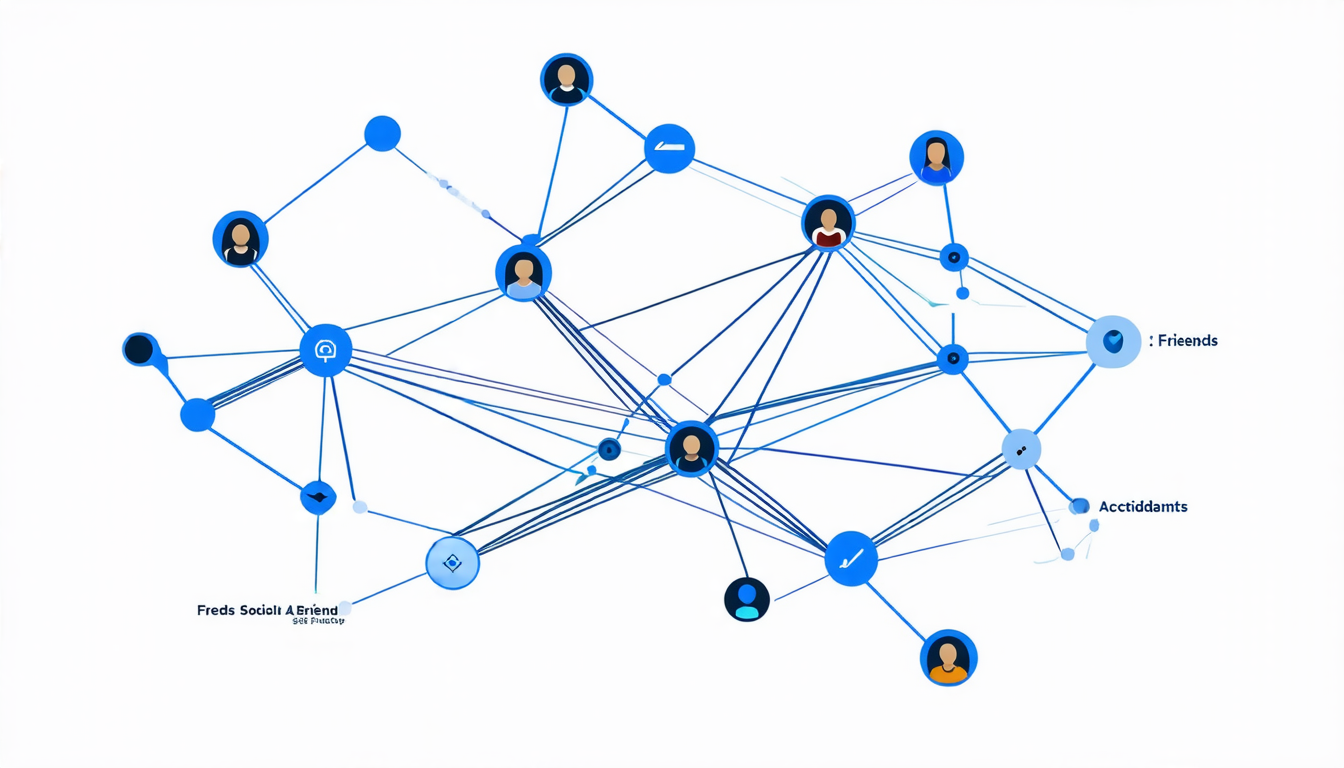
Think of a subgraph like a small, self-contained community within a larger social network. By analyzing these smaller groups, the algorithm can identify patterns and relationships that might be missed by looking at the entire network at once. This is particularly useful when dealing with large-scale networks where manual feature engineering becomes impractical.
The key innovation in SOLA-GCL lies in its ability to jointly train two components: a subgraph augmentation selector and a subgraph view generator. The former determines which subgraphs are most informative for learning, while the latter generates new views of these subgraphs by perturbing them with noise or other transformations.
This process is repeated multiple times, allowing the algorithm to learn from diverse representations of the same subgraphs. As a result, SOLA-GCL can generate rich feature representations that capture intricate patterns and relationships within the network.
The researchers tested SOLA-GCL on a range of datasets, including social networks, traffic patterns, and molecular structures. The results are impressive: in many cases, SOLA-GCL outperformed state-of-the-art methods by significant margins.
One of the most exciting applications of SOLA-GCL is in the field of graph-based anomaly detection. By identifying unusual patterns within a network, the algorithm can help detect malicious activity, predict traffic congestion, or identify potential health risks.
While there’s still much to be explored in this area, the potential impact of SOLA-GCL on our understanding and manipulation of complex networks is undeniable. As we continue to grapple with the complexities of modern data analysis, approaches like SOLA-GCL will play a vital role in helping us make sense of it all.
In the coming years, we can expect to see SOLA-GCL applied to a wide range of applications, from social media recommendation systems to traffic management and beyond.
Cite this article: “Boosting Graph Contrastive Learning with Subgraph-Augmented Views”, The Science Archive, 2025.
Graph Contrastive Learning, Machine Learning, Subgraphs, Feature Representation, Graph-Based Anomaly Detection, Social Networks, Traffic Patterns, Molecular Structures, Sola-Gcl, Network Analysis.





