

Thursday 10 April 2025
As we rely increasingly on renewable energy sources, our power grids are undergoing a major transformation. Once a straightforward system of generating and distributing electricity, the grid is now a complex network that must adapt to fluctuations in wind and solar power output. One key player in this transition is the grid-forming converter, a device that helps ensure a stable flow of electricity by mimicking the behavior of traditional generators.
But what happens when the grid faces a sudden shock, such as a fault or a surge in demand? Grid-forming converters must be able to respond quickly and safely to prevent damage to equipment and disruption to service. This is where safety filters come in – specialized systems that detect potential problems and intervene to protect the grid.
A new study has shed light on the development of advanced safety filters for grid-forming converters. Researchers have created a sophisticated system that combines mathematical techniques with real-time data from sensors to predict and prevent faults. The result is a more reliable, efficient, and resilient power grid.
The key innovation lies in the use of control barrier functions – mathematical formulas that describe the safe operating limits of the converter. By monitoring the converter’s behavior and comparing it to these limits, the safety filter can intervene before a fault occurs, making adjustments to ensure the system remains stable.
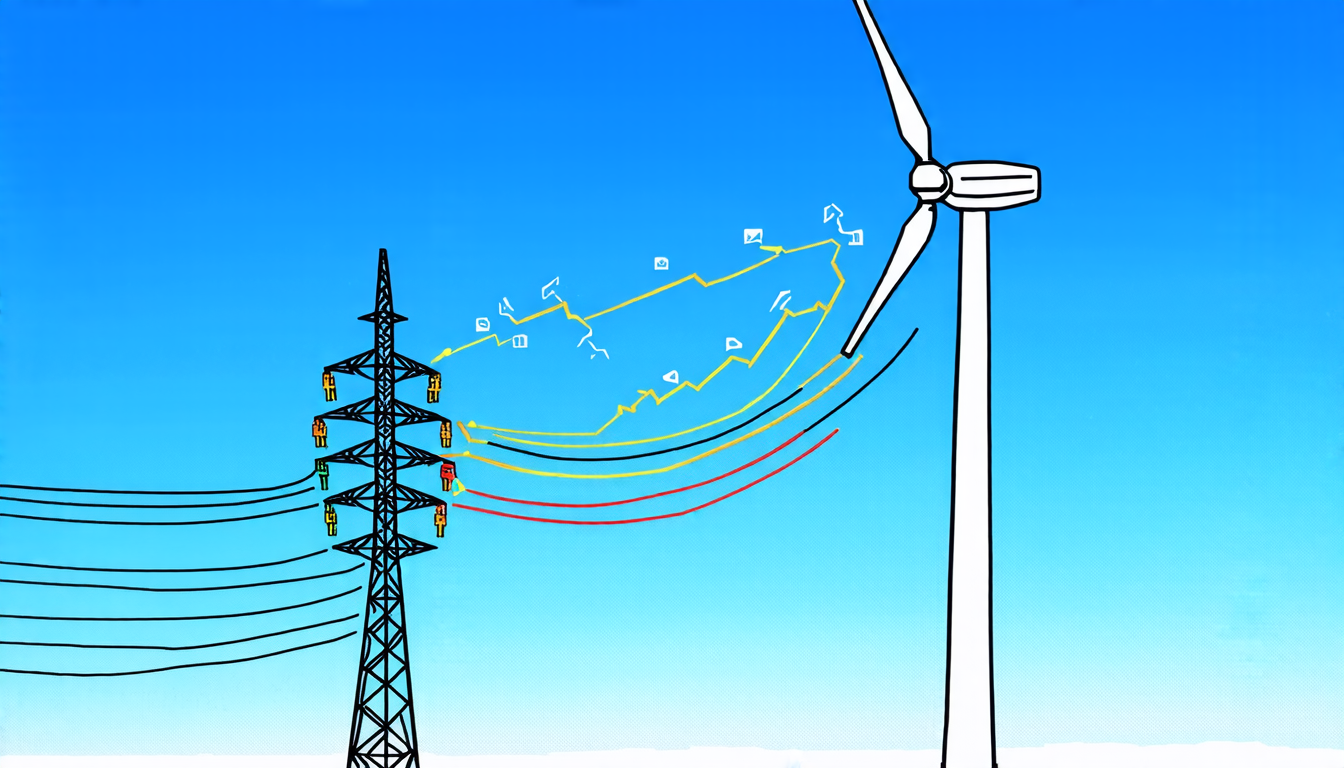
But how does this work in practice? Let’s consider an example: a wind farm connected to the grid via a grid-forming converter. When a sudden gust of wind causes the turbines to generate more power than usual, the converter must adjust its output to match the changing demand. The safety filter comes into play by monitoring the converter’s behavior and detecting any signs of instability.
If the filter detects a potential fault, it can intervene by adjusting the converter’s output or even shutting it down temporarily to prevent damage. This allows the grid to continue functioning smoothly, without disrupting service to consumers.
The benefits of this advanced safety filter are twofold. First, it reduces the risk of equipment failure and extends the lifespan of the grid-forming converters. Second, it enables the grid to operate more efficiently, with less waste and fewer interruptions.
As our power grids become increasingly complex, the need for sophisticated safety systems like this one will only continue to grow. By developing advanced technologies like control barrier functions and real-time monitoring, we can build a smarter, more resilient energy infrastructure that serves us well into the future.
Cite this article: “Enhancing Grid Stability through Advanced Safety Filtering Techniques in Grid-Forming Converters”, The Science Archive, 2025.
Grid-Forming Converter, Renewable Energy, Power Grid, Fault Detection, Safety Filter, Control Barrier Function, Mathematical Modeling, Real-Time Monitoring, Wind Farm, Energy Infrastructure





