

Friday 11 April 2025
Scientists have made a significant breakthrough in understanding how radio signals interact with trees and other vegetation, which could have major implications for wireless communication technology.
Radio signals are an essential part of our daily lives, allowing us to communicate with each other wirelessly. However, these signals can be disrupted by obstacles such as buildings, hills, and even trees. For years, researchers have been trying to understand how radio signals behave in different environments, but there is still much to be learned.
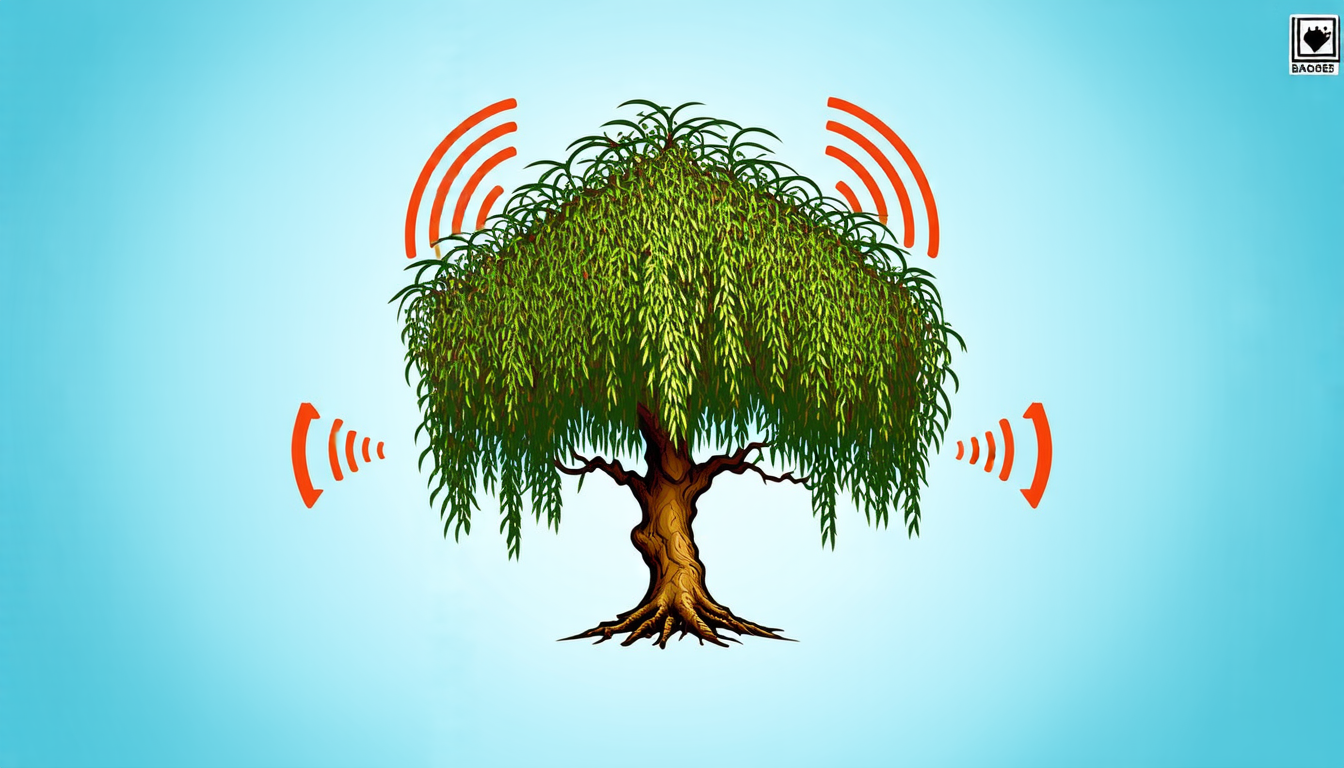
A recent study published in a scientific journal has shed new light on the interaction between radio signals and vegetation. The research focused on a single deciduous tree, specifically a willow, and measured how its leaves and branches affected the signal strength as it passed through.
The results were surprising: the researchers found that the signal strength was much higher when the receiver was positioned directly opposite the transmitter, than when it was at an angle. This suggests that the tree’s foliage is playing a significant role in scattering the radio waves, rather than just absorbing them.
But what does this mean for wireless communication? The discovery could have major implications for the development of new technologies such as 5G and millimeter wave networks. By understanding how trees affect radio signals, engineers can design more efficient networks that take into account the impact of vegetation on signal strength.
The study also highlights the importance of considering the environment in which wireless communication takes place. In urban areas, where buildings and trees are abundant, signal strength can be significantly affected by these obstacles. By taking this into account, network designers can create more reliable and efficient networks that work better for users.
The research is not limited to just understanding how radio signals interact with vegetation. It also has implications for other fields such as environmental monitoring and agriculture. For example, scientists could use this technology to monitor the health of trees by analyzing changes in their foliage’s impact on radio signals.
As we continue to rely more heavily on wireless communication, it is essential that we understand the complex interactions between radio signals and the environment. This research is an important step forward in achieving that goal.
Cite this article: “Unveiling the Secrets of Millimeter-Wave Propagation Through Vegetation: A Novel Approach to Modeling Attenuation in Single Tree Scenarios”, The Science Archive, 2025.
Radio Signals, Wireless Communication, Vegetation, Trees, Signal Strength, Scattering, Absorption, 5G, Millimeter Wave Networks, Environmental Monitoring





