

Wednesday 16 April 2025
In a breakthrough that sheds new light on the behavior of alkali metals on silicon-based materials, scientists have successfully adsorbed potassium atoms onto silicon nanoribbons and studied their properties using scanning tunneling microscopy (STM) and density functional theory (DFT) calculations.
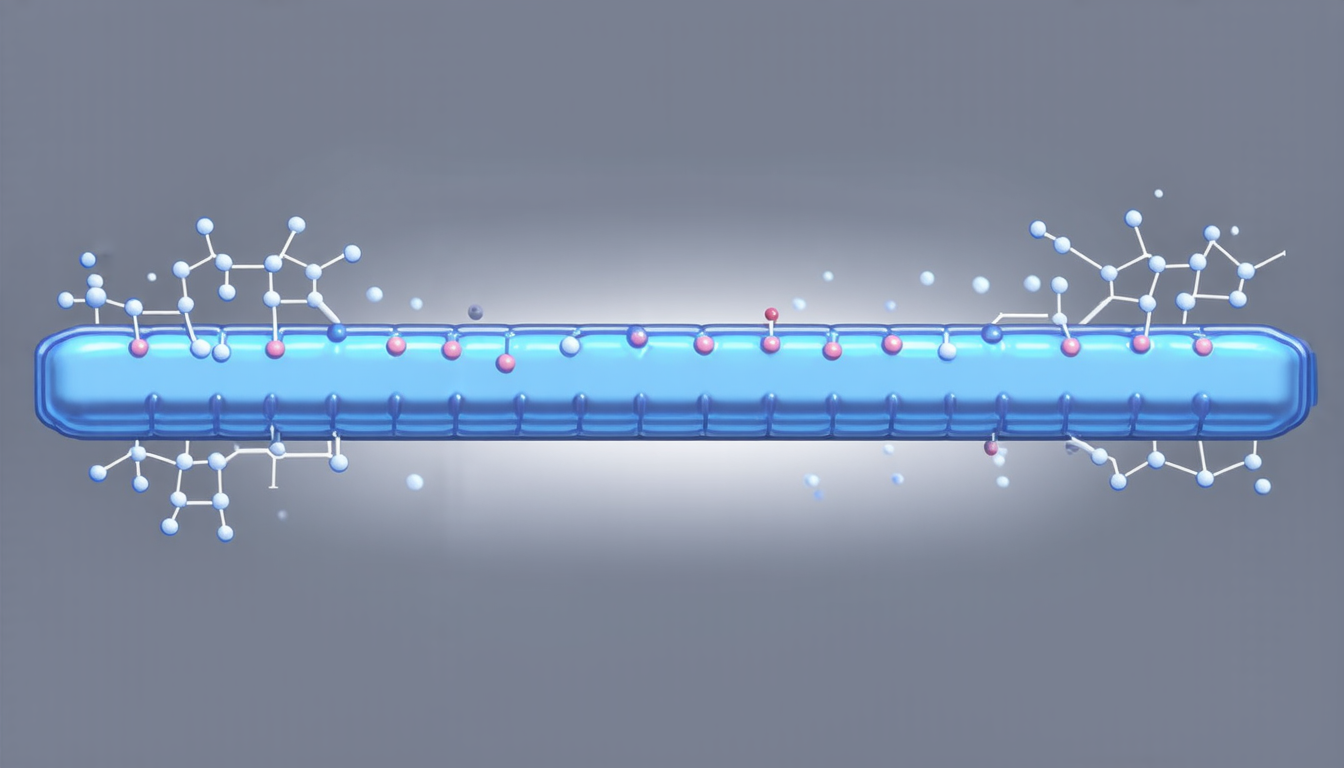
The researchers started by creating silicon nanoribbons with a pentagonal structure, which is unique compared to the more common hexagonal arrangement found in graphene. These ribbons were then deposited onto a silver substrate and examined using STM, revealing that potassium atoms preferentially adsorb at interstitial sites between the silicon atoms.
Further analysis using DFT calculations showed that each adsorbed potassium atom forms a distorted configuration with its nearest three silicon atoms, resulting in charge transfer between the two species. This interaction is significant enough to cause a shift in the Dirac cone position of the silicon nanoribbons relative to the Fermi level, indicating electron doping.
One of the most striking aspects of this study is the ability to control the adsorption behavior of potassium atoms using voltage pulses applied to the STM tip. By applying specific pulses, researchers were able to switch between two distinct adsorption orientations and even move individual potassium atoms along the nanoribbon surface.
The reversibility of the adsorption process was also demonstrated by desorbing potassium atoms from the silicon nanoribbons using high-amplitude pulses without damaging the underlying material. This finding has important implications for the development of novel electronic devices that rely on alkali metal-doped silicon nanostructures.
In addition to their fundamental scientific significance, these results may have practical applications in fields such as electronics and optoelectronics. For example, the ability to control the adsorption behavior of potassium atoms could be used to create highly sensitive sensors or to develop new types of transistors.
The study’s authors also explored the implications of their findings for other alkali metals, such as lithium and sodium, which are commonly used in battery technology. While these elements may not exhibit the same level of adsorption behavior as potassium, the researchers suggest that similar interactions could occur with other silicon-based materials.
Overall, this research provides new insights into the complex interactions between alkali metals and silicon-based materials, shedding light on the fundamental physics underlying these systems. As scientists continue to explore the properties of these materials, we can expect to see breakthroughs in a range of fields, from electronics to energy storage.
Cite this article: “Unlocking the Secrets of Silicon Nanoribbons: A Novel Adsorption Process Revealed”, The Science Archive, 2025.
Alkali Metals, Silicon Nanoribbons, Potassium Atoms, Scanning Tunneling Microscopy, Density Functional Theory, Adsorption Behavior, Charge Transfer, Electron Doping, Dirac Cone, Voltage Pulses





