

Wednesday 16 April 2025
Researchers have developed a new approach to motion cueing, a crucial component of flight simulators and virtual reality experiences that helps our brains distinguish between real and simulated movements. The innovation promises to revolutionize the way we interact with digital environments by providing more realistic and immersive experiences.
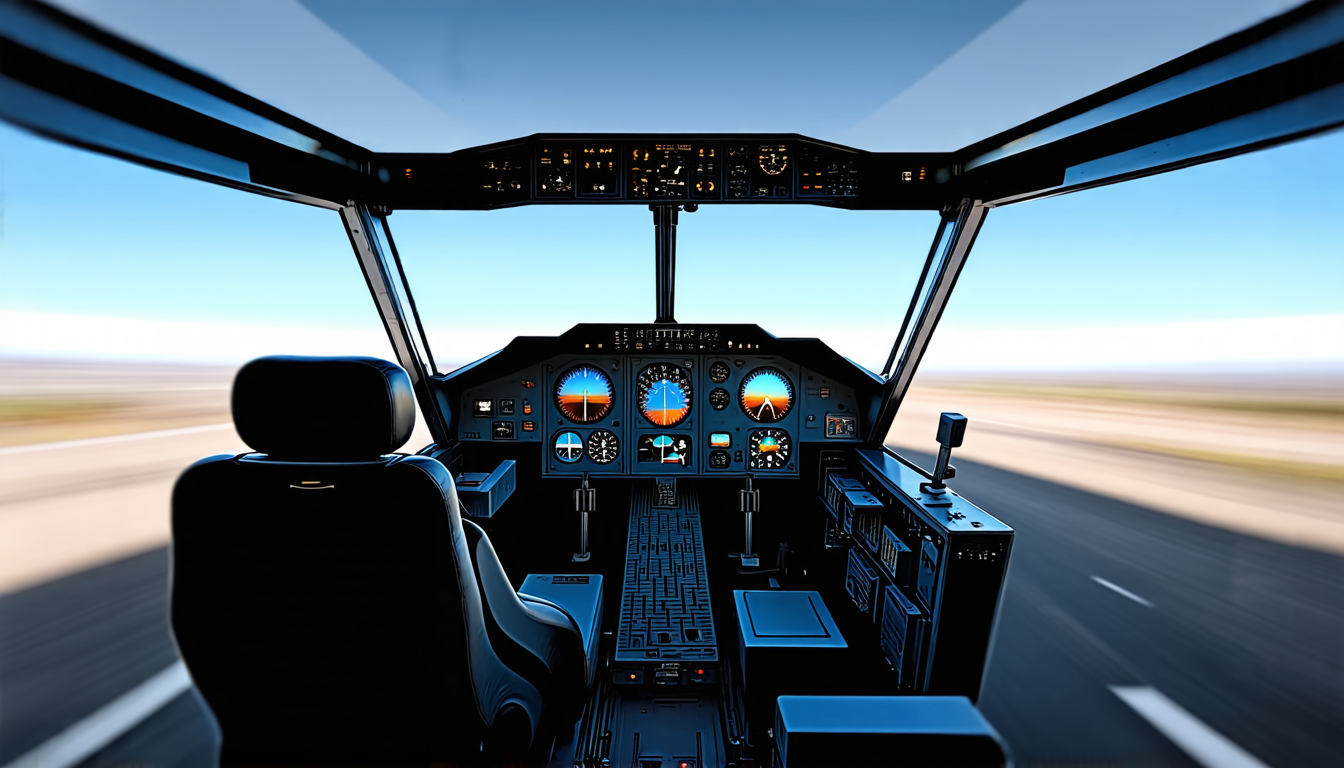
Motion cueing is a complex process that involves simulating the physical sensations of movement, such as acceleration, deceleration, and rotation, in order to trick our brains into believing we are actually moving. In flight simulators, for example, motion cueing helps pilots develop their skills by mimicking the sensations they would feel in an actual aircraft.
The new approach, developed by a team of researchers from Deakin University in Australia, uses machine learning algorithms to predict and simulate the movement patterns of a simulated vehicle. This allows the simulator to generate more realistic and dynamic movements that better match the physical sensations experienced during real-world driving or flying.
One of the key advantages of this approach is its ability to handle complex and nonlinear systems, such as those encountered in flight simulators. Traditional motion cueing algorithms often struggle to accurately simulate these types of movements, leading to a sense of disconnection between the simulated environment and the physical sensations experienced by the user.
The new algorithm uses a combination of neural networks and differential predictive control to learn the patterns and dynamics of movement from large datasets. This allows it to adapt to changing conditions and environments in real-time, making it more effective at simulating realistic movements.
The researchers tested their approach using a range of scenarios, including flight simulations and virtual reality experiences. The results were impressive, with users reporting a greater sense of immersion and realism compared to traditional motion cueing algorithms.
The potential applications of this technology are vast. In addition to improving the realism and immersion of virtual reality experiences, it could also be used in fields such as education and training, where simulators are used to teach complex skills like flying or driving.
In the future, the researchers plan to continue refining their algorithm and exploring new applications for motion cueing. With its potential to revolutionize the way we interact with digital environments, this technology has the power to transform a wide range of industries and activities.
Cite this article: “Revolutionizing Motion Cueing in Flight Simulators with Deep Learning-Based Predictive Control”, The Science Archive, 2025.
Motion Cueing, Virtual Reality, Flight Simulators, Machine Learning, Algorithms, Neural Networks, Differential Predictive Control, Immersion, Realism, Simulation





