

Wednesday 16 April 2025
In a breakthrough that could revolutionize the way we diagnose and treat cancer, scientists have developed a new algorithm that can accurately translate images of tissue samples stained with different dyes. This technology has the potential to make it much easier for doctors to identify specific proteins and other markers associated with various types of cancer.
The problem is that traditional staining techniques use different dyes to highlight different features of the cells, making it difficult to compare results between different samples or even to analyze large amounts of data. But what if you could take a tissue sample stained with one dye and convert it into an image that looks like it was stained with another dye?
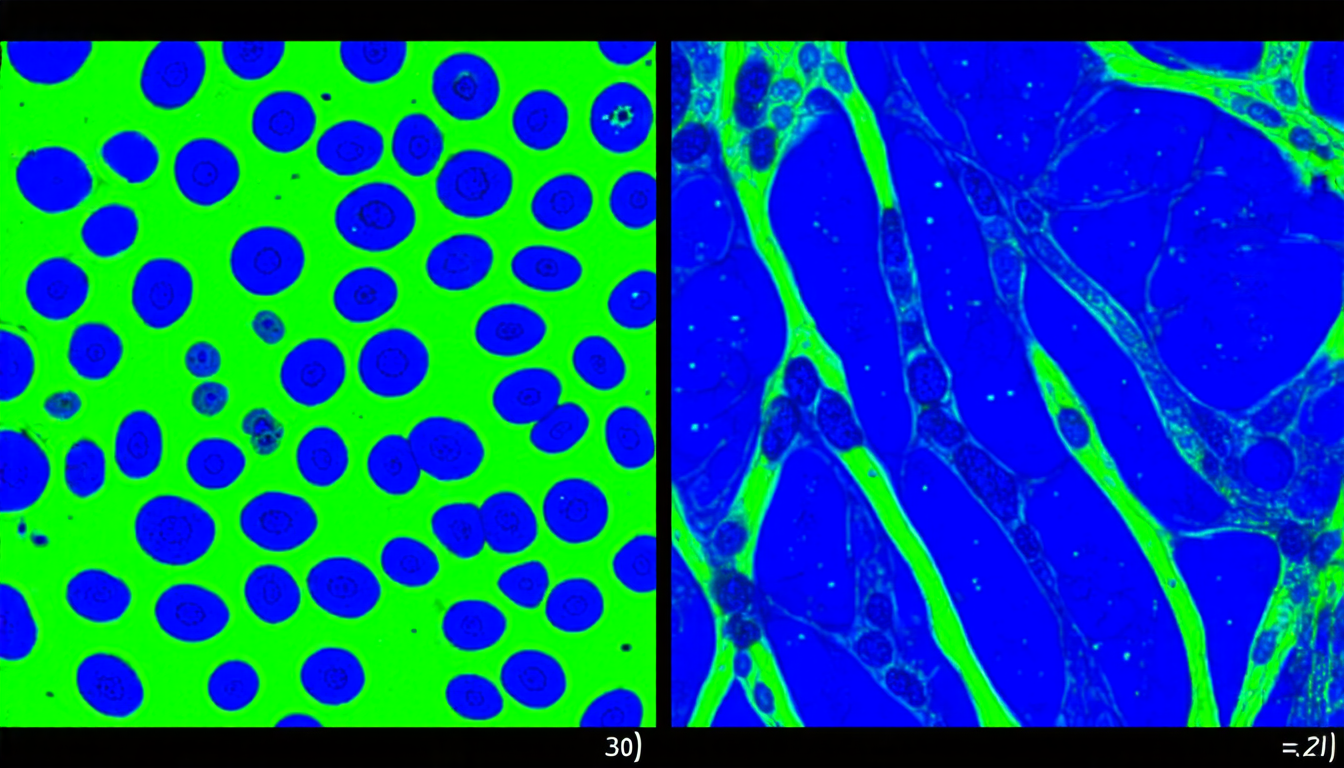
That’s exactly what a team of researchers has achieved using a deep learning algorithm called Style Distribution Constraint Feature Alignment Network (SCFANet). By feeding the algorithm images of tissue samples stained with different dyes, they were able to train it to recognize patterns in the way the dyes interacted with the cells and then generate new images that looked like they had been stained with a different dye.
The implications are significant. With this technology, doctors could potentially analyze large amounts of data from various sources without having to re-stain samples or use expensive equipment. This could help speed up diagnosis times and make it easier for researchers to identify patterns in cancer development.
But the benefits don’t stop there. The algorithm could also be used to generate images that look like they were stained with a specific dye, even if that dye is not available in the lab. This could be especially useful for countries or regions where access to certain dyes or equipment is limited.
The team behind SCFANet has already tested their algorithm on a range of tissue samples and found it to be highly accurate. They are now working to refine the technology and make it more widely available.
As scientists continue to explore the potential of deep learning in medicine, breakthroughs like this one offer a glimpse into the future of cancer diagnosis and treatment. With SCFANet, doctors may soon have a powerful new tool at their disposal to help them identify and combat cancer more effectively.
Cite this article: “Breakthrough in Digital Pathology: AI-Powered H&E to IHC Image Translation Achieves State-of-the-Art Accuracy”, The Science Archive, 2025.
Cancer, Diagnosis, Treatment, Algorithm, Deep Learning, Tissue Samples, Staining Techniques, Image Analysis, Protein Markers, Medical Imaging





