

Wednesday 16 April 2025
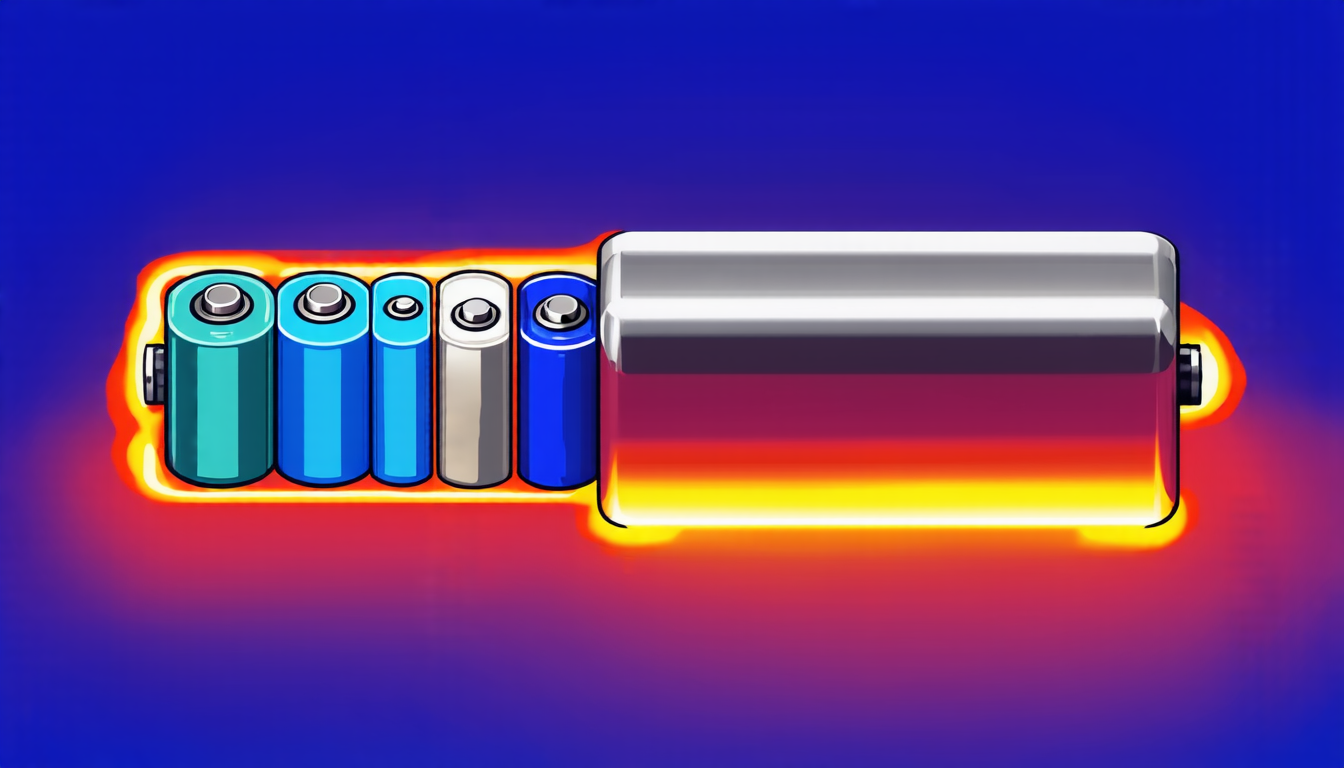
As we continue to rely on lithium-ion batteries to power our devices and electric vehicles, researchers are working tirelessly to improve their performance and longevity. A recent study published in a leading scientific journal sheds light on a crucial aspect of battery design: cell-to-cell heterogeneities.
In simple terms, heterogeneities refer to the differences between individual cells within a battery pack. These disparities can arise from various factors, such as manufacturing tolerances, thermal gradients, and even the way each cell is connected to its neighbors. The consequences of these variations are far-reaching, affecting not only the battery’s overall performance but also its lifespan.
The researchers behind this study employed a unique approach to tackle this complex issue. They developed an experimentally validated electrochemical model that simulated hundreds of battery configurations, each consisting of four cells in parallel. By analyzing the results, they uncovered the relative importance of key cell-level parameters on module capacity, energy, and current.
One of the most significant findings is that heterogeneities in electrode active material volume fractions have a profound impact on module performance. This means that slight variations in the amount of active material within each cell can significantly affect the battery’s overall capacity and efficiency.
Another crucial aspect is the role of interconnection resistance, which refers to the electrical resistance between cells. The study reveals that this factor plays a significant role in determining thermal gradients within the battery pack. As temperatures rise, the risk of degradation increases, making it essential to optimize cell connections to minimize these effects.
The researchers also explored the impact of module design configurations on thermal gradients and long-term module degradation. Surprisingly, they found that even small changes in cell arrangement can have a substantial influence on performance and lifespan.
To mitigate these issues, the study proposes several strategies for optimizing battery design. By carefully controlling manufacturing processes, designing more efficient thermal management systems, and implementing advanced algorithms for cell balancing, researchers hope to improve overall battery performance while extending its lifespan.
As our reliance on lithium-ion batteries continues to grow, understanding and addressing cell-to-cell heterogeneities is crucial for developing more reliable and sustainable energy storage solutions. By shedding light on this complex issue, the authors of this study have taken a significant step towards optimizing battery design and ensuring a brighter future for electric vehicles, renewable energy systems, and our daily lives.
Cite this article: “Unlocking the Secrets of Parallel-Connected Lithium-Ion Batteries: A Novel Study on Cell-to-Cell Variations and Thermal Gradients”, The Science Archive, 2025.
Lithium-Ion Batteries, Battery Design, Cell-To-Cell Heterogeneities, Electrode Active Material, Interconnection Resistance, Thermal Gradients, Module Capacity, Energy, Current, Optimization Strategies.





