

Wednesday 16 April 2025
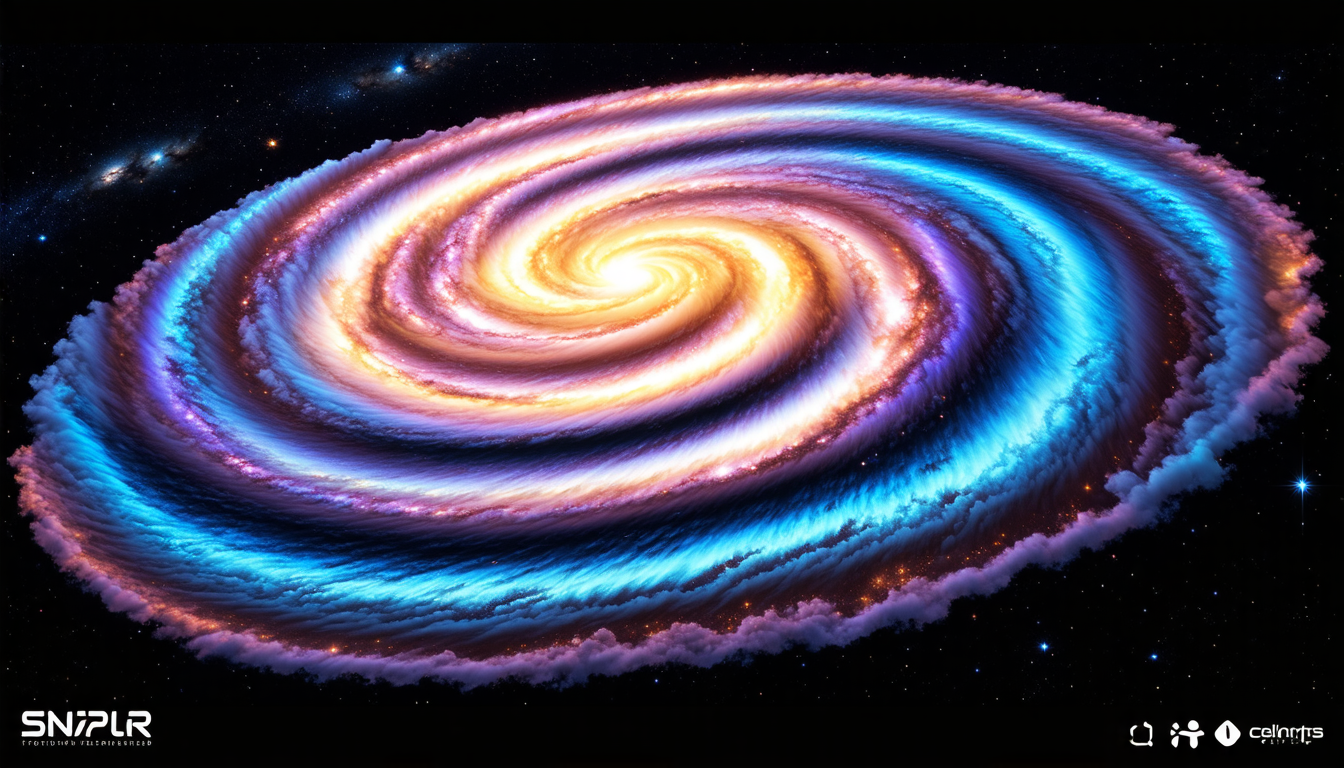
A team of astronomers has made a fascinating discovery about the early universe, shedding light on how galaxies formed and evolved billions of years ago. By studying simulations of galaxy evolution, scientists have uncovered the secrets behind the formation of giant bulgeless disk galaxies.
These behemoths are unlike anything we see in our own universe today, with massive disks that spin around at incredible speeds. But what’s truly remarkable is that these galaxies existed just 2 billion years after the Big Bang, a time when the universe was still in its infancy.
The researchers used powerful computers to simulate the formation of galaxies over millions of years, taking into account factors like dark matter, gas, and stars. By analyzing these simulations, they were able to identify the conditions necessary for giant bulgeless disk galaxies to form.
It turns out that these galaxies owe their existence to a combination of factors, including high levels of gas and star formation, as well as specific properties of the dark matter halos that surround them. The simulations suggest that these galaxies formed in areas where gas was abundant and the gravitational forces were just right, allowing for the creation of massive disks.
But what about our own galaxy, the Milky Way? Does it have a similar history to these ancient behemoths? Surprisingly, yes. Our own galaxy is thought to have undergone a similar period of rapid growth and star formation in its youth, although on a much smaller scale.
The discovery of giant bulgeless disk galaxies has significant implications for our understanding of the early universe. It provides valuable insights into how galaxies evolved over time, and how they interacted with their surroundings. By studying these ancient galaxies, scientists can gain a better understanding of the fundamental laws that govern the universe.
The research also highlights the importance of continued investment in cutting-edge computing technology. Without powerful computers capable of simulating complex galaxy formation processes, we wouldn’t be able to explore the mysteries of the early universe.
As scientists continue to unravel the secrets of these ancient galaxies, they’re not only gaining a deeper understanding of the universe’s past but also shedding light on its present and future. The discovery of giant bulgeless disk galaxies is an exciting reminder that there’s still so much to learn about our cosmos, and that the pursuit of knowledge is an ongoing adventure.
Cite this article: “Unveiling the Secrets of Giant Bulgeless Disk Galaxies in the Early Universe”, The Science Archive, 2025.
Galaxies, Universe, Formation, Evolution, Stars, Gas, Dark Matter, Simulations, Computers, Discovery





