

Wednesday 16 April 2025
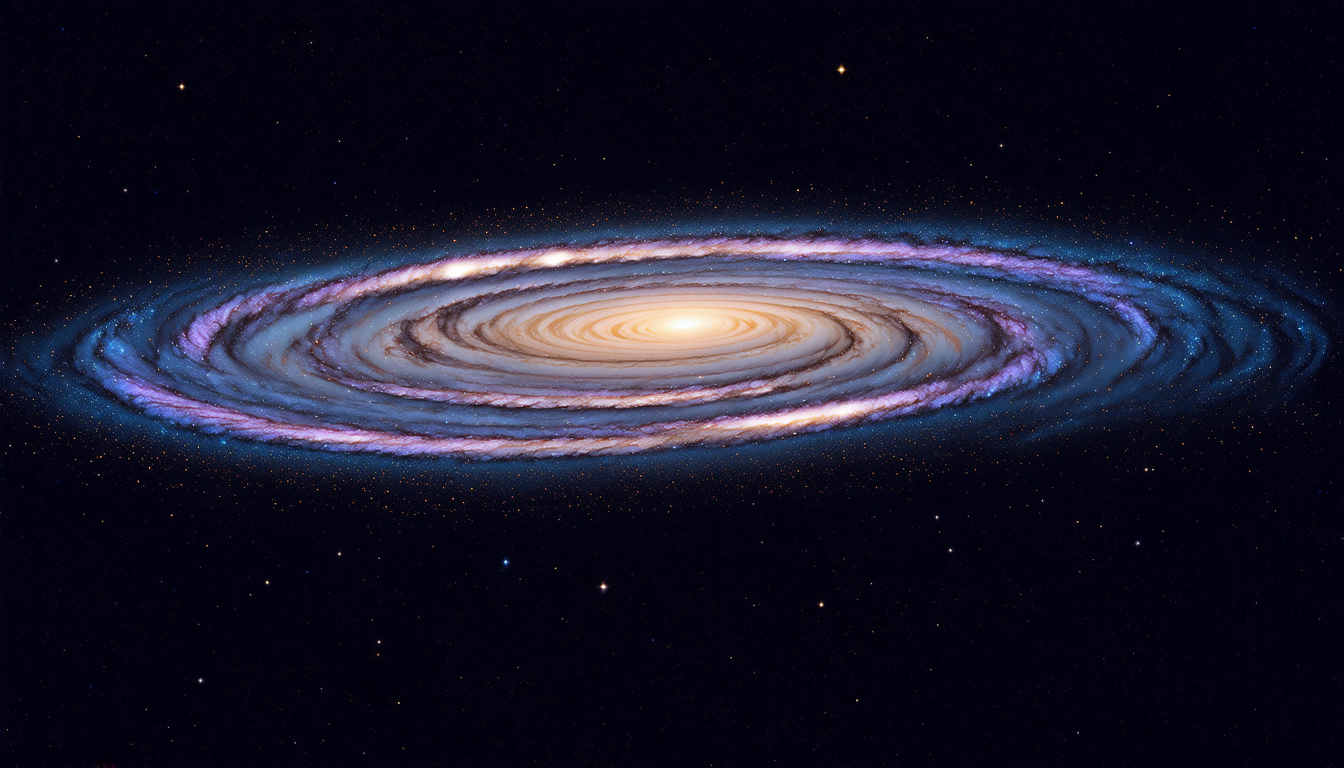
A team of researchers has made a significant breakthrough in understanding how stars form within galaxies like our own Milky Way. By analyzing data from computer simulations, they’ve gained new insights into the complex process of star birth and the role that magnetic fields play.
At its core, star formation is a messy business. Gas and dust condense under gravity, collapsing into denser regions until a protostar begins to shine. But this process doesn’t happen in isolation – it’s influenced by the surrounding environment, including the strength of magnetic fields within the galaxy.
To better understand these interactions, researchers turned to computer simulations, running complex models that recreated the dynamics of gas and dust within a Milky Way-like galaxy. The simulations were designed to mimic real-world conditions, taking into account factors like magnetic field strength, gas density, and gravity.
One key finding was that the strength of magnetic fields plays a crucial role in shaping star formation. In areas where these fields are weak, gas and dust collapse more easily, leading to the birth of new stars. But where fields are strong, they can actually prevent star formation by disrupting the collapse process.
This isn’t just an abstract concept – it has real-world implications for our understanding of galaxy evolution. By studying how magnetic fields influence star formation, scientists can better understand how galaxies like our own evolved over billions of years. It’s a complex puzzle, but one that’s slowly coming together through advances in computer power and simulation techniques.
The researchers also found that the strength of magnetic fields varies across different regions of the galaxy. In areas where gas is denser, for example, magnetic fields tend to be weaker, allowing for more star formation. Conversely, in less dense regions, stronger magnetic fields can dominate, suppressing star birth.
This nuanced understanding of magnetic field behavior has significant implications for our understanding of galaxy evolution. By studying how these fields interact with gas and dust, scientists can gain insights into the complex processes that shape our universe.
The research also highlights the importance of multiscale simulations – those that recreate the dynamics of gas and dust at multiple scales, from individual stars to entire galaxies. By combining data from these simulations with observations from telescopes like ALMA, scientists can create a more complete picture of star formation and galaxy evolution.
In short, this breakthrough represents a significant step forward in our understanding of how stars form within galaxies.
Cite this article: “Unraveling the Mysteries of Galactic Filaments: A New Perspective on Star Formation”, The Science Archive, 2025.
Star Formation, Magnetic Fields, Galaxy Evolution, Computer Simulations, Milky Way, Gas And Dust, Protostar, Star Birth, Multiscale Simulations, Alma.





