

Wednesday 16 April 2025
Scientists have made a significant breakthrough in the development of quantum error correction techniques, which are crucial for the widespread adoption of quantum computing technology. A team of researchers has designed a hardware emulator that can simulate the behavior of quantum computers under realistic conditions, allowing them to test and optimize their error correction algorithms.
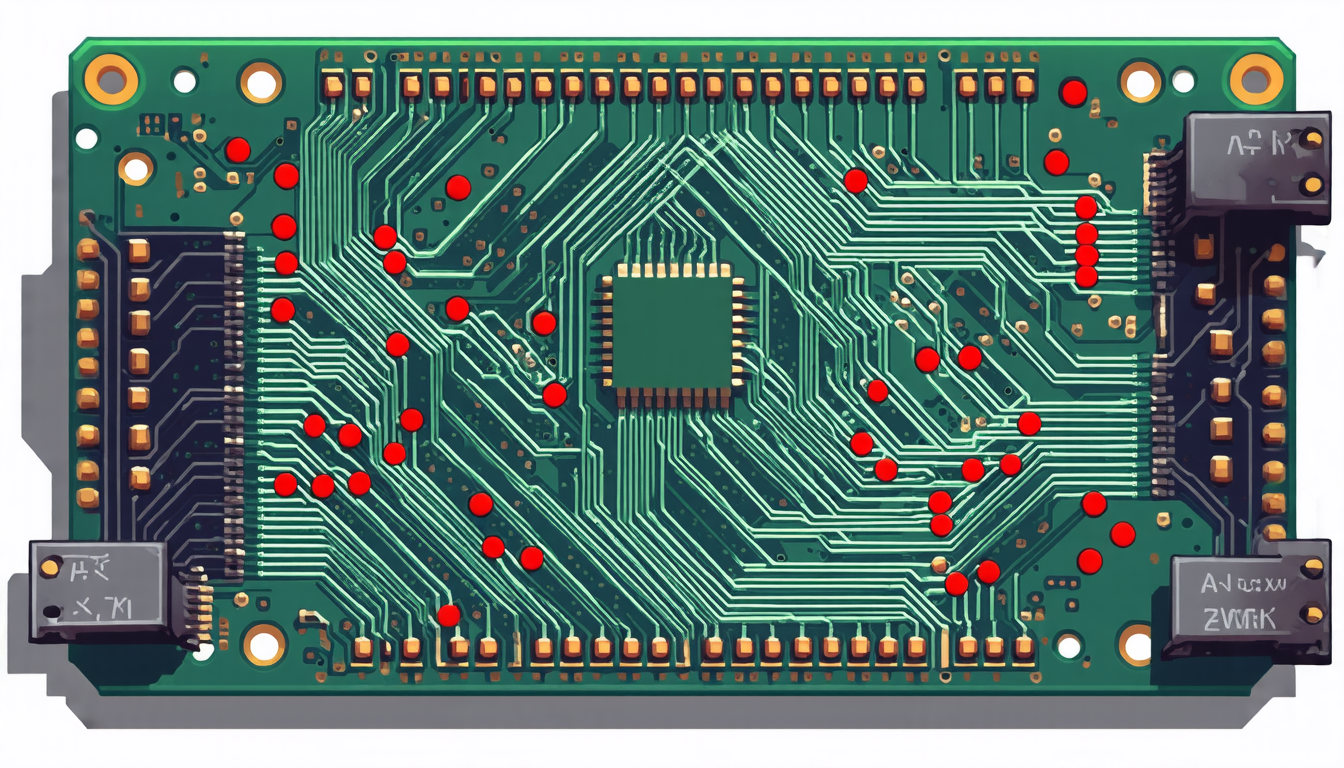
The emulator is built using a field-programmable gate array (FPGA), a type of microchip that can be programmed to perform specific tasks. The researchers used this chip to create a virtual environment that mimics the behavior of a quantum computer, complete with noise and errors that occur during calculations.
Using this emulator, the team was able to test and optimize their error correction algorithms, which are designed to detect and correct errors that occur during quantum computations. These algorithms are essential for ensuring the accuracy and reliability of quantum computers, as even small errors can have significant effects on the outcome of complex calculations.
The researchers used a type of algorithm called belief propagation (BP) to correct errors in their simulated quantum computer. BP is a widely used technique in classical computing that involves iteratively updating estimates based on the probability of errors occurring during computation. In the context of quantum computing, BP has been shown to be effective in correcting errors that occur due to noise and other environmental factors.
However, BP can be computationally intensive and requires significant resources to implement. The researchers used their emulator to test different variations of the BP algorithm, including ones that use quantization techniques to reduce the amount of memory required.
The results of their tests showed that the optimized BP algorithms were able to correct errors with high accuracy and efficiency. In some cases, the algorithms were able to correct errors in as few as 10 iterations, which is significantly faster than previous approaches.
The development of this emulator and error correction algorithm has significant implications for the future of quantum computing. It paves the way for the widespread adoption of quantum computers in fields such as medicine, finance, and materials science, where accurate and reliable calculations are critical.
The researchers plan to continue refining their emulator and algorithms, with the goal of developing a fully functional quantum computer that can be used for practical applications. The success of this project demonstrates the potential for interdisciplinary collaboration between computer scientists, physicists, and engineers to drive innovation in this field.
In the near future, we can expect to see significant advances in the development of quantum computing technology, thanks to the hard work of researchers like these who are pushing the boundaries of what is possible.
Cite this article: “Unlocking Quantum Error Correction with Diversity Decoders”, The Science Archive, 2025.
Quantum Computing, Error Correction, Quantum Error Correction, Fpga, Field-Programmable Gate Array, Emulator, Belief Propagation, Algorithm Optimization, Quantum Technology, Interdisciplinary Research.





