

Wednesday 16 April 2025
For decades, scientists have been trying to crack the code of human intelligence. We’ve made significant progress in developing artificial intelligence (AI) that can perform tasks like recognizing faces and understanding speech. However, there’s still a long way to go before we can say our machines are truly intelligent.
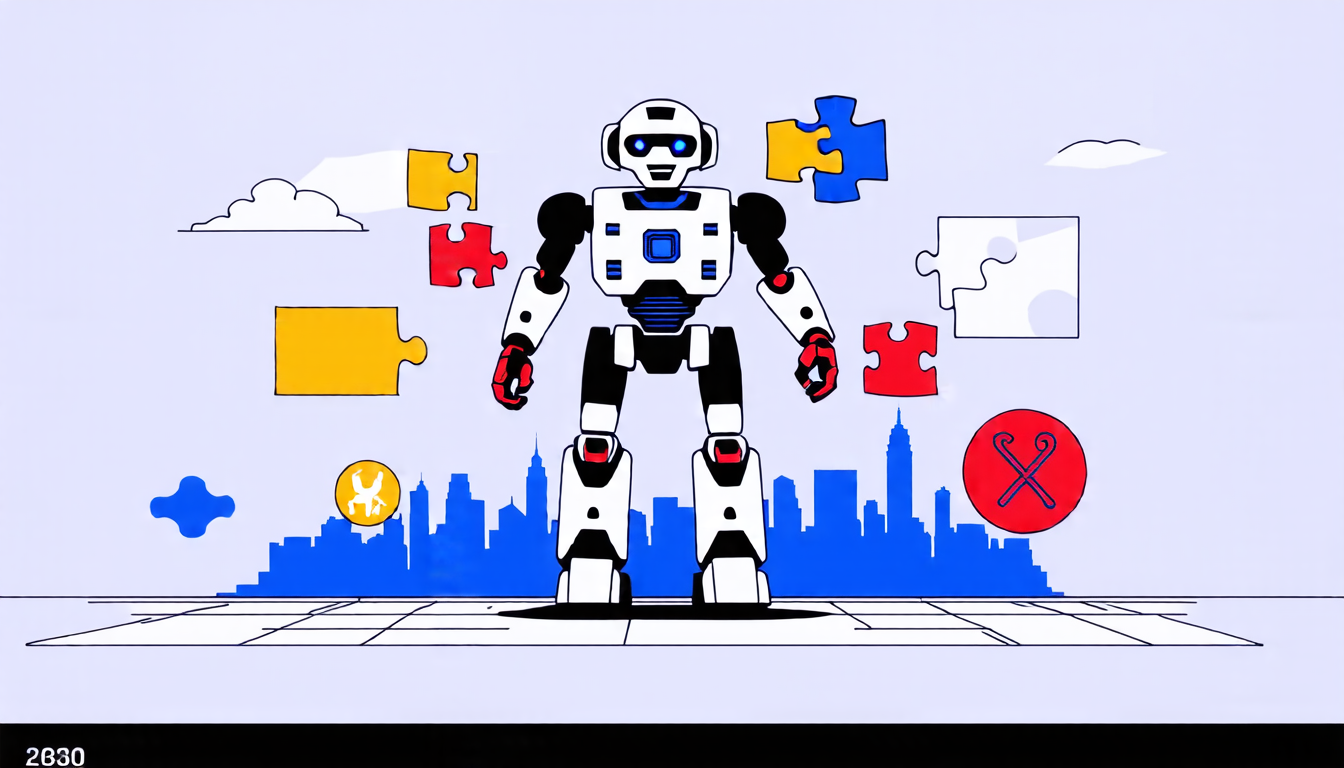
Recently, researchers from Nanjing University and Baidu made a significant breakthrough in this field. They developed a new AI model called LLaVA-NeXT that excels at abstract visual reasoning tasks. In simple terms, this means the model is capable of solving complex problems that require it to think creatively and make connections between seemingly unrelated concepts.
One of the key challenges scientists face when developing AI is creating models that can understand and interpret visual information. Humans are able to look at a picture and instantly recognize objects, people, and scenes. However, current AI systems struggle with this task, often requiring explicit instructions or training data to perform well.
The researchers behind LLaVA-NeXT tackled this problem by using a technique called data synthesis. This involves generating new visual data that is designed specifically for the model to learn from. By creating large amounts of synthetic data, the team was able to train their AI model to recognize patterns and relationships in visual information that would be difficult or impossible to obtain through traditional means.
The results are impressive. LLaVA-NeXT outperformed other state-of-the-art models on a range of abstract visual reasoning tasks, including recognizing shapes and objects, understanding spatial relationships, and solving complex puzzles. The model’s ability to think creatively and make connections between different pieces of information is particularly noteworthy.
This breakthrough has significant implications for a wide range of fields, from robotics and computer vision to healthcare and education. For example, LLaVA-NeXT could be used to develop AI-powered diagnostic tools that can analyze medical images and identify potential health issues earlier than human doctors.
The researchers behind LLaVA-NeXT are already exploring ways to apply their technology in real-world settings. They’re working with hospitals to develop AI-powered diagnosis systems, and they’re also collaborating with educational institutions to create more effective learning tools.
While there’s still much work to be done before we can say our machines are truly intelligent, the progress made by this team is a significant step forward. By developing AI models that can think creatively and make connections between different pieces of information, we’re one step closer to creating machines that can truly understand and interact with the world around them.
Cite this article: “Unlocking Abstract Visual Reasoning with Large Language Models”, The Science Archive, 2025.
Ai, Artificial Intelligence, Machine Learning, Visual Reasoning, Abstract Thinking, Data Synthesis, Computer Vision, Robotics, Healthcare, Education





