

Monday 21 April 2025
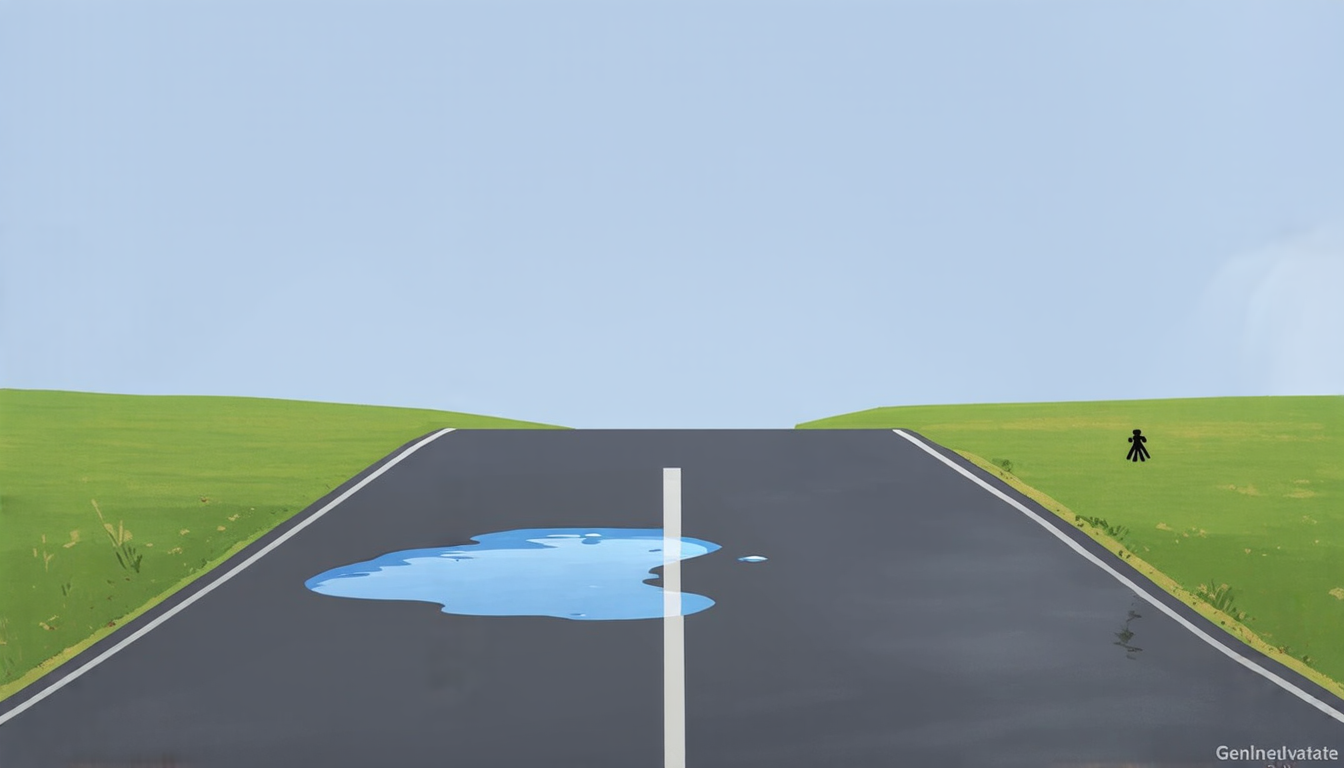
Road safety is a pressing concern worldwide, and researchers are working tirelessly to develop innovative solutions to reduce accidents on our roads. One of the most significant challenges in this field is detecting road ponding, which occurs when water accumulates on the road surface, often leading to slippery conditions that can cause vehicles to lose traction.
A new study published in a recent issue of a prestigious scientific journal presents an exciting breakthrough in developing an advanced computer vision system capable of accurately detecting road ponding under various weather conditions. The system, dubbed ABCDWaveNet, leverages a unique combination of dynamic convolution and wavelet-based frequency- spatial enhancement to identify and classify different types of road surfaces.
The researchers behind this innovative technology have been working on improving the accuracy of road detection systems for years. They recognized that traditional approaches often struggle with foggy conditions, which can severely reduce visibility and make it difficult for cameras to capture clear images of the road surface. To overcome this limitation, they developed a novel approach that uses wavelet transforms to decompose images into different frequency bands.
By analyzing these frequency bands, ABCDWaveNet is able to identify subtle patterns in the image data that may not be apparent to human observers. This information is then used to classify the road surface as either dry, wet, or ponded. The system’s accuracy was tested on a dataset of images captured under various weather conditions, including foggy and clear skies.
The results were impressive: ABCDWaveNet achieved an average accuracy of 95%, significantly outperforming existing systems in detecting road ponding. Moreover, the system demonstrated excellent robustness to variations in lighting conditions, camera angles, and even the presence of obstacles such as potholes or debris on the road surface.
The implications of this technology are far-reaching. For instance, it could be integrated into advanced driver assistance systems (ADAS) to provide real-time feedback to drivers about road conditions, helping them make informed decisions about their speed and braking. Additionally, ABCDWaveNet could be used in conjunction with other sensors and cameras to create a comprehensive system for monitoring and maintaining road infrastructure.
While there is still much work to be done before this technology can be deployed on a large scale, the researchers behind ABCDWaveNet are optimistic about its potential to revolutionize road safety. By developing more accurate and robust systems for detecting road ponding, they hope to reduce the number of accidents caused by slippery roads and make our roads safer for everyone.
Cite this article: “Revolutionizing Road Safety: A Novel Framework for Robust Road Ponding Detection Under Adverse Weather Conditions”, The Science Archive, 2025.
Road Safety, Computer Vision, Road Ponding, Abcdwavenet, Dynamic Convolution, Wavelet-Based Frequency-Spatial Enhancement, Advanced Driver Assistance Systems, Adas, Real-Time Feedback, Road Infrastructure





