

Monday 21 April 2025
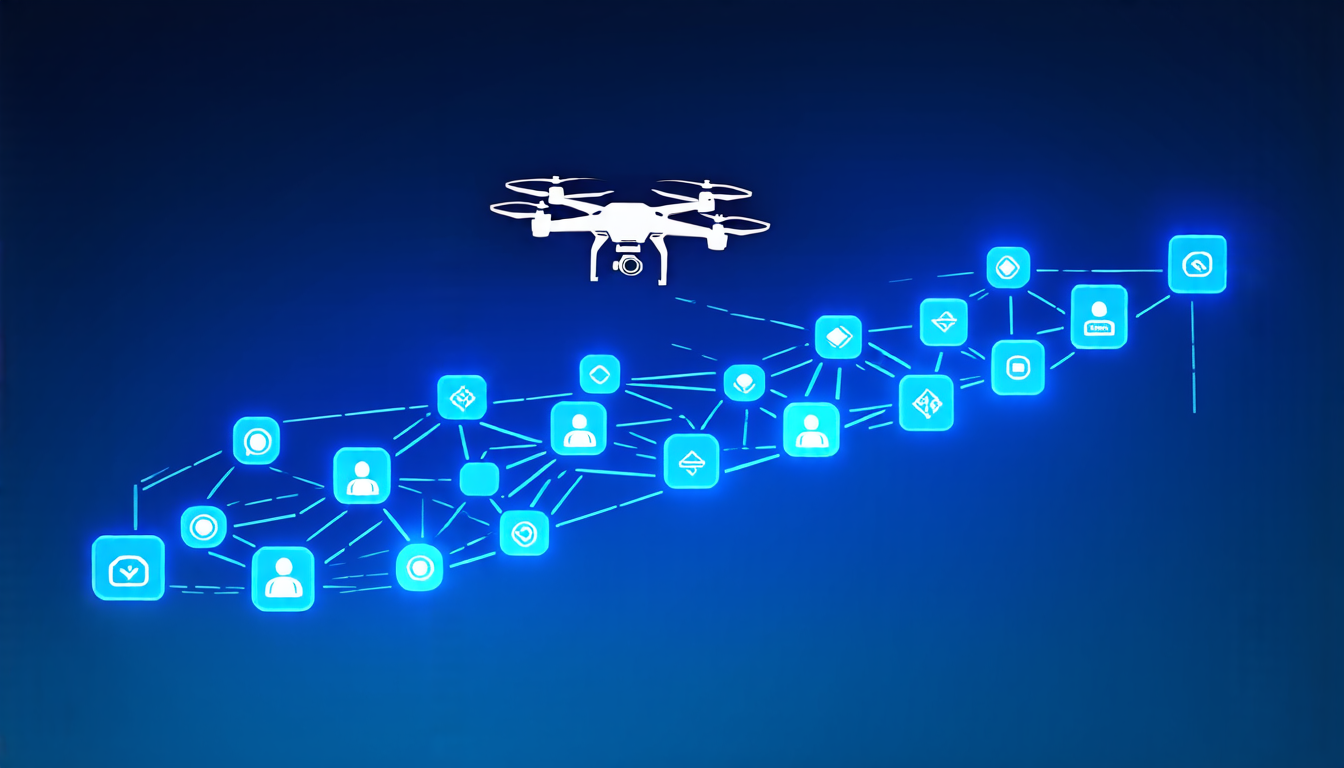
Scientists have made a significant breakthrough in optimizing cellular networks for drone corridors, paving the way for improved connectivity and data transmission between devices. By using Bayesian optimization, researchers were able to identify optimal antenna configurations that significantly enhance performance along these aerial highways.
Cellular networks are crucial for supporting the increasing number of drones flying overhead, but traditional approaches often struggle to provide reliable coverage. The problem is exacerbated by the unique properties of drone corridors, where signals must be transmitted over long distances and through varying environmental conditions.
To address this challenge, researchers turned to Bayesian optimization, a technique that uses machine learning algorithms to search for the best solution among a vast number of possibilities. By analyzing data on signal strength, interference, and other factors, Bayesian optimization can identify optimal antenna configurations that balance performance and energy efficiency.
The study used a combination of real-world data from a production cellular network and simulations to test the effectiveness of Bayesian optimization. Results showed that optimized antenna configurations led to significant improvements in coverage and capacity along drone corridors. In fact, the optimized networks were able to provide reliable connectivity to almost 100% of the drones flying through the corridor, compared to just 50% with traditional approaches.
The researchers also explored the potential for transfer learning, where data from one scenario can be used to inform decisions in another. This approach showed promise, allowing the network to adapt to changing conditions and maintain performance even when faced with unexpected interference or environmental changes.
The implications of this research are significant, as it has the potential to revolutionize the way we design and operate cellular networks for drone corridors. With improved connectivity and data transmission, drones can be used in a wider range of applications, from package delivery to search and rescue operations. Additionally, the optimized networks could also support new services, such as real-time video streaming or remote control operations.
While there is still much work to be done, this breakthrough has significant potential for transforming the way we use cellular networks for drone corridors. As researchers continue to refine their approach, it’s likely that we’ll see even more innovative applications of Bayesian optimization in the years to come.
Cite this article: “Unlocking the Skies: Optimizing Cellular Networks for Reliable UAV Connectivity with Data-Driven Bayesian Optimization”, The Science Archive, 2025.
Drones, Cellular Networks, Bayesian Optimization, Antenna Configurations, Machine Learning, Signal Strength, Interference, Environmental Conditions, Transfer Learning, Connectivity





