

Monday 21 April 2025
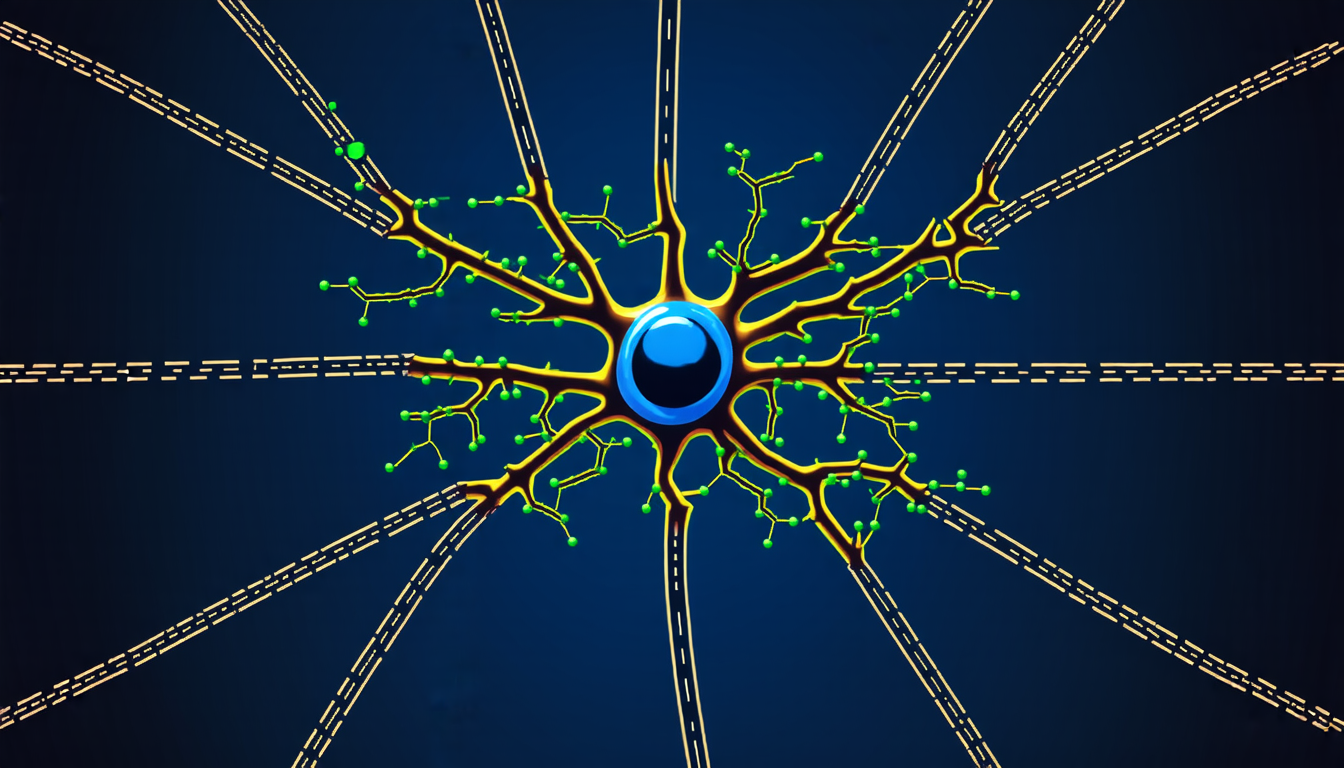
As we strive to create more efficient and adaptive artificial intelligence, researchers have been exploring the intricacies of the human brain for inspiration. One fascinating aspect of our cognitive machinery is the way it learns and adapts through a process called synaptic plasticity. This phenomenon allows neurons to strengthen or weaken their connections with each other based on experience and activity patterns.
Synaptic plasticity has long been thought to be a key factor in learning and memory, but its mechanisms are still not fully understood. Recently, scientists have made significant progress in deciphering the intricacies of this process by studying how it is influenced by neuromodulators, such as dopamine and serotonin.
These chemicals play a crucial role in modulating synaptic plasticity, allowing us to adapt to changing environments and learn from our experiences. For instance, when we perform a task correctly, dopamine release can enhance the connections between neurons involved in that task, making it easier to repeat in the future.
Researchers have been working on developing artificial neural networks that mimic this process of synaptic plasticity. These networks, known as spiking neural networks (SNNs), use electrical impulses instead of traditional digital signals to communicate between nodes.
One challenge facing SNNs is the need for efficient learning algorithms that can take into account the complex interactions between neurons and neuromodulators. To address this issue, scientists have been developing novel learning rules that incorporate three key factors: spike timing, synaptic plasticity, and neuromodulation.
These three-factor learning rules allow SNNs to learn and adapt more effectively by incorporating the dynamic interplay between neurons and their environment. For example, in a recent study, researchers demonstrated how an SNN could learn to recognize patterns and make decisions based on context-dependent cues using this type of learning rule.
The implications of these findings are significant, as they could lead to the development of more advanced artificial intelligence systems that can learn and adapt in complex environments. This technology has potential applications in areas such as robotics, healthcare, and finance, where adaptive decision-making is crucial.
Furthermore, understanding the mechanisms underlying synaptic plasticity can provide valuable insights into neurological disorders, such as Alzheimer’s disease and Parkinson’s disease, which are characterized by impaired learning and memory. By developing more realistic models of brain function, researchers may be able to identify new therapeutic targets for these conditions.
As we continue to unravel the mysteries of the human brain, we are reminded of the importance of interdisciplinary collaboration between neuroscientists, computer scientists, and engineers.
Cite this article: “Unlocking the Secrets of Neural Networks: A Survey of Three-Factor Learning Rules”, The Science Archive, 2025.
Artificial Intelligence, Synaptic Plasticity, Neuromodulators, Dopamine, Serotonin, Spiking Neural Networks, Learning Algorithms, Spike Timing, Synaptic Plasticity Rules, Neuroscience





