

Wednesday 30 April 2025
Scientists have made a significant breakthrough in understanding and generating synthetic spider silk, a material renowned for its exceptional strength and elasticity. By combining advanced machine learning techniques with bioinformatics, researchers have developed a novel method to design and produce artificial silk fibers that mimic the properties of natural spider silk.
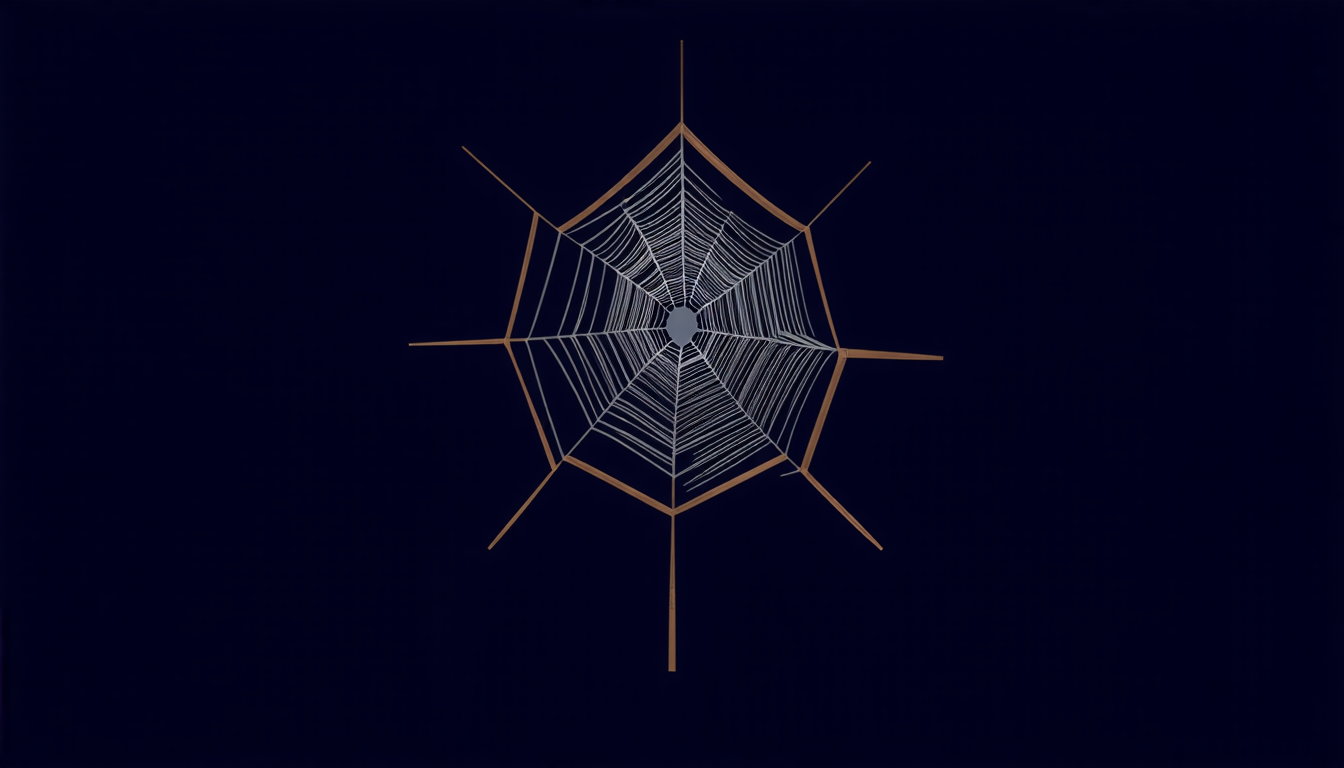
Spider silk is prized for its remarkable mechanical properties, which are crucial for its role in supporting the spider’s web structure. The key to achieving these properties lies in the protein sequence of the spider silk proteins, known as spidroins. These proteins consist of repetitive regions that are precisely arranged to create a complex hierarchical structure.
To replicate this natural process, researchers employed a generative model based on the GPT-2 language architecture, which is designed for text prediction tasks. By fine-tuning this model using a dataset of 6,000 spidroin sequences and their corresponding mechanical properties, scientists were able to generate synthetic sequences that incorporate essential structural motifs, such as glycine-rich GGX repeats and poly-Ala stretches.
The generated sequences were then used to predict the mechanical properties of the artificial silk fibers. The results showed a strong correlation between the predicted properties and those observed in natural spider silk. This suggests that the model has successfully captured the intricate relationships between sequence composition and material properties.
To further validate these findings, researchers analyzed the molecular structure of the generated sequences using computational tools. The predicted structures revealed a high degree of similarity to those found in natural spider silk, confirming that the synthetic fibers are likely to exhibit similar mechanical properties.
The implications of this research are significant, as it could lead to the development of sustainable and environmentally friendly materials with tailored properties. Synthetic spider silk could be used in a variety of applications, including textiles, medical devices, and biodegradable composites.
This study demonstrates the power of combining machine learning and bioinformatics to understand complex biological systems. By leveraging advanced computational tools and large datasets, scientists can gain insights into the intricate relationships between sequence composition, structure, and function. This knowledge can be used to design and produce novel biomaterials with unique properties, potentially revolutionizing industries such as textiles, medicine, and biotechnology.
The future of synthetic spider silk is bright, as researchers continue to refine their methods and explore new applications for this remarkable material. As our understanding of the intricate relationships between sequence composition and mechanical properties deepens, we may see the development of even more sophisticated biomaterials with tailored properties.
Cite this article: “Synthetic Spider Silk Breakthrough: Combining Machine Learning and Bioinformatics to Create Sustainable Materials”, The Science Archive, 2025.
Spider Silk, Synthetic Materials, Machine Learning, Bioinformatics, Protein Sequence, Mechanical Properties, Generative Model, Gpt-2, Biomaterials, Biotechnology





