

Wednesday 07 May 2025
A team of astronomers has made a remarkable discovery that sheds new light on the early universe. By studying two galaxies that existed over 13 billion years ago, researchers have gained valuable insights into the formation and evolution of stars and galaxies during this period.
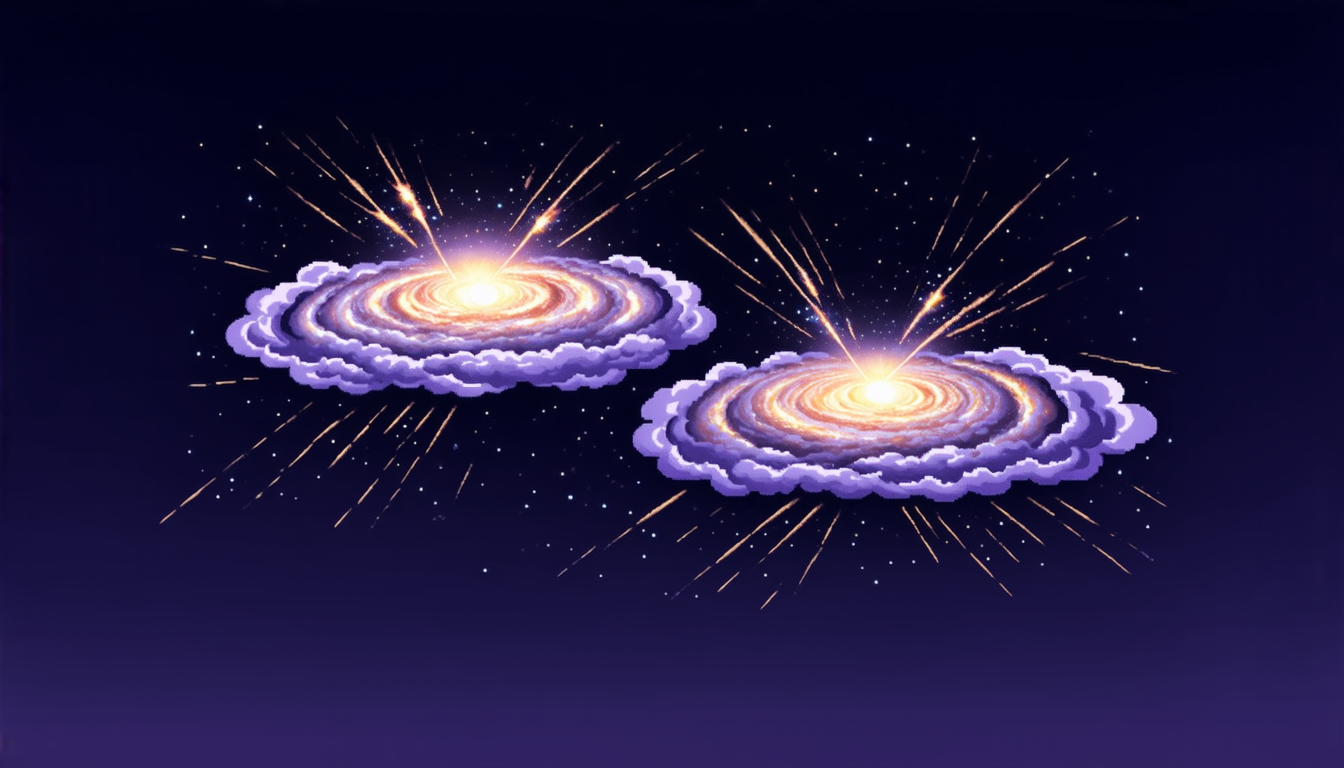
The study focused on two UV-bright galaxies, dubbed CAPERS-1 and CAPERS-2, which were detected using NASA’s James Webb Space Telescope. These galaxies are among the oldest known galaxies in the universe, with light that has been traveling through space for over 13 billion years.
By analyzing the light emitted by these ancient galaxies, scientists have been able to reconstruct their properties and behaviors. They found that both galaxies had intense star-forming activity, producing hundreds of new stars per year. This is much more rapid than what we see in modern galaxies like our own Milky Way.
The team also discovered that CAPERS-1 was a smaller galaxy with a mass similar to the Large Magellanic Cloud, a satellite galaxy of the Milky Way. In contrast, CAPERS-2 was significantly larger and had a mass comparable to the Small Magellanic Cloud, another satellite galaxy.
These findings have important implications for our understanding of galaxy formation and evolution. They suggest that galaxies in the early universe were more massive and active than previously thought, with intense star-forming activity driving their growth.
The study also provides new insights into the role of supernovae explosions in shaping the properties of these ancient galaxies. Supernovae are explosive events that occur when stars run out of fuel and collapse under their own gravity. They can disperse heavy elements throughout a galaxy, influencing its chemical composition and structure.
Researchers found evidence of multiple supernova explosions in both CAPERS-1 and CAPERS-2, which likely played a key role in shaping the galaxies’ properties. This suggests that these events were more frequent and intense in the early universe than they are today.
Overall, this study has significantly advanced our understanding of the early universe and its galaxies. It has provided new insights into the formation and evolution of stars and galaxies during this period, as well as the role of supernovae explosions in shaping their properties.
Cite this article: “Unveiling the Secrets of Ancient Galaxies: Insights into the Early Universes Formation and Evolution”, The Science Archive, 2025.
Galaxies, Early Universe, Star Formation, James Webb Space Telescope, Capers-1, Capers-2, Supernovae, Galaxy Evolution, Milky Way, Large Magellanic Cloud.





