

Wednesday 07 May 2025
The discovery of exoplanets has long been a fascination for astronomers and space enthusiasts alike. With thousands of confirmed planets orbiting other stars, scientists have been able to study their properties and behaviors in unprecedented detail. But despite these advances, there’s still much we don’t know about the formation and evolution of planetary systems.
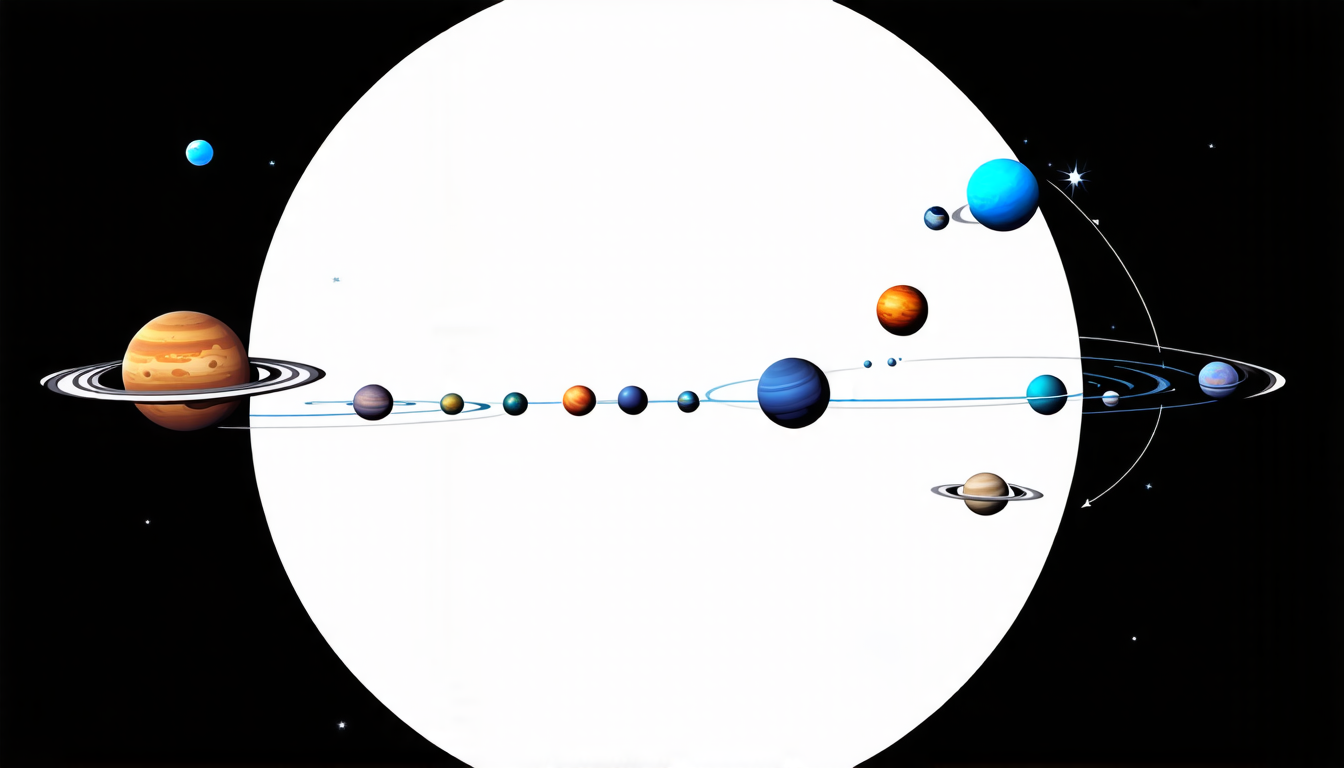
One mystery that has puzzled researchers is the prevalence of higher-order mean-motion resonances (MMRs) – complex orbital patterns where multiple planets align in a repeating pattern. These resonances are rare among our own solar system’s eight planets, but they’re more common among exoplanets, which often have tighter orbits and more diverse planetary populations.
A new study published in the Astrophysical Journal has shed light on this enigma by simulating thousands of planetary systems using advanced computer models. The researchers found that higher-order MMRs are not as rare as previously thought, and can actually form through a process called Type-I disk migration – where planets slowly move inward or outward due to interactions with their surrounding disk of gas and dust.
In the simulations, the team discovered that about 10% of planetary systems formed via Type-I disk migration ended up with second-order MMRs (such as 5:3), while around 2% had third-order MMRs (like 10:7). These resonances often arise when planets are still in the process of forming and migrating towards their final orbits.
The study’s findings have significant implications for our understanding of planetary system formation and evolution. For instance, they suggest that higher-order MMRs may be more common among exoplanets than previously thought, which could explain some of the unusual orbital patterns observed in these systems.
Moreover, the simulations imply that planetary migration is a complex process influenced by various factors, including the properties of the disk and the mass of the planets themselves. This complexity could lead to a greater diversity of planetary architectures, with different resonances and orbital patterns emerging depending on the specific conditions.
The research also highlights the importance of continued simulation-based studies in understanding exoplanetary systems. By running thousands of simulations, scientists can explore the vast parameter space of possible planetary configurations and gain insights into the underlying processes that shape these systems.
As researchers continue to study exoplanets and their properties, this new work provides valuable context for understanding the complex interplay between planets, disks, and gravity.
Cite this article: “Unraveling the Mystery of Higher-Order Mean-Motion Resonances in Exoplanetary Systems”, The Science Archive, 2025.
Planetary Systems, Exoplanets, Mean-Motion Resonances, Planetary Migration, Disk Migration, Type-I Disk Migration, Computer Simulations, Orbital Patterns, Gravitational Interactions, Planetary Formation





