

Saturday 31 May 2025
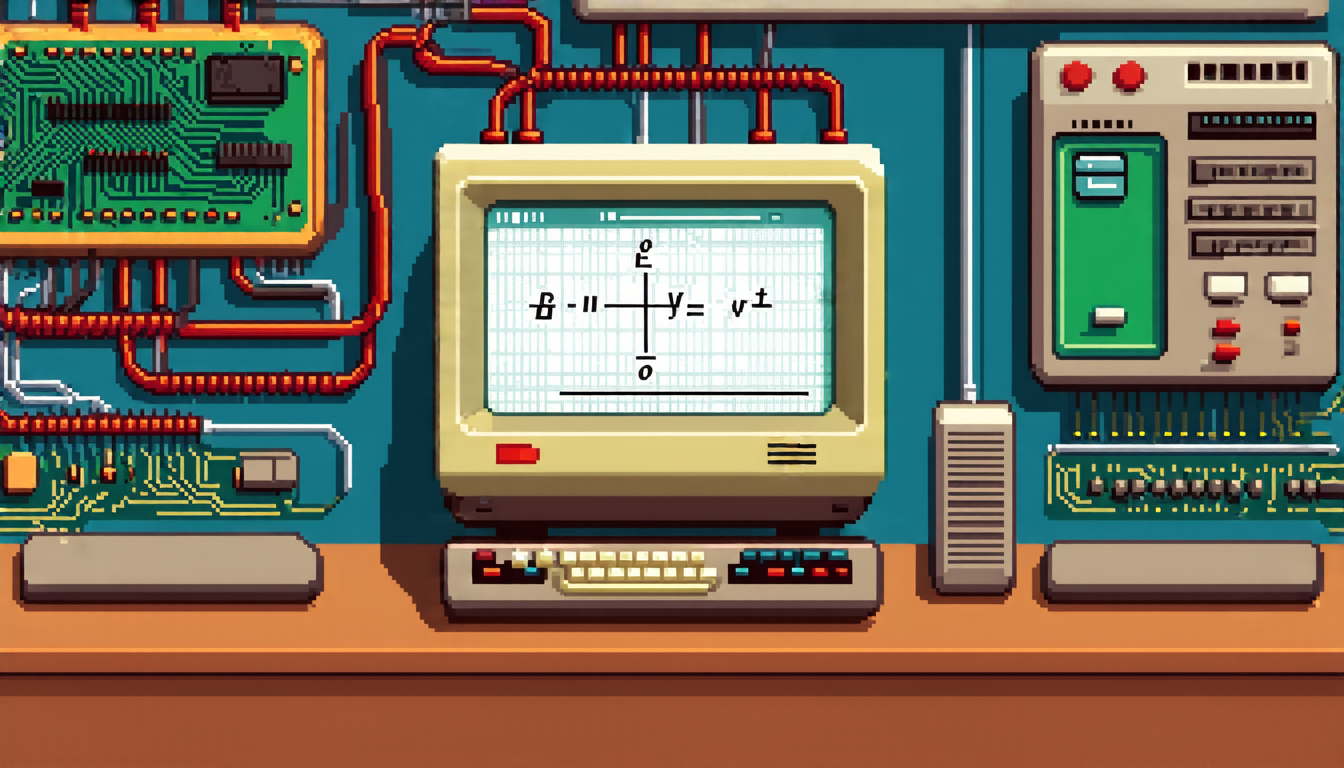
In a remarkable feat of computational archaeology, researchers have successfully built and run a version of the Reduce computer algebra system from over 50 years ago. This achievement is significant not only because it showcases the power of modern computing capabilities but also provides a fascinating glimpse into the early days of computer science.
Reduce was first developed in the late 1960s as a tool for symbolic computation, specifically designed to help physicists and mathematicians manipulate complex equations. In its heyday, Reduce was used by many prominent researchers, including Stephen Hawking, to tackle some of the most challenging problems in theoretical physics.
The team behind this project started with an archival copy of Reduce’s source code from 1973 and worked tirelessly to modify it to run on a modern computer. This involved overcoming numerous compatibility issues with ancient Lisp systems, as well as implementing workarounds for outdated features and bug fixes.
One of the most impressive aspects of this achievement is the ability to test Reduce’s capabilities using a suite of benchmarking problems. These problems, which were originally designed to push the limits of Reduce’s performance in the 1970s, have been run on the modern system with astonishing results. In some cases, the old Reduce system outperformed its modern counterparts, highlighting the remarkable efficiency and scalability of the original code.
The team also demonstrated Reduce’s ability to tackle complex problems in physics, including calculations related to general relativity and quantum mechanics. These examples showcase the system’s capacity to handle intricate mathematical manipulations and provide a glimpse into the types of research that were being conducted using Reduce during its heyday.
This project is not only a testament to the ingenuity of the researchers involved but also serves as a fascinating historical artifact. It provides a unique window into the early days of computer science, when pioneers like Tony Hearn and Stephen Hawking were pushing the boundaries of what was possible with computers.
The implications of this achievement extend beyond the realm of nostalgia or historical curiosity. By studying the evolution of Reduce and its capabilities over time, researchers can gain valuable insights into the development of computer science and the role that symbolic computation has played in shaping our understanding of the universe.
As we continue to push the boundaries of what is possible with computers, it is essential to remember the pioneers who paved the way for us. This remarkable achievement serves as a reminder of the importance of preserving historical artifacts like Reduce and the invaluable contributions they can make to our understanding of the world around us.
Cite this article: “Reviving the Past: Bringing 50-Year-Old Computer Algebra System Reduce Back to Life”, The Science Archive, 2025.
Computer Algebra System, Reduce, Symbolic Computation, Computer Science, Historical Artifact, Tony Hearn, Stephen Hawking, General Relativity, Quantum Mechanics, Lisp.
Reference: Arthur C. Norman, Stephen M. Watt, “Semi-Centennial REDUCE” (2025).





