

Saturday 31 May 2025
A new approach to planning and problem-solving has emerged, one that combines the strengths of both symbolic and neural networks to tackle complex tasks like never before. This innovative framework, dubbed SymPlanner, is designed to help robots and artificial intelligence systems navigate uncertain environments and achieve specific goals.
The challenge of planning is a fundamental one in AI research. Given a set of initial conditions and a desired outcome, how can a system efficiently determine the sequence of actions required to reach that goal? In recent years, neural networks have made significant strides in this area, but they often struggle with tasks that require a deep understanding of the underlying semantics.
SymPlanner addresses this issue by integrating symbolic planning with neural networks. The former provides a structured representation of the problem domain, allowing the system to reason about abstract concepts and relationships. Meanwhile, the latter brings its own set of strengths to the table, including the ability to learn from experience and adapt to changing circumstances.
The framework is comprised of three main components: a generator, an iterative corrector, and a discriminator. The generator proposes a sequence of actions based on the initial conditions and goal, while the iterative corrector refines this plan by identifying and correcting any invalid or suboptimal steps. Finally, the discriminator evaluates the quality of each action, providing feedback to the generator and corrector.
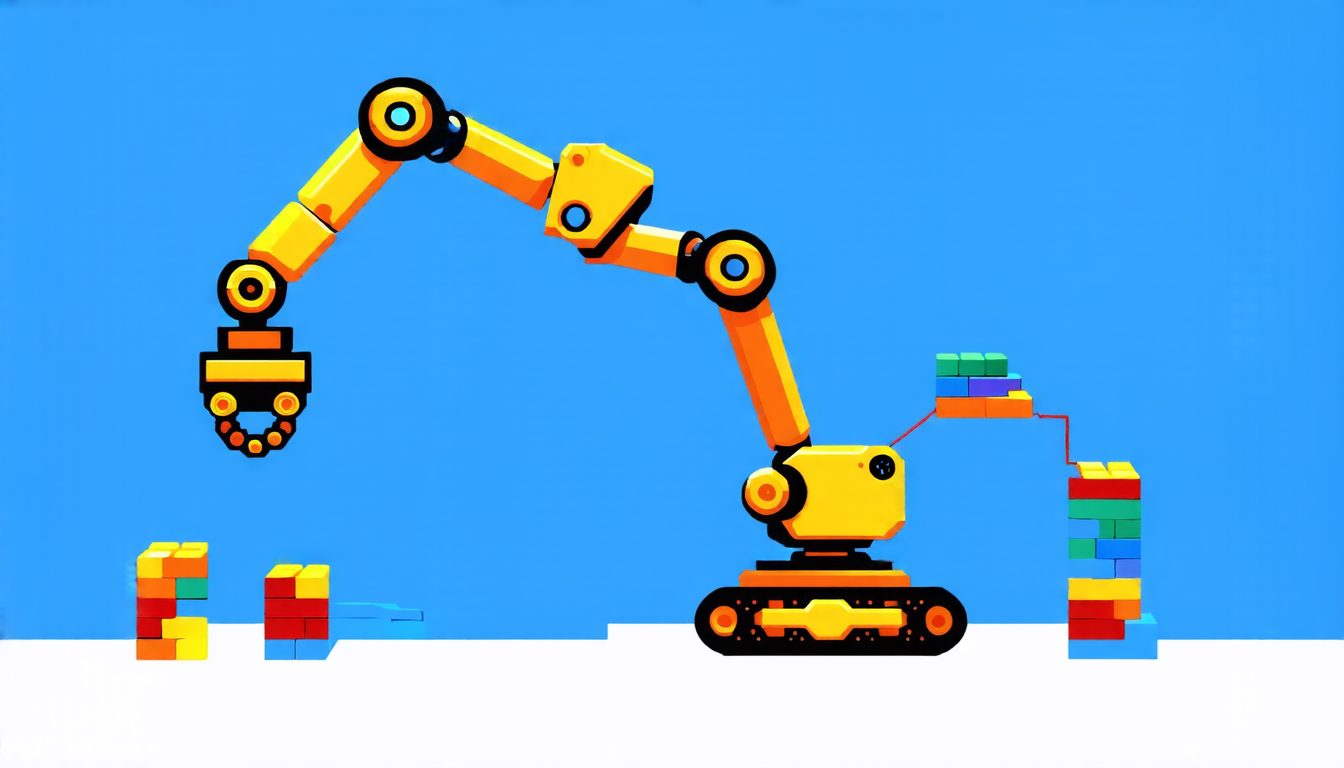
To test SymPlanner’s capabilities, researchers designed a series of experiments involving a set of blocks in different configurations. The goal was to rearrange these blocks according to specific rules, such as stacking certain objects on top of others or placing them in a particular order. By comparing the performance of SymPlanner with existing planning methods, the team found that their framework consistently outperformed its competitors.
One key advantage of SymPlanner is its ability to handle complex tasks with multiple constraints and uncertainties. Unlike traditional planning approaches, which may become overwhelmed by the sheer number of possibilities, this framework can efficiently explore the solution space and identify the most promising paths forward.
The implications of SymPlanner are far-reaching, with potential applications in areas such as robotics, autonomous vehicles, and even healthcare. By enabling systems to plan and adapt more effectively, we may soon see significant advancements in fields where uncertainty and complexity are the norm.
As researchers continue to refine and extend this innovative framework, it will be exciting to see how SymPlanner is applied to an increasingly diverse range of challenges.
Cite this article: “SymPlanner: A Novel Framework for Integrated Symbolic and Neural Planning”, The Science Archive, 2025.
Artificial Intelligence, Symbolic Planning, Neural Networks, Robotics, Autonomous Vehicles, Healthcare, Uncertainty, Complexity, Problem-Solving, Ai Research





