

Thursday 10 July 2025
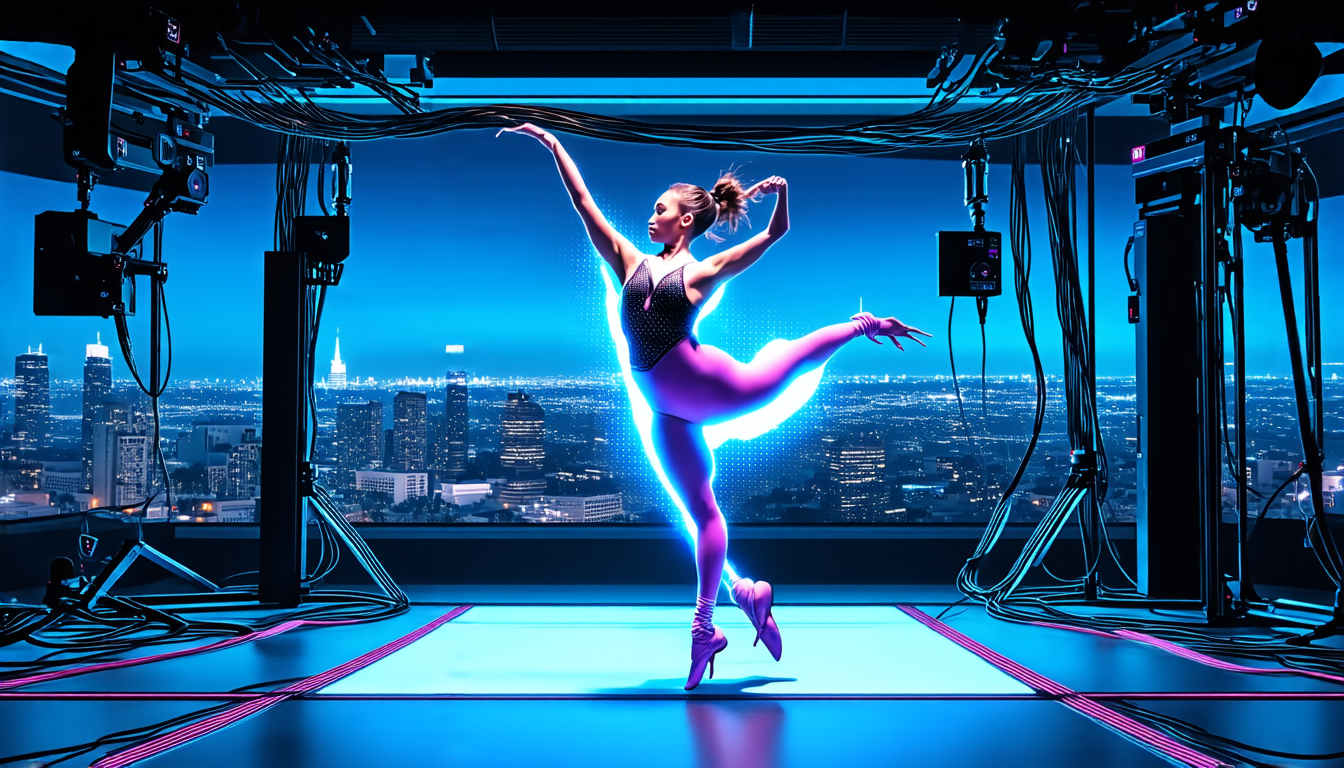
A new era in dance generation has dawned, thanks to a team of researchers who have created an AI system capable of producing high-quality, controllable dance movements. This breakthrough could revolutionize the way we experience dance, enabling artists and educators to create complex choreographies without the need for expensive motion-capture studios.
The system, known as OpenDanceNet, uses a combination of music, text prompts, and 2D keypoint data to generate realistic and diverse dance sequences. By conditioning the AI on these multimodal inputs, researchers can control the style, tempo, and even emotional tone of the generated dances.
One of the most impressive aspects of OpenDanceNet is its ability to generalize across different genres and styles. Using a dataset of over 100 hours of human dance movements from 14 distinct genres, the AI system was able to generate high-quality choreographies that were both realistic and varied.
The potential applications of this technology are vast. For artists, it could provide a new tool for creating complex choreographies without the need for extensive rehearsal or expensive equipment. Educators could use OpenDanceNet to create interactive lessons on dance history and technique, allowing students to explore different styles and eras in a more immersive way.
For game developers and virtual reality enthusiasts, the possibilities are endless. Imagine being able to generate realistic dance movements for characters in your favorite games or VR experiences. The potential for storytelling and immersion is immense.
But OpenDanceNet’s impact goes beyond just entertainment. It could also have significant implications for physical therapy and rehabilitation. By generating precise and controlled dance movements, the AI system could be used to help patients recover from injuries or develop new motor skills.
The creation of OpenDanceNet marks a significant milestone in the development of AI-powered dance generation. As the technology continues to evolve, we can expect to see even more innovative applications across various fields. For now, it’s clear that this breakthrough has the potential to change the way we experience and interact with dance forever.
Cite this article: “Revolutionizing Dance Generation with AI: OpenDanceNet”, The Science Archive, 2025.
Ai, Dance, Opendancenet, Music, Text Prompts, Keypoint Data, Choreography, Virtual Reality, Physical Therapy, Rehabilitation.





