

Tuesday 23 September 2025
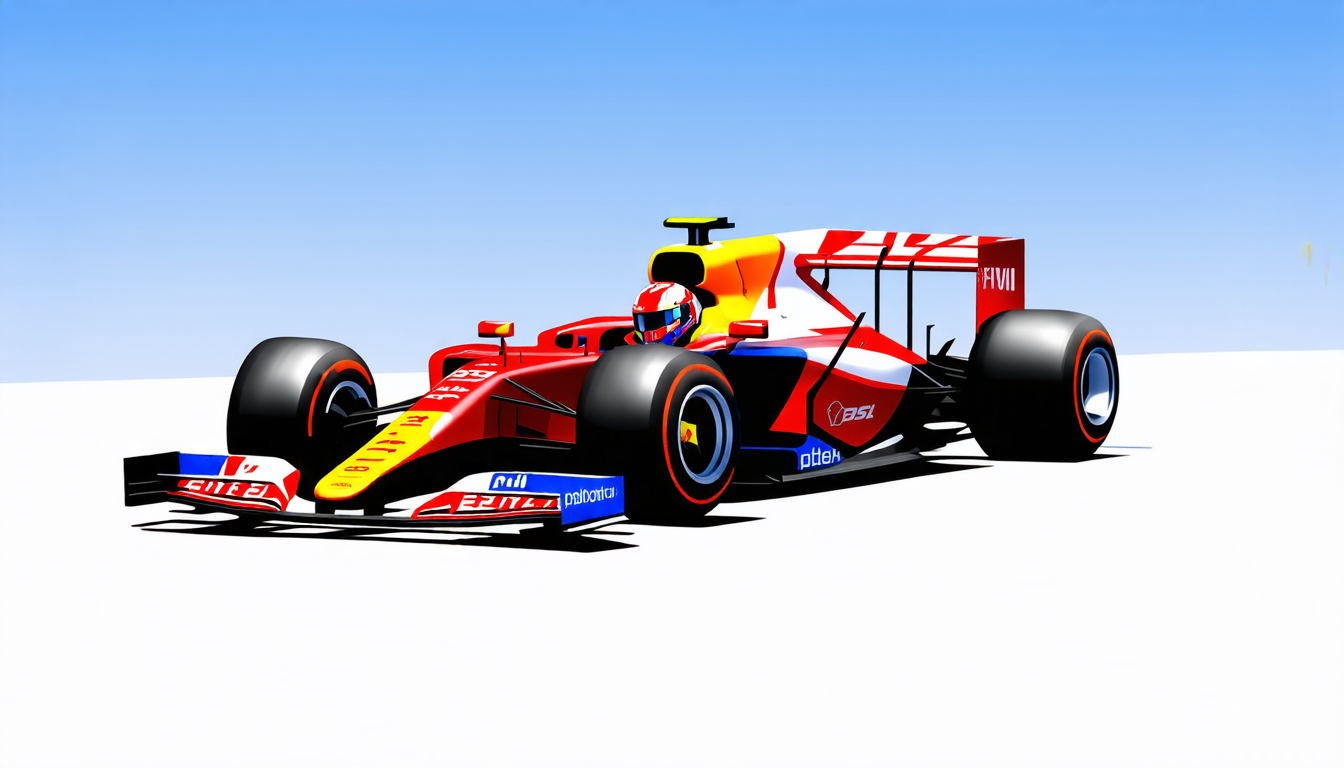
Formula One teams are constantly seeking ways to shave precious seconds off their lap times, and now a new approach is promising to revolutionize aerodynamic design. By combining computational fluid dynamics (CFD) simulations with artificial intelligence (AI), researchers have developed a Physics-Informed Neural Network (PINN) that can predict the aerodynamic performance of a Formula One front wing with unprecedented accuracy.
The traditional method of designing an F1 car’s aerodynamics involves expensive and time-consuming CFD simulations, which are then analyzed by human experts to identify areas for improvement. However, as teams are restricted by budget caps and limited wind tunnel testing hours, they need more efficient ways to optimize their designs.
That’s where the PINN comes in. By training a neural network on data from CFD simulations, the AI can learn to predict the aerodynamic coefficients of a front wing – such as drag and lift – with remarkable accuracy. But what sets this approach apart is its ability to incorporate physical laws into the learning process, ensuring that the predictions are not only accurate but also physically plausible.
The researchers used data from SimScale simulations to train their PINN model, which was then tested on a separate dataset of CFD results. The results were astonishing – the PINN predicted the aerodynamic coefficients with a coefficient of determination (R²) of 0.968 for drag and 0.981 for lift, outperforming traditional machine learning approaches.
This new approach has significant implications for F1 teams. By using the PINN to predict the aerodynamic performance of different designs, they can quickly identify the most promising configurations without having to run expensive CFD simulations or conduct time-consuming wind tunnel tests. This could lead to a significant reduction in development time and costs, giving teams a competitive edge.
The potential applications of this technology extend far beyond Formula One, however. Any field that relies on complex fluid dynamics – such as aerospace engineering or ship design – could benefit from the use of PINNs.
As researchers continue to refine their approach, it’s clear that the future of aerodynamic design is AI-driven. And with the ability to predict the performance of a front wing with unprecedented accuracy, F1 teams are poised to take their designs to new heights.
Cite this article: “AI-Powered Aerodynamics Revolutionizes Formula One Design”, The Science Archive, 2025.
Formula One, Aerodynamics, Artificial Intelligence, Computational Fluid Dynamics, Neural Network, Physics-Informed, Simulation, Design, Optimization, Machine Learning





