

Friday 31 January 2025
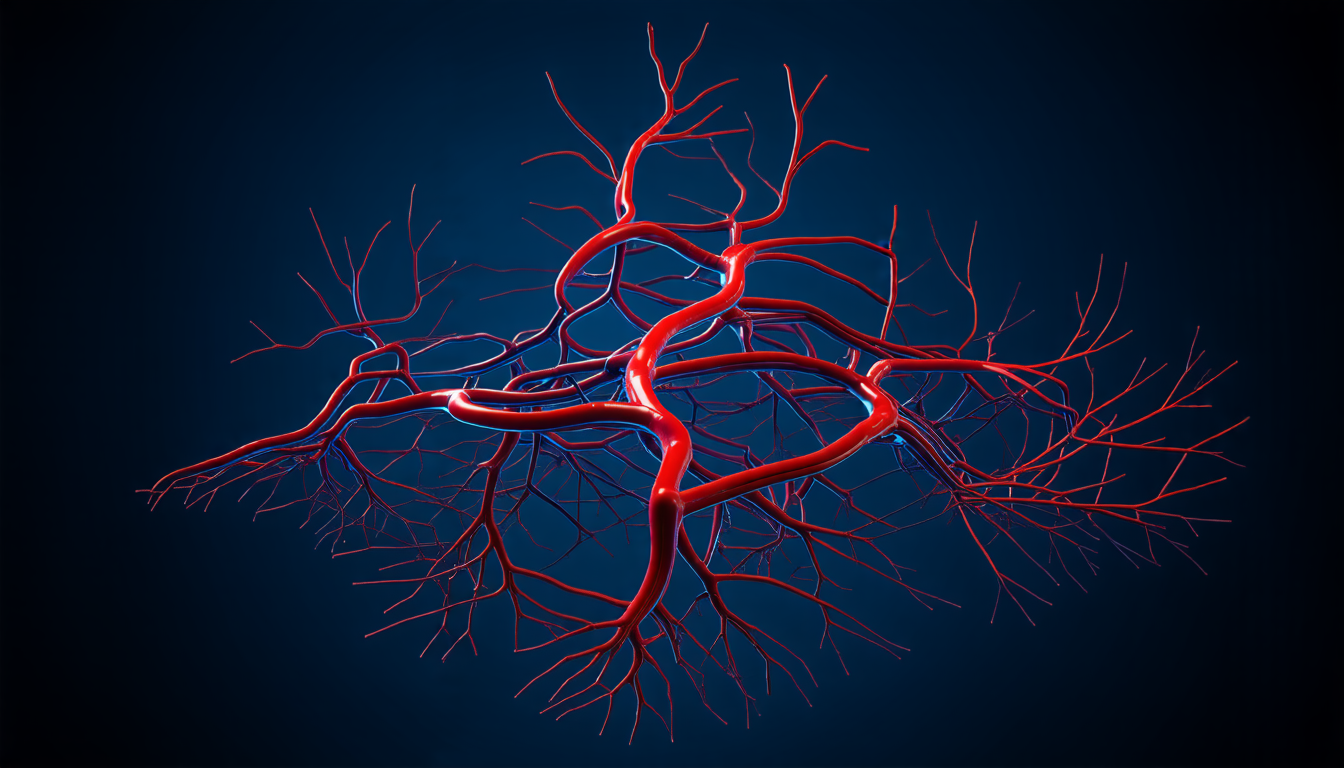
The intricate network of blood vessels in our bodies is a marvel of engineering, and understanding how they function is crucial for diagnosing and treating diseases such as heart disease and stroke. Researchers have long sought to develop methods for accurately reconstructing these vessels from medical images, but traditional approaches have been limited by their reliance on manual annotation and the complexity of the vascular network.
A team of scientists has now developed a new approach that uses artificial intelligence (AI) to automatically generate high-quality 3D models of blood vessels from medical images. The method, known as DVasMesh, is based on a technique called template deformation, which allows the researchers to create detailed and accurate models of the vascular network by deforming a pre-existing template.
The team used DVasMesh to analyze data from patients with coronary artery disease, a condition in which the blood vessels supplying the heart become narrowed or blocked. The method was able to accurately reconstruct the complex 3D geometry of the blood vessels, including their branching patterns and connections.
One of the key advantages of DVasMesh is its ability to automatically reconnect broken or disconnected vessels, which is a major challenge for traditional methods. This allows the researchers to create more accurate models that better reflect the true anatomy of the vascular network.
The team also used DVasMesh to analyze data from patients with cerebral artery disease, another condition in which blood vessels become narrowed or blocked. In this case, the method was able to accurately reconstruct the 3D geometry of the blood vessels in the brain, including their branching patterns and connections.
Overall, the results of the study demonstrate the potential of DVasMesh as a powerful tool for analyzing and understanding complex vascular networks. The method has the potential to revolutionize the field of medical imaging, allowing researchers to gain new insights into the causes of disease and develop more effective treatments.
In addition to its use in medical research, DVasMesh could also have applications in fields such as biomechanics and engineering, where it could be used to simulate the behavior of complex systems and predict their performance. The team’s approach has far-reaching implications for our understanding of the human body and its many intricate systems.
Cite this article: “AI-Powered Vascular Modeling Breakthrough”, The Science Archive, 2025.
Blood Vessels, Medical Imaging, Artificial Intelligence, 3D Modeling, Coronary Artery Disease, Cerebral Artery Disease, Vascular Network, Template Deformation, Biomedical Research, Biomechanics





