
Wednesday 26 February 2025
As financial markets continue to evolve, researchers are working to develop new tools that can better understand and predict their behavior. A recent paper proposes a novel approach to modeling complex financial systems using hidden Markov graphical models.
The model, which combines elements of machine learning and statistics, uses a type of probability distribution known as the generalized hyperbolic (GH) family to capture the unique characteristics of financial data. The GH distribution is particularly well-suited for modeling heavy-tailed distributions, which are common in finance but can be challenging to work with.
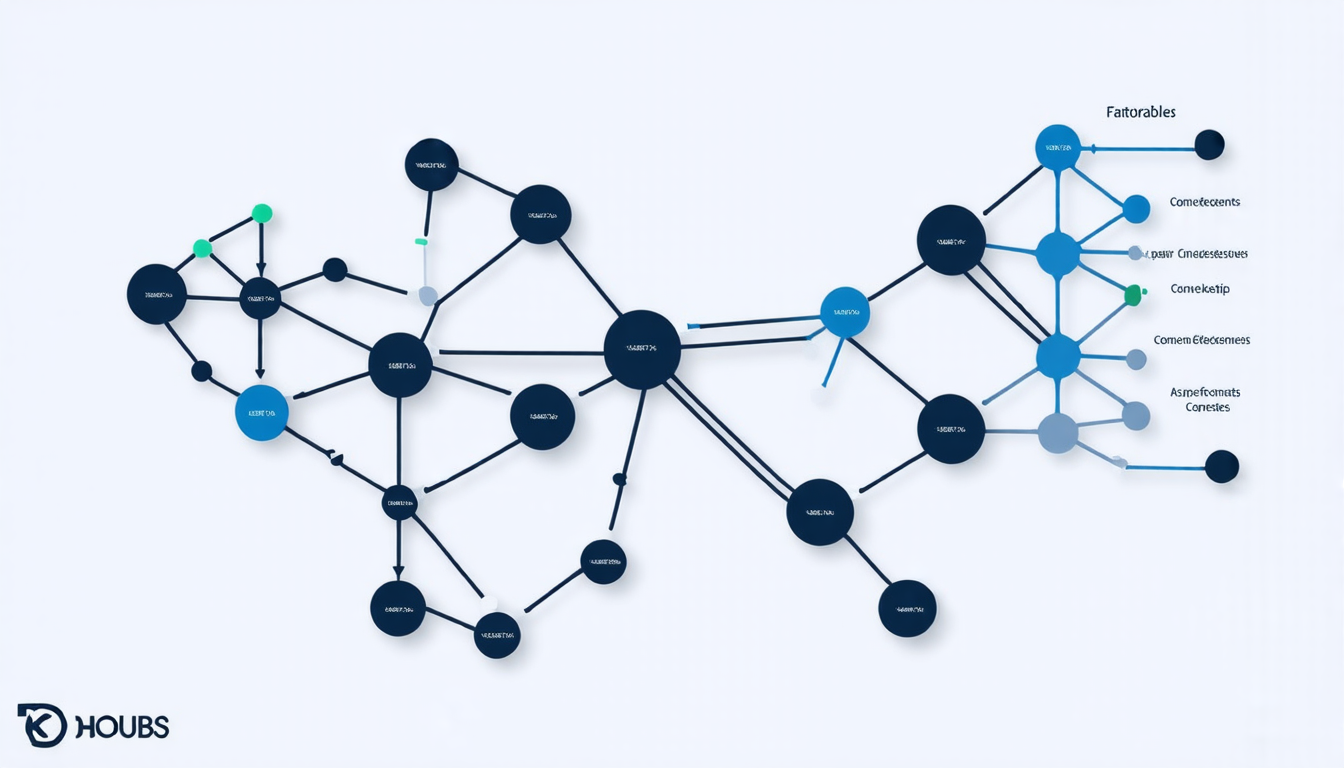
The researchers’ approach involves using a hidden Markov model to represent the underlying dynamics of the system, and then using the GH distribution to model the relationships between different variables within that system. This allows them to capture both the temporal and spatial dependencies present in financial data.
One of the key advantages of this approach is its ability to handle high-dimensional data, which is becoming increasingly common in finance. By using a sparse precision matrix estimation technique, the model can identify the most important relationships between different variables and ignore those that are less significant.
The researchers tested their model on a large dataset of financial returns from various assets, including cryptocurrencies, commodities, and stock indexes. They found that it was able to accurately capture the complex dynamics of the system and make accurate predictions about future behavior.
This new approach has significant implications for financial risk management and portfolio optimization. By better understanding the relationships between different assets, investors can make more informed decisions and reduce their exposure to potential risks.
The model also has broader applications in fields such as economics and finance, where complex systems are often difficult to model and predict. As researchers continue to develop and refine this approach, it may have far-reaching implications for our understanding of the world around us.
Cite this article: “Modeling Financial Complexity with Hidden Markov Graphical Models”, The Science Archive, 2025.
Financial Markets, Markov Models, Machine Learning, Statistics, Generalized Hyperbolic Distribution, Heavy-Tailed Distributions, High-Dimensional Data, Sparse Precision Matrix Estimation, Financial Risk Management, Portfolio Optimization