

Wednesday 05 March 2025
The decentralized social media platform known as the Fediverse has been growing in popularity, attracting users who value their online freedom and autonomy. However, this decentralized nature also presents a unique set of challenges for content moderation – the process of reviewing and regulating user-generated content to uphold community standards.
Traditional social media platforms like Facebook and Twitter rely on centralized moderation teams to tackle this issue. But the Fediverse’s decentralized architecture makes it difficult to implement similar approaches. Each instance is independently owned and operated, with its own set of rules and guidelines for what constitutes acceptable content.
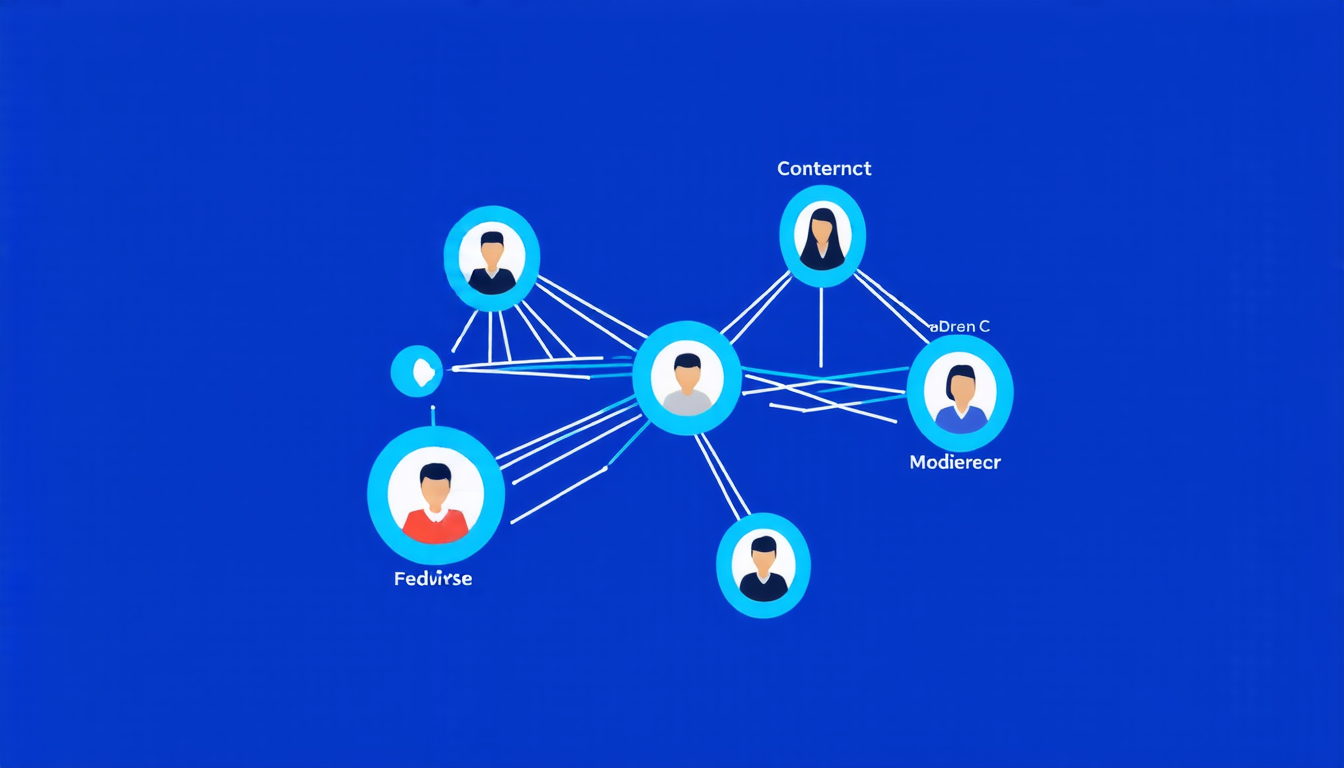
To address this challenge, researchers have developed a new system called FedMod, which enables instances to collaborate on content moderation tasks. The key innovation behind FedMod is the use of federated learning – a machine learning approach that allows multiple devices or institutions to jointly train a model without sharing their local data.
In traditional machine learning, a central server collects and aggregates data from all participating devices before training the model. But in federated learning, each device trains its own model using only its local data, and then shares the model parameters with other devices. This approach not only preserves user privacy but also enables instances to maintain their autonomy while still benefiting from the collective knowledge of the Fediverse.
The researchers tested FedMod on a dataset of posts from several Mastodon instances – a popular decentralized social media platform that is part of the Fediverse. They found that FedMod was able to detect harmful content with high accuracy, outperforming traditional local content moderation methods.
One of the key benefits of FedMod is its ability to adapt to the unique context and guidelines of each instance. By allowing instances to contribute their own labeled data to the training process, FedMod can learn to recognize what constitutes acceptable content within that specific community.
The researchers also experimented with different peer selection strategies for choosing which instances to collaborate with during the training process. They found that selecting peers based on similarity in content or user behavior led to better performance than randomly selecting peers.
While FedMod is still a proof-of-concept, its potential implications are significant. By enabling decentralized and autonomous content moderation, FedMod could help ensure that online communities remain vibrant and inclusive, while also protecting users from harmful content.
As the Fediverse continues to grow and evolve, it’s likely that we’ll see more innovative solutions like FedMod emerge to tackle the challenges of decentralized social media.
Cite this article: “Decentralized Content Moderation in the Fediverse: A Federated Learning Approach”, The Science Archive, 2025.
Decentralized Social Media, Content Moderation, Federated Learning, Machine Learning, Fediverse, Mastodon, Online Communities, User Privacy, Autonomous, Proof-Of-Concept





