
Thursday 06 March 2025
Scientists have long been fascinated by the SARS-CoV-2 virus, which has wreaked havoc on global health and economies since its emergence in late 2019. While researchers have made significant progress in understanding the virus’s behavior and transmission, there is still much to be learned about its evolution and spread.
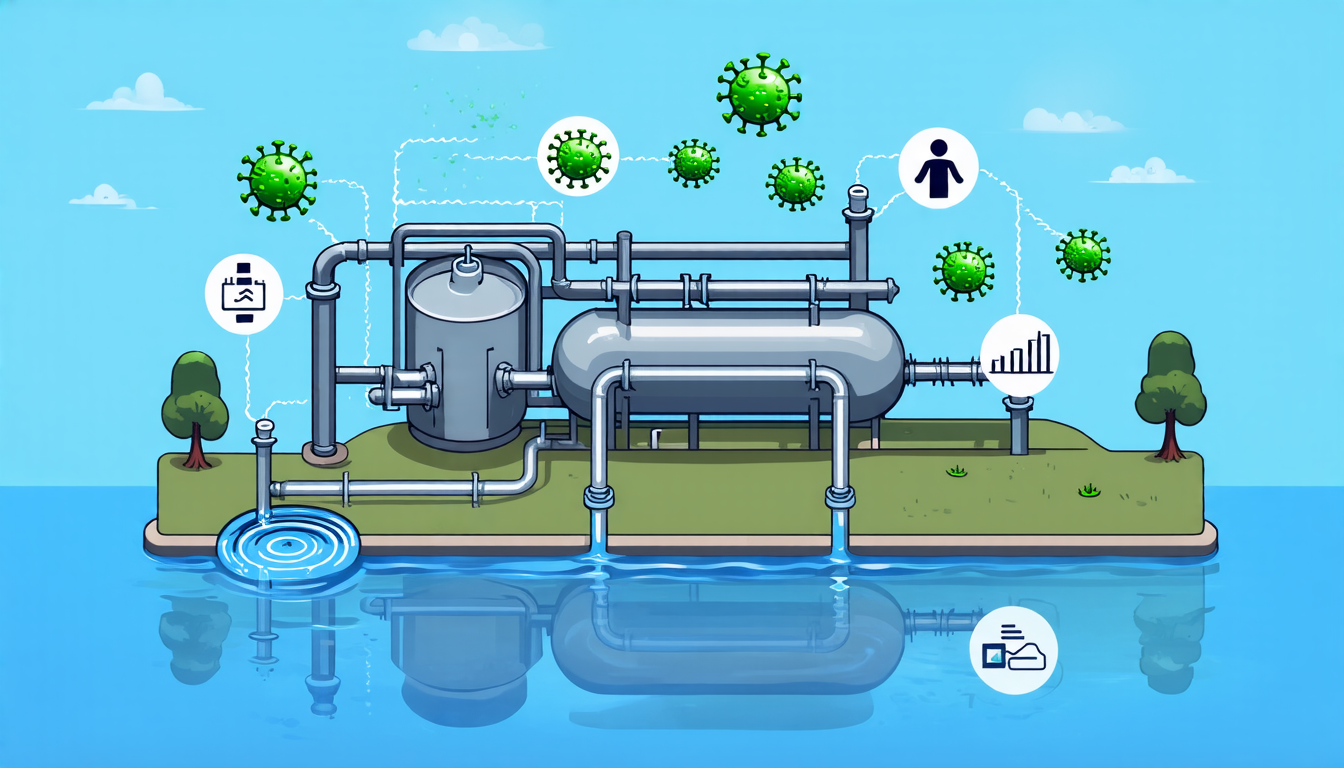
Recently, a team of scientists published a paper that sheds new light on the dynamics of SARS-CoV-2 variants. Their findings suggest that wastewater samples can provide valuable insights into the virus’s evolutionary trajectory, allowing for more effective monitoring and control strategies.
To achieve this, the researchers developed an innovative statistical model that uses data from wastewater treatment plants to track the emergence and spread of new variants. The approach is based on a combination of mathematical techniques and machine learning algorithms, which enable scientists to identify patterns in the genomic data that might be missed by traditional methods.
The team applied their model to a dataset of SARS-CoV-2 sequencing data collected from wastewater treatment plants in France between October 2020 and April 2021. They found that their approach was able to accurately detect the presence of emerging variants, including the Alpha variant, which was first identified in the UK in late 2020.
One of the key advantages of this method is its ability to provide early warnings about new variants before they become established in a population. This could be particularly valuable for public health officials, who often rely on traditional surveillance methods that may not detect emerging threats until it’s too late.
The researchers also explored the potential benefits of using wastewater samples as a complementary approach to clinical testing. They found that wastewater-based surveillance can provide a more comprehensive picture of viral spread and evolution than traditional methods alone, which are limited by their reliance on individual cases.
While this study focuses specifically on SARS-CoV-2, the authors suggest that their methodology could be applied to other viruses and diseases as well. This has significant implications for global health security, as it could enable scientists to develop more effective strategies for monitoring and responding to emerging threats.
Overall, this research highlights the potential of wastewater-based surveillance as a powerful tool in the fight against infectious diseases. By leveraging advances in data analysis and machine learning, scientists can gain new insights into the dynamics of viral spread and evolution, ultimately improving our ability to predict and respond to emerging threats.
Cite this article: “Unlocking Insights from Wastewater: A New Approach to Tracking SARS-CoV-2 Variants”, The Science Archive, 2025.
Sars-Cov-2, Virus, Evolution, Spread, Wastewater, Surveillance, Machine Learning, Data Analysis, Public Health, Infectious Diseases.