

Thursday 06 March 2025
The quest for a more accurate and efficient way to track human activity has led researchers down many paths. From wearables to video analysis, scientists have explored various methods to monitor our daily movements. A recent study published in the IEEE Transactions on Neural Networks and Learning Systems takes a novel approach by harnessing the power of electrostatic fields.
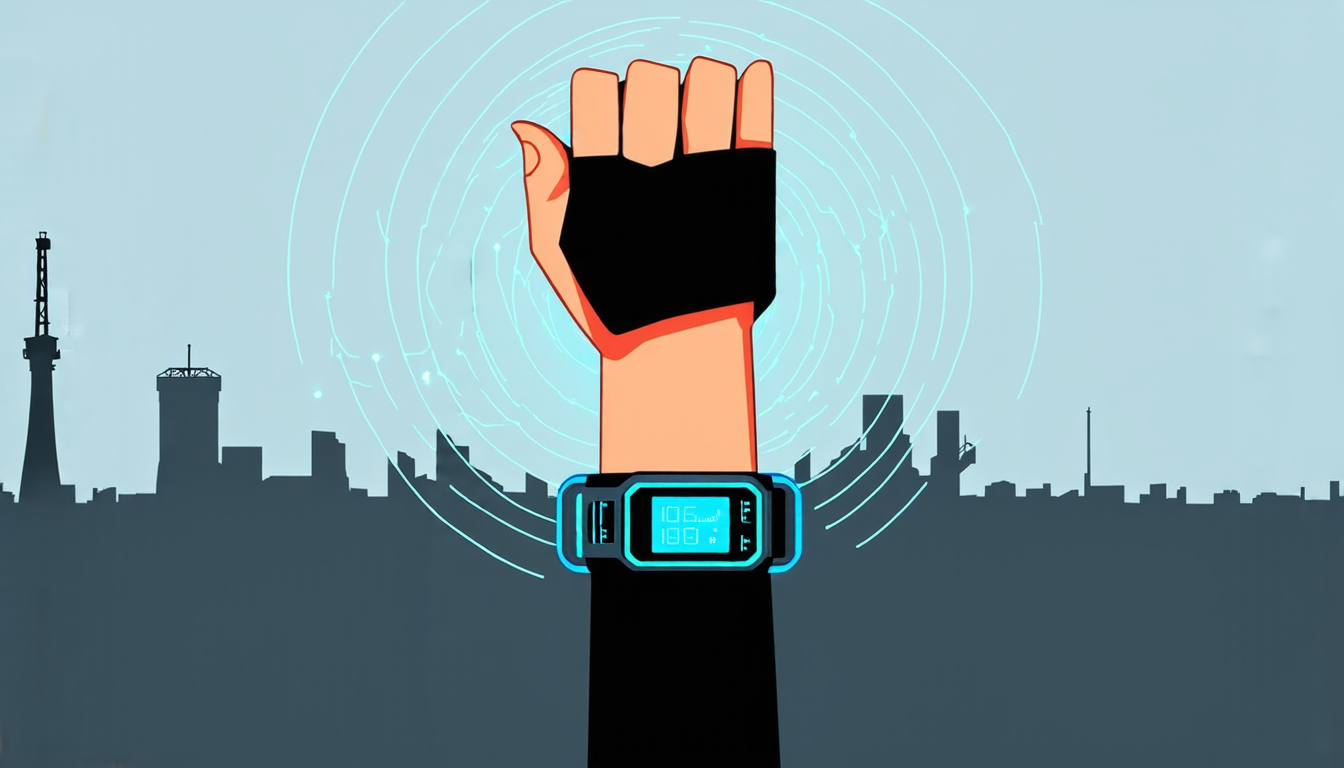
The researchers designed a wearable device that uses capacitive sensing technology to detect changes in electric fields generated by human bodies. This method, known as body-area electrostatic sensing (BAES), has the potential to accurately track individual and collaborative activities with unprecedented precision.
In the study, participants wore wrist-mounted prototypes equipped with both traditional accelerometers and BAES sensors while performing a range of tasks, including walking, carrying objects, and manipulating heavy metal pieces. The results were surprising: while the accelerometer-based system struggled to recognize joint activities, the BAES sensor excelled in detecting collaboration.
The key advantage of BAES lies in its ability to perceive subtle changes in electric fields caused by human interactions. When individuals work together, their bodies create a unique electrostatic signature that can be detected using this technology. This signal is distinct from individual movements, allowing for more accurate recognition of collaborative actions.
The study highlights the potential benefits of incorporating BAES into wearable devices, particularly in scenarios where traditional sensors fall short. For instance, detecting collaboration in manufacturing settings or monitoring group activities in healthcare environments could greatly improve efficiency and productivity.
However, the researchers acknowledge that their approach is not without its limitations. The accuracy of BAES relies heavily on the quality of the sensor design and the complexity of the algorithms used to analyze the data. Furthermore, the technology may be sensitive to environmental factors such as humidity and temperature.
Despite these challenges, the findings suggest that BAES could become a valuable tool in the field of human activity recognition. As wearable technology continues to evolve, it will be interesting to see how this innovative approach is refined and integrated into future devices.
The potential applications of BAES are vast and varied, from enhancing our understanding of human behavior to improving healthcare outcomes. By leveraging the power of electrostatic fields, researchers may have stumbled upon a game-changing solution for tracking human activity with unprecedented accuracy.
Cite this article: “Electrostatic Fields Unlock New Era in Human Activity Tracking”, The Science Archive, 2025.
Wearable Technology, Electrostatic Fields, Body-Area Electrostatic Sensing, Human Activity Recognition, Collaborative Activities, Accelerometers, Sensor Design, Algorithm Complexity, Environmental Factors, Healthcare Outcomes.





