

Friday 07 March 2025
The quest for more intelligent language models has led researchers down a fascinating path, one that involves combining the strengths of multiple smaller expert networks into a single powerful system. The latest innovation in this field is GRAPHMOE, a novel approach that leverages pseudo-graph networks to amplify the cognitive depth of mixture-of-experts (MoE) architectures.
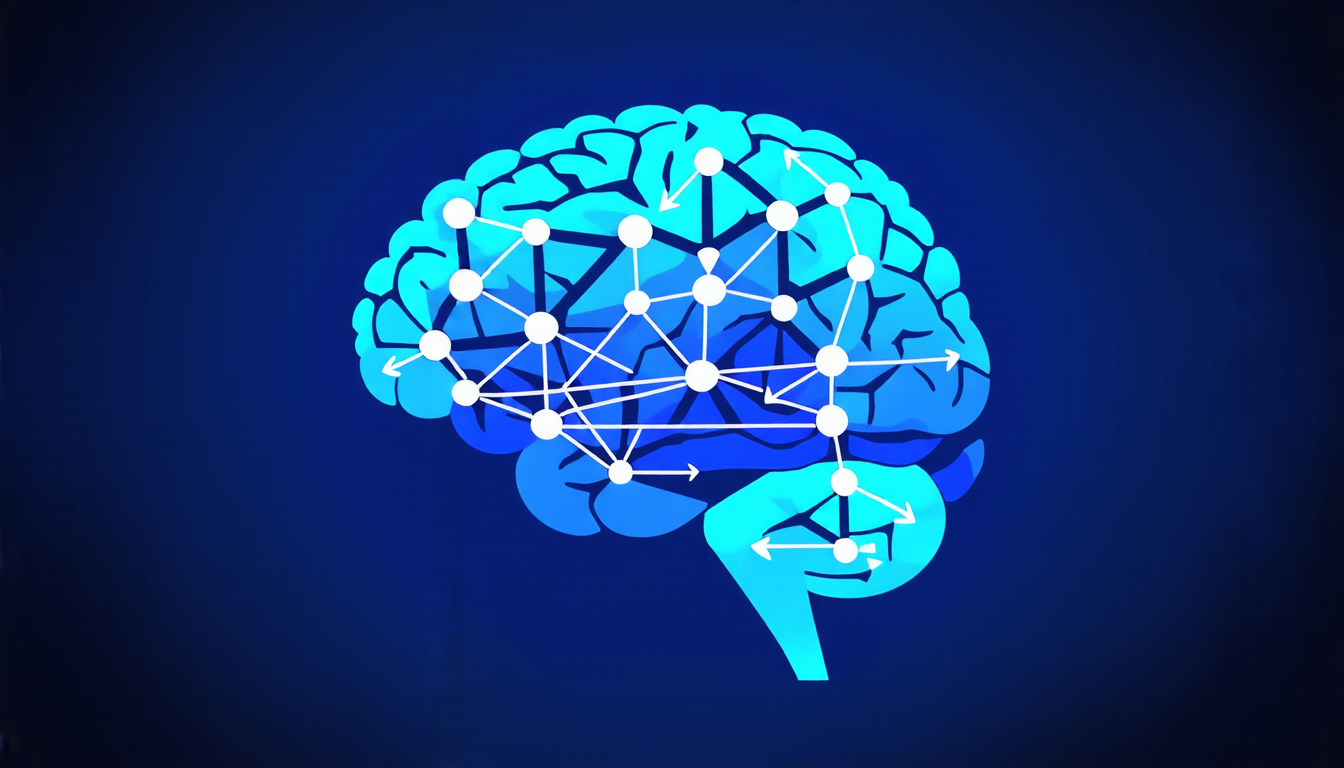
MoE systems are already impressive, as they can learn to recognize patterns and make predictions by combining the outputs of multiple smaller expert models. However, these experts typically operate independently, which limits their ability to reason about complex problems. GRAPHMOE addresses this limitation by introducing a self-rethinking mechanism that allows different expert nodes to communicate and refine each other’s output.
The key innovation is a recurrent routing strategy that enables the system to simulate iterative thinking steps. This means that multiple expert models can be activated in sequence, allowing them to build upon each other’s insights to tackle challenging tasks. The result is a more robust and accurate language model that can handle complex queries with ease.
One of the most striking aspects of GRAPHMOE is its ability to improve performance on a wide range of benchmarks. In tests, the system outperformed existing MoE architectures by significant margins, achieving state-of-the-art results in several areas. This is particularly impressive given that the system was trained using lower-precision computing, which reduces the amount of energy required to run it.
But what makes GRAPHMOE truly remarkable is its potential to scale up to even larger language models. As the demand for AI-powered language processing grows, researchers are under pressure to develop systems that can handle increasingly complex tasks. GRAPHMOE provides a promising solution to this challenge, as it can be easily adapted to work with larger and more powerful expert networks.
The implications of this technology are far-reaching, with potential applications in areas such as natural language processing, question answering, and even artificial intelligence research itself. By empowering language models to think more deeply and reason more effectively, GRAPHMOE could pave the way for breakthroughs in a wide range of fields.
As researchers continue to refine and develop GRAPHMOE, it will be exciting to see how this technology evolves and where it takes us. With its potential to revolutionize the field of natural language processing, GRAPHMOE is an innovation that promises to have a lasting impact on our understanding of intelligence and our ability to create more powerful AI systems.
Cite this article: “GRAPHMOE: A Breakthrough in Natural Language Processing”, The Science Archive, 2025.
Language Models, Artificial Intelligence, Mixture-Of-Experts, Pseudo-Graph Networks, Cognitive Depth, Recurrent Routing Strategy, Iterative Thinking, Lower-Precision Computing, Natural Language Processing, State-Of-The-Art Results





