

Friday 07 March 2025
Artificial Intelligence has made tremendous progress in recent years, and one area that has seen significant advancements is sequence modeling. This technique allows machines to analyze and understand complex patterns in data, such as language or time series information.
Traditional methods for sequence modeling rely on recurrent neural networks (RNNs) and transformers, which are powerful tools but have limitations when dealing with long sequences. RNNs struggle with the problem of vanishing gradients, where the flow of information becomes distorted as it passes through layers of the network. Transformers, on the other hand, suffer from quadratic complexity, making them inefficient for processing very long sequences.
To address these challenges, researchers have been exploring new approaches to sequence modeling. One promising direction is the use of hierarchical memory structures, which allow machines to store and retrieve information more efficiently.
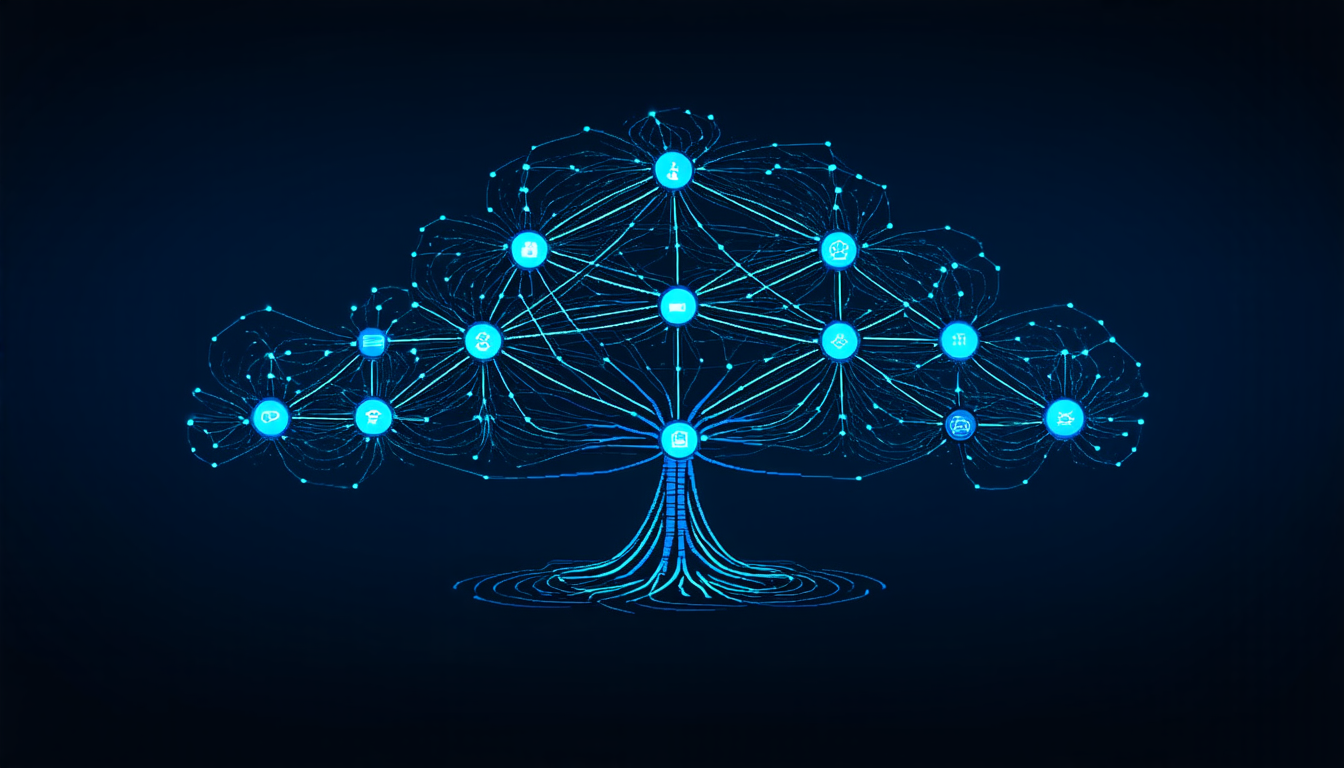
Logarithmic Memory Networks (LMNs) are a type of hierarchical memory structure that has shown great promise in sequence modeling. These networks consist of a series of layers, each of which summarizes the information from the previous layer. This process continues until the desired level of abstraction is reached.
One of the key features of LMNs is their ability to efficiently store and retrieve information. By using a hierarchical tree structure, LMNs can reduce the memory footprint required for sequence modeling by several orders of magnitude compared to traditional methods.
LMNs also have the advantage of being highly parallelizable, which makes them well-suited for modern computing architectures. This allows machines to process sequences much faster than was previously possible with traditional methods.
In addition to their efficiency and scalability, LMNs have been shown to be highly effective in a variety of sequence modeling tasks. These include natural language processing, time series forecasting, and more.
The potential applications of LMNs are vast and varied. For example, they could be used to build intelligent personal assistants that can understand complex spoken commands or to develop advanced systems for predicting and analyzing financial markets.
Overall, Logarithmic Memory Networks represent a significant step forward in the field of sequence modeling. By providing a more efficient and scalable approach to processing long sequences, LMNs have the potential to enable a wide range of new applications and innovations.
Cite this article: “Advances in Sequence Modeling: Logarithmic Memory Networks”, The Science Archive, 2025.
Artificial Intelligence, Sequence Modeling, Recurrent Neural Networks, Transformers, Hierarchical Memory Structures, Logarithmic Memory Networks, Natural Language Processing, Time Series Forecasting, Parallelization, Scalability





